A supplier presents you with an ATEX-certified camera. Another quotes an IECEx-certified equivalent. Both claim full compliance for your UAE facility. Both cannot be equally correct for every application — and in a classified hazardous zone, the difference between accepting the right certification and accepting a plausible-sounding one carries consequences that go well beyond a failed audit. Across UAE and Kuwait industrial procurement, confusion between these two frameworks is remarkably common — and routinely exploited by suppliers who know their buyers cannot easily distinguish between them. This article gives you the technical grounding to make that distinction yourself, and to hold your supply chain accountable for what it claims.
Two Standards, One Purpose — But Different Jurisdictions
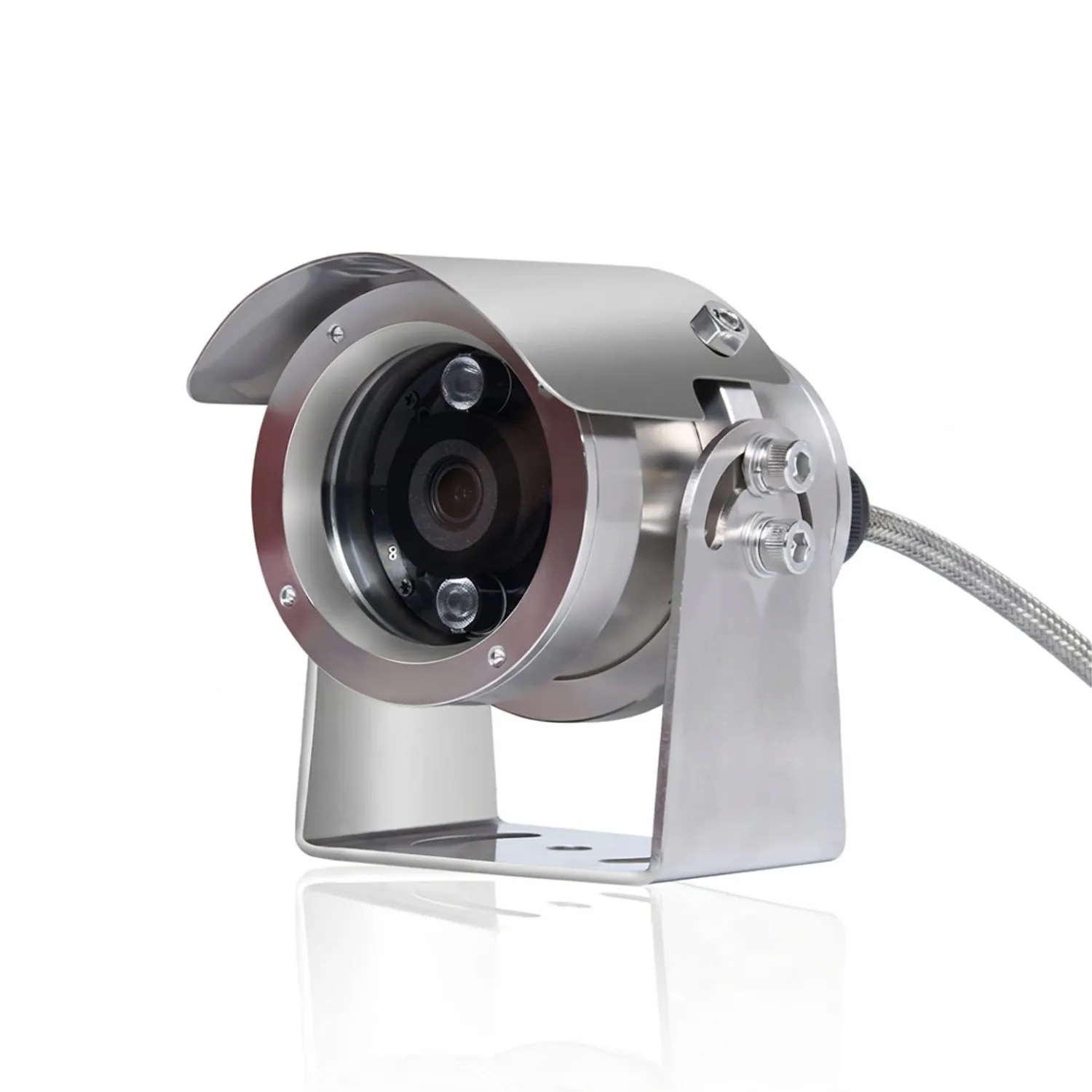
ATEX and IECEx both govern equipment designed for use in explosive atmospheres. Both cover gas groups, temperature classes, and equipment protection levels. At the technical testing level, they are broadly harmonised. The critical difference is jurisdictional.
ATEX (from the French ATmosphères EXplosibles) is the European Union's mandatory regulatory framework for equipment used in explosive atmospheres. Compliance with ATEX is a legal requirement for equipment placed on the EU market. The Directive covers both the equipment itself (ATEX 114, formerly 94/9/EC) and the safety of workers in hazardous areas (ATEX 153, formerly 1999/92/EC).
IECEx is the International Electrotechnical Commission's global certification scheme. It is not tied to any single regulatory jurisdiction. Instead, it provides a mutually recognised certification framework that participating countries — including the UAE, Kuwait, Australia, and many others — can adopt as the basis for their national hazardous area equipment requirements.
The practical implication for GCC buyers: IECEx certification is the internationally recognised benchmark that UAE and Kuwait regulatory bodies reference when assessing equipment compliance. ATEX certification, while technically rigorous, is a European regulatory instrument. In the GCC context, IECEx is the primary validation standard — though ATEX-certified equipment with equivalent IECEx documentation is broadly accepted in practice.
What the Certification Documents Should Actually Show You
Supplier certification claims are only as useful as the documents that substantiate them. Many procurement teams accept a label photograph or a datasheet mention of "ATEX/IECEx certified" without verifying what the certification actually covers.
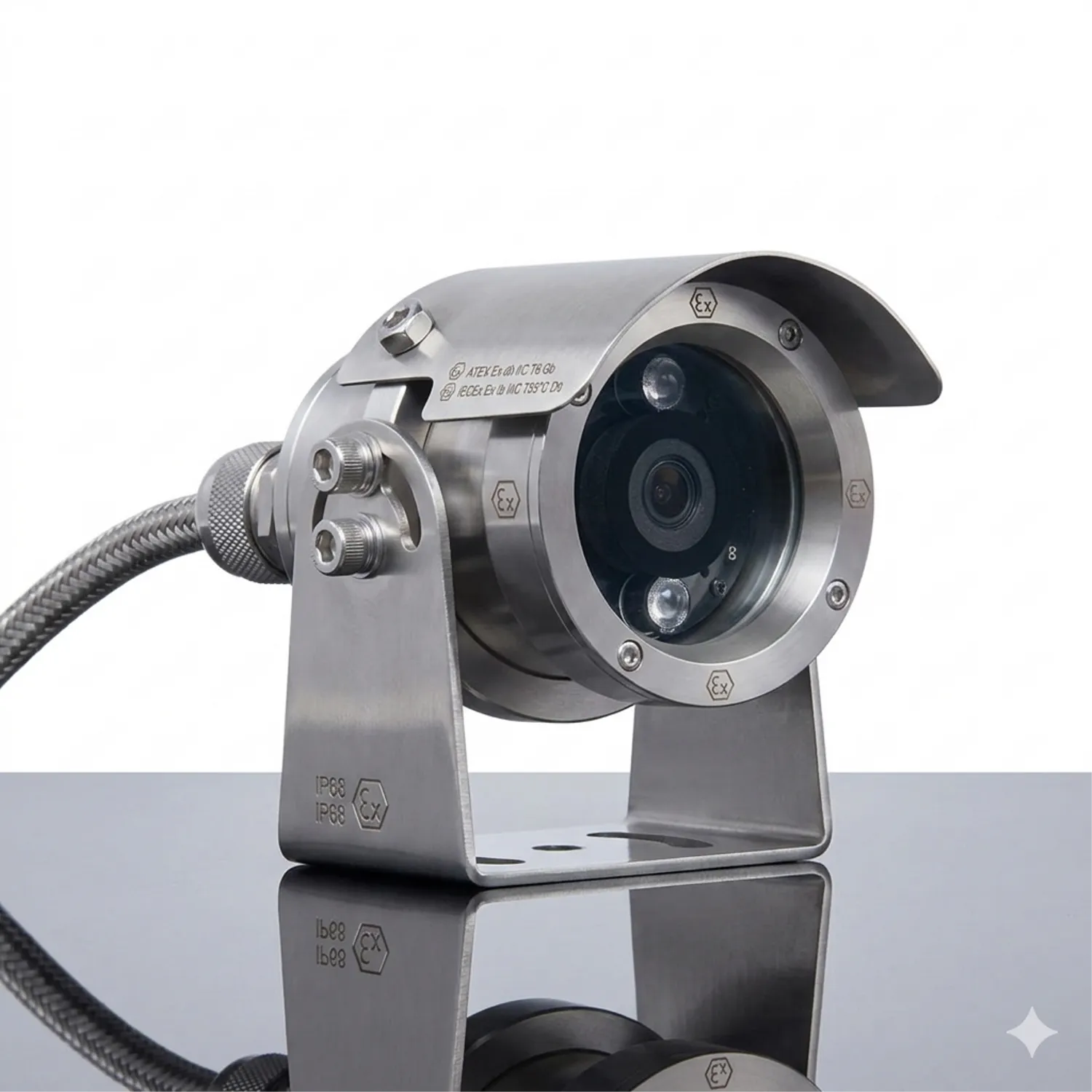
When you are evaluating an Explosion proof IR Mini Camera UAE specification from any supplier, the certification documentation should explicitly state:
- The certifying body (e.g., SGS, Bureau Veritas, TÜV Rheinland for ATEX; any IECEx-accredited ExCB for IECEx)
- The certificate number, which is independently verifiable on the IECEx website (iecex.com) or the EU ATEX Notified Body register
- Equipment group and category (Group II, Category 2 for Zone 1; Category 3 for Zone 2)
- Gas group (IIA, IIB, or IIC — covering progressively more reactive flammable substances)
- Temperature class (T1 through T6, defining maximum permitted surface temperature)
- The specific protection concept applied (Ex d for flameproof, Ex e for increased safety, Ex ia/ib for intrinsic safety, and so on)
An explosion proof mini ir camera UAE supplier who cannot provide a certificate number that you can independently verify is not a supplier you should be purchasing classified zone equipment from. This is not a burdensome demand — legitimate certification is publicly registered precisely so that buyers can check it.
How UAE and Kuwait Regulatory Environments Apply These Standards
The UAE does not operate a single unified national hazardous area equipment standard in the way that EU member states implement ATEX. Instead, UAE regulatory bodies — including the Abu Dhabi Department of Energy, ADNOC subsidiaries, and free zone authorities — reference IECEx as the international benchmark, often supplemented by HSE workplace safety guidance and, in some sectors, DSEAR-aligned requirements carried over from international operators with UK or European parent companies.
Kuwait's oil and gas sector, dominated by Kuwait Petroleum Corporation and its subsidiaries, similarly references IECEx as the primary international certification framework. KPC procurement specifications for classified zone equipment consistently require IECEx documentation, with ATEX accepted as a parallel standard rather than a substitute.
The practical consequence: if you are sourcing equipment for a UAE or Kuwait facility and a supplier presents only ATEX documentation without corresponding IECEx certification, request clarification on whether the product holds a concurrent IECEx certificate. Many manufacturers certify to both standards. Those who do not should be asked why, particularly if IECEx is specified in your facility's procurement requirements.
Validating Supplier Claims Before You Commit Budget
Certification fraud and misrepresentation in the explosion-proof equipment market are not hypothetical concerns. Counterfeit or overstated certification claims appear with enough frequency that major certifying bodies publish guidance on how to verify documentation authenticity.
Before you Get Quote for Explosion Proof Mini IR Camera systems from any supplier, run through this verification sequence:
- Request the full certificate document — not a summary, not a datasheet extract
- Locate the certificate number and search it on the IECEx public certificate register at iecex.com
- Confirm that the specific model you are being quoted matches the equipment described in the certificate — not merely the product family
- Check the certificate status (current, suspended, or withdrawn)
- Confirm the gas group and T-rating match your zone classification requirements
A supplier who objects to this process, delays providing documentation, or provides certificates that cannot be verified through the public register should be removed from your shortlist.
Working with a recognised SharpEagle Explosion Proof Mini IR Camera Supplier means documentation is provided as a standard part of the quotation package, not extracted under pressure. That transparency is itself a meaningful qualification criterion when you are making a purchase decision for classified zone infrastructure.
When you Buy SharpEagle Explosion Proof Mini IR Camera units through a structured procurement process, the IECEx certificate number, gas group, T-rating, and zone suitability are all included in the supply documentation — ready to be inserted directly into your facility's equipment register without further verification work.
Conclusion
The IECEx versus ATEX question is not merely academic. For UAE and Kuwait procurement teams buying explosion-proof cameras for oil and gas, industrial, or maritime applications, understanding which standard governs your regulatory environment — and how to verify that the equipment you are purchasing actually meets it — is a fundamental competency. Suppliers who cannot provide independently verifiable certification are a compliance risk, regardless of how credible their brochure appears. As GCC regulatory bodies continue to align more closely with IECEx as the primary international framework, procurement teams who understand this landscape will be better positioned to make defensible, audit-ready purchasing decisions. For operations where explosion-proof monitoring requirements extend into extraction and underground processing environments, the same certification rigour applies at scale — as examined in the recommended read: Advanced Monitoring for Critical Mining Operations