Explosion Proof Flashlight UK for Grain, Flour and Food-Processing Dust Environments
Grain dust explosions have levelled entire silo complexes in a matter of seconds, and the ignition energy required is often lower than people assume — a fine enough dust cloud can ignite from sources that wouldn't trouble a gas-classified area at all. Mills, silos and food-processing plants across the UK handle exactly this kind of material daily, yet lighting procurement in these sites often defaults to gas-zone thinking, missing the fact that combustible dust behaves according to a different set of rules entirely. If your facility processes grain, flour, sugar, starch or similar fine particulates, understanding that distinction is the first step toward getting your equipment specification right.
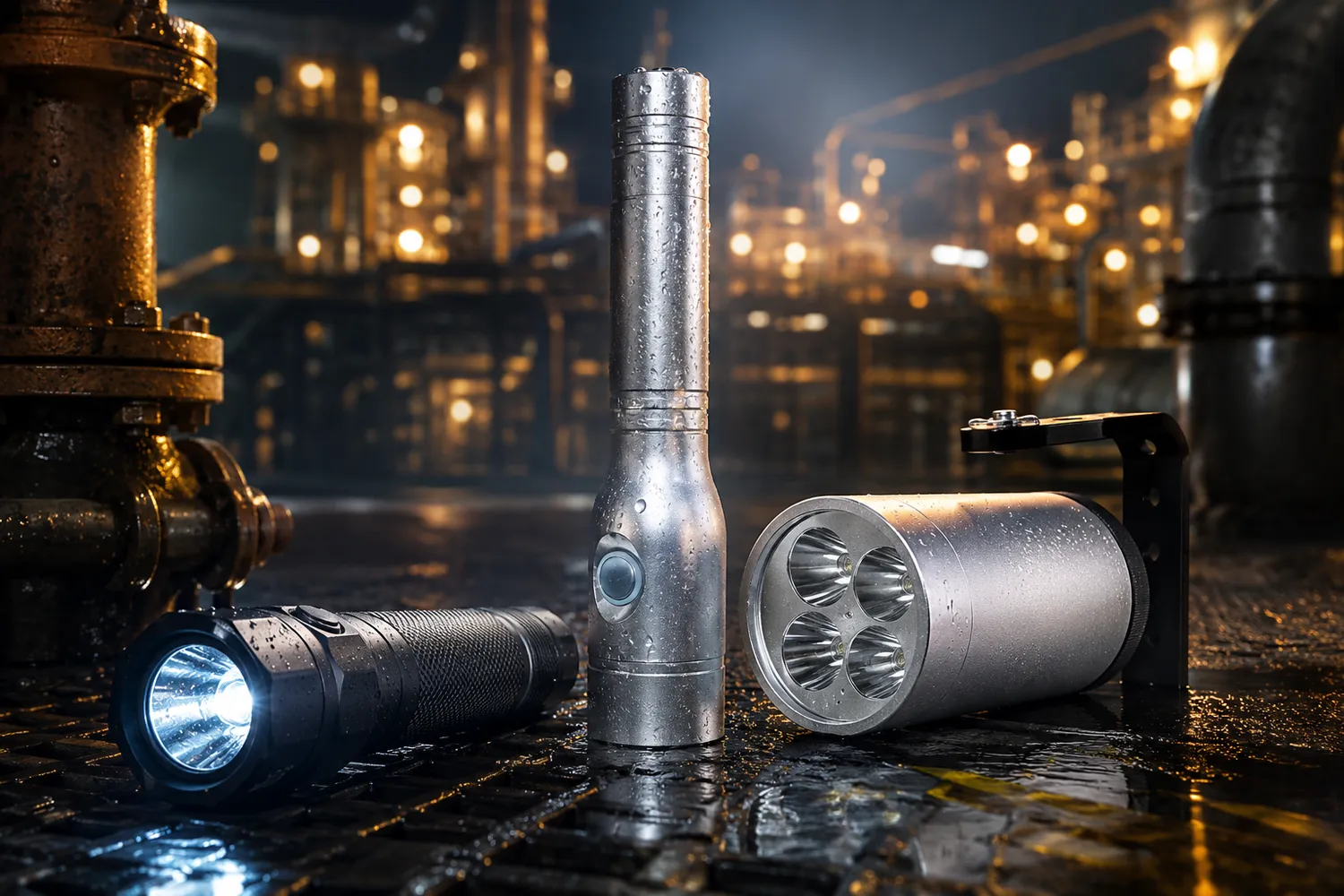
Why Combustible Dust Behaves Differently From Flammable Gas
Gas and dust hazards share the same underlying explosion mechanics — fuel, oxygen and an ignition source — but the practical differences matter enormously for equipment selection. Gas atmospheres disperse and mix readily, creating relatively predictable concentration zones. Dust clouds settle, accumulate on surfaces, and can be re-suspended by vibration, airflow or even routine cleaning activity, meaning risk isn't always confined to where you'd expect it. A layer of settled dust on a light fitting or torch housing isn't just a housekeeping issue; under the right disturbance conditions, it becomes the fuel source for a secondary explosion far more destructive than the initial event.
This is why equipment genuinely rated for dust environments carries separate certification from gas-rated equipment, under Equipment Group III rather than Group II.
Zone 20, Zone 21 and Zone 22 in Mills, Silos and Food Plants
Dust hazardous areas are classified using their own zone system, distinct from the gas zones (0, 1, 2) most safety officers know well:
- Zone 20 – combustible dust is present continuously or for long periods, typically inside processing vessels, mixers or the interior of silos themselves
- Zone 21 – a dust cloud is likely to occur occasionally during normal operation, common around filling points, conveyor transfer areas and bagging stations
- Zone 22 – dust cloud presence is unlikely, and brief if it occurs, often applying to general mill floor areas with good housekeeping standards
Mills and silos across UK agricultural processing regions frequently contain all three zones within a single building, which means a uniform lighting policy rarely fits the actual risk profile on the ground.
Dust Ingress Protection, Sealed Housings and Cleaning Requirements
Standard gas-rated flameproof housings don't automatically protect against dust ingress, since the sealing requirements differ. When selecting an explosion proof LED flashlight UK for dust environments, check specifically for dust-tight housing ratings — typically indicated by an IP6X rating — alongside the correct Group III certification. Food-processing sites carry an added layer of demand: housings need to withstand frequent washdown and sanitising chemicals without seal degradation, and surfaces should avoid seams or crevices where flour or grain dust can accumulate and resist cleaning.
Identifying Whether a Flashlight Is Certified for Gas, Dust or Both
This is where procurement teams most often go wrong. A torch marked simply "Ex" or "explosion proof" without checking the Group designation could be gas-rated only, dust-rated only, or genuinely dual-certified. Look specifically at the marking: Group II covers gas atmospheres, Group III covers dust, and some equipment carries both where testing supports it. An ATEX approved hazardous area flashlight UK used across a facility handling both fuel storage and grain processing — not uncommon at combined agricultural sites — needs dual certification, not an assumption that gas-rated equipment automatically covers dust risk too.
High-Visibility, Ergonomic Equipment for Hygiene-Controlled Areas
Food-processing environments add hygiene requirements on top of ignition safety. Equipment should be easy to identify visually against pale flour or grain dust backgrounds, reducing the chance of a unit being left behind during a shift changeover. Smooth, easy-clean housings support hygiene protocols without compromising the seal integrity your dust certification depends on, and glove-friendly controls matter just as much here as in any other industrial setting, given food-safety gloving requirements.
Procurement Considerations for Food and Agricultural Sites
Before finalising an order for a multi-zone food or agricultural facility, procurement teams should:
- Map lighting needs against the specific Zone 20/21/22 classification of each area, drawn from the site's DSEAR assessment
- Confirm Group III certification explicitly, rather than assuming general "Ex" marking covers dust risk
- Check IP rating for both dust ingress and washdown resistance where hygiene protocols apply
- Request documentation suitable for both HSE compliance files and food safety audit trails
- Standardise across sites where possible, working with explosion proof flashlight suppliers who can support consistent specification across a multi-site estate
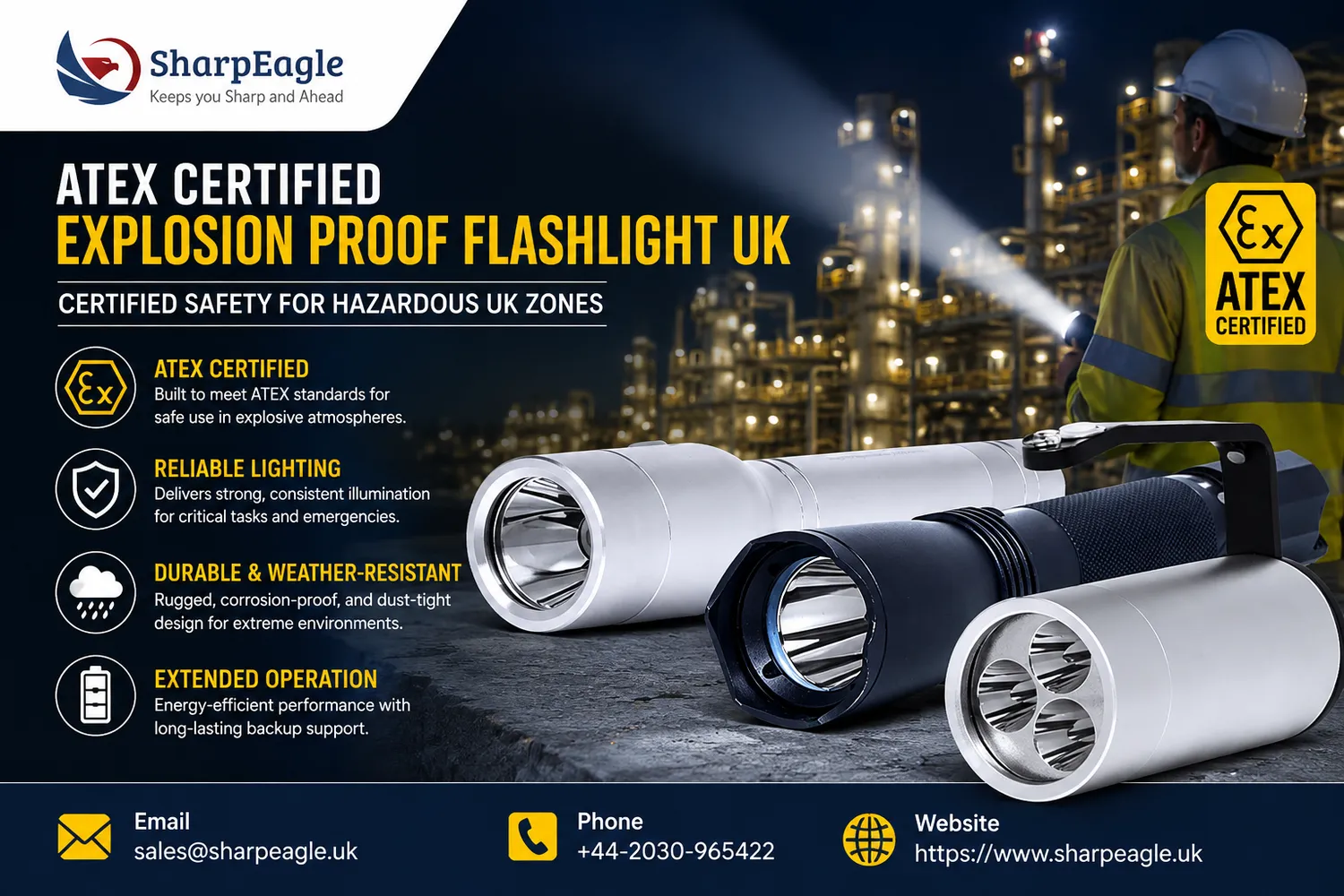
SharpEagle ATEX Certified Explosion Proof Flashlight UK
SharpEagle Technology's Explosion proof Handheld LED Torch UK is available with genuine Group III dust certification suited to mills, silos and food-processing environments, alongside dust-tight, easy-clean housings built to withstand frequent washdown without compromising seal integrity. The range offers strong beam visibility against pale dust backgrounds and glove-friendly controls suited to food-safety gloving requirements. Full certification documentation ships with every order, ready for your DSEAR and food safety compliance files. View the complete range on the SharpEagle Explosion Proof Flashlight product page.
Closing the Dust-Risk Gap
Combustible dust incidents remain under-recognised against their gas-explosion counterparts, despite comparable severity when conditions align. Getting lighting certification right — genuinely matched to dust rather than borrowed from gas-zone assumptions — closes one of the more overlooked gaps in UK food and agricultural processing safety. Speak to SharpEagle Technology to get your mill, silo or food plant properly equipped.