An ERP system can drive growth for modern businesses
An ERP system plays a vital role in accelerating growth for modern businesses by providing a centralized platform to streamline core processes. Additionally, organizations can automate repetitive tasks and gain actionable insights to make timely, well-informed decisions through advanced ERP solutions. Cloud-based ERP software also enhances scalability in a cost-effective way. However, to fully reap these benefits, businesses must implement ERP data migration effectively.
ERP data migration—often referred to simply as ERP migration—is the process of transferring corporate data from existing business systems into a new ERP platform. This critical step helps transform business operations and unlock the full potential of your business model. In this post, we’ll explore the challenges, best practices, and benefits of ERP migration. Let’s begin with the fundamentals.
Overview of Data Migration in ERP
The ERP data migration process starts with extracting data from various sources, such as legacy systems and databases. Next, this data undergoes cleaning, transformation, and validation to ensure it aligns with the new ERP environment. The final step involves migrating the data to the cloud, enabling secure and anytime-anywhere access for users. Successful ERP data migration requires technical expertise and strategic planning.
Once completed, ERP data migration offers numerous business advantages. Let’s explore the key benefits.
Key Reasons to Migrate Your Data in ERP System
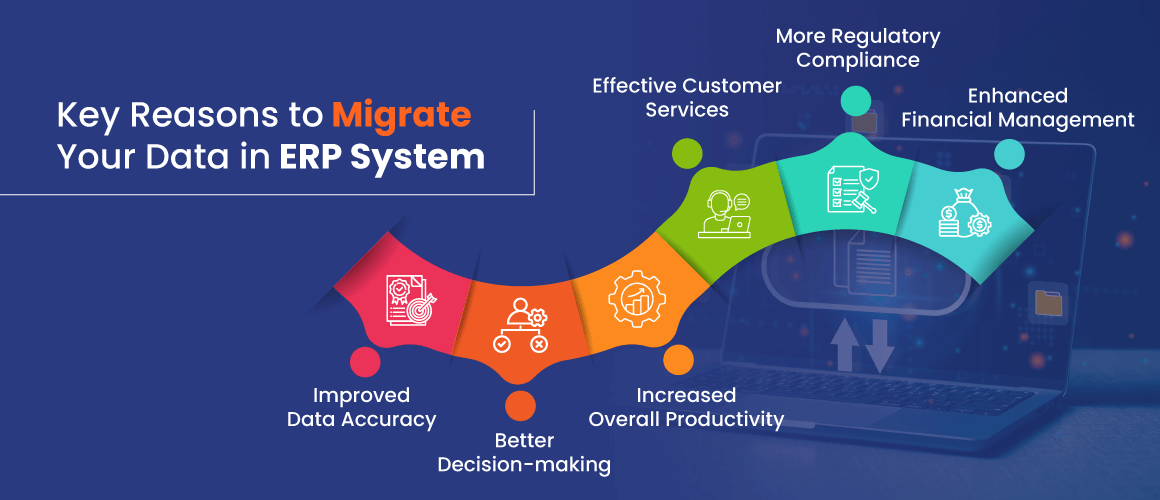
Migrating your company’s data to an ERP system can be a transformative step. Here are the major reasons to consider:
Improved Data Accuracy
Cloud-based ERP solutions ensure data consistency and improve accuracy. Acting as a central source of truth, ERP systems consolidate data from different departments to minimize discrepancies and deliver valuable insights.
Better Decision-making
With accurate, real-time data at their fingertips, management teams can make better strategic decisions. ERP systems enable timely access to reliable insights for all key stakeholders.
Increased Overall Productivity
Cloud ERP reduces manual effort and saves time, resulting in improved staff productivity. Automated workflows also allow employees to concentrate on high-value tasks.
Effective Customer Services
Real-time access to accurate customer data enables companies to offer more personalized and efficient service. ERP systems empower teams with the information they need to resolve customer queries effectively.
More Regulatory Compliance
ERP systems provide real-time, consistent data across departments, which is crucial for audits and maintaining regulatory compliance within the organization.
Enhanced Financial Management
With comprehensive financial reporting and analytics tools, ERP software helps improve financial planning and decision-making. Built-in capabilities also assist in monitoring expenses and forecasting revenue.
To implement this effectively, companies can rely on ERP migration service providers that utilize advanced tools. Let’s look at some of the leading tools in this space.
ERP Data Migration Tools and How They Help
Here are a few popular ERP data migration tools and how they support the process:
Informatica Power Center
A powerful data integration and ETL (Extract, Transform, Load) tool capable of managing complex migration tasks across systems.
SAP Data Services
Specifically designed for SAP environments, this tool handles intricate SAP data structures and is ideal for SAP ERP migrations, including transitions to HANA.
While these tools are useful, successful ERP migration also depends on following the right practices.
ERP Data Migration Best Practices
Migrating to a cloud ERP system is a critical task that requires careful planning. Following best practices ensures a smooth and effective transition:
Define Goals
Clearly outline the objectives behind the data migration initiative.
Choose Tools
Select migration tools that match the complexity and volume of your data.
Assess Data
Evaluate the quality of current data to identify inconsistencies or gaps.
Data Mapping
Create a detailed data mapping document to track data flow and field matching.
Data Cleansing
Clean and transform the data to ensure accuracy, relevance, and usability.
Data Validation
Conduct rigorous testing and validation to confirm readiness for migration.
Develop Plan
Prepare a migration strategy with defined steps, roles, and risk mitigation plans.
Pilot Migration
Start with a pilot run to identify and fix potential issues before full deployment.
Post-migration Support
Ensure continued support and monitoring after the migration is complete to address any emerging issues.
Despite careful planning, some challenges are commonly encountered during ERP data migration.
Common Challenges of ERP Data Migration
To ensure a successful ERP data migration, it’s important to address key challenges such as:
Data Quality Issues
Legacy systems often contain outdated or incomplete data. This can hinder smooth migration. Data cleansing and transformation are essential to overcome this.
Complex Data Structures
Migrating large volumes of data with complex structures can complicate the process. ERP service providers use advanced tools and best practices to manage this complexity.
Data Security and Compliance
Protecting sensitive data such as financial and customer information is critical. Compliance with data privacy regulations and industry standards must be ensured during migration.
By addressing these challenges and following best practices, companies can pave the way for a successful ERP data migration.
Building an Effective ERP Data Migration Strategy
A successful ERP migration starts with a well-defined strategy. This includes setting clear objectives, identifying the datasets to be migrated, and selecting the right ERP partner. Your implementation partner will help with data mapping, cleansing, transformation, and validation. A comprehensive migration plan should include milestones, timelines, and contingency steps. Don’t forget to arrange for ongoing support and maintenance after the migration is complete.
Concluding Lines
ERP data migration is essential for businesses looking to improve scalability, streamline operations, and enhance decision-making. When executed correctly, it brings significant benefits such as improved customer service, higher productivity, and better financial oversight. However, achieving these benefits requires a sound strategy and adherence to migration best practices.
SAP Silver Touch is your trusted ERP partner. Our experienced in-house teams can assist you at every stage of ERP data migration to ensure a seamless and successful transition. We also provide technical support and maintenance services to make your ERP solution future-ready. Contact us to learn more about our services.
Source - https://sap.silvertouch.com/blog/erp-data-migration