Legal Documents Do Not Wait for Convenient Circumstances
A hospital notary appointment is rarely planned. It happens when a patient is admitted unexpectedly and a family r ealizes that no one holds legal authority to make medical or financial decisions on their behalf. It happens when someone facing surgery wants to execute a power of attorney before going under. It happens at the intersection of health urgency and legal necessity — a place nobody anticipates being until they are already there, with a narrow window to act.
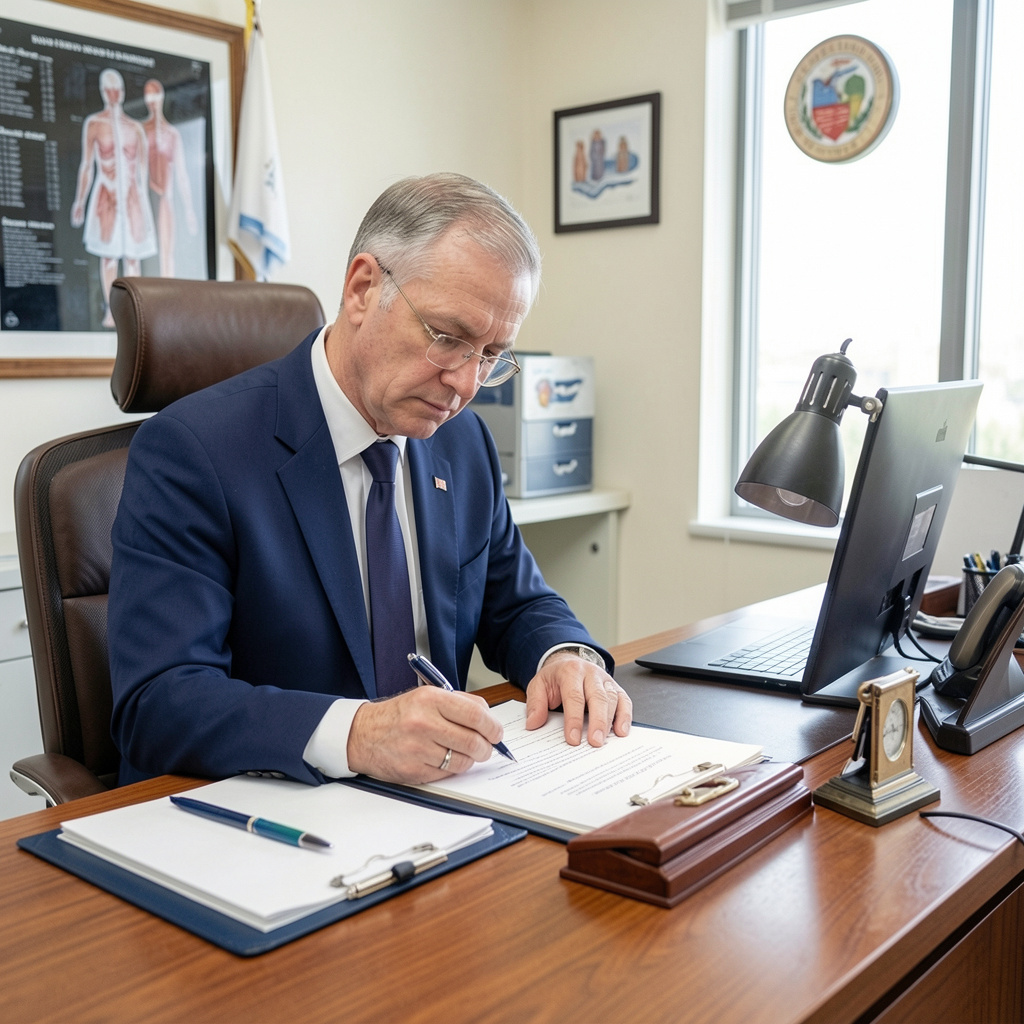
The Documents Most Commonly Needed in Hospital Settings
Healthcare directives, living wills, durable powers of attorney, and healthcare proxies are the documents most frequently executed in hospital settings. Each of these serves a specific legal function. A durable power of attorney designates an agent to manage financial and legal matters if the principal becomes incapacitated. A healthcare proxy specifically names someone to make medical decisions. An advance directive documents the patient's own wishes regarding treatment options under specific circumstances.
These documents carry significant legal weight precisely because they are used when the person who signed them cannot speak for themselves. If they are improperly executed — if the notarization was defective, if the wrong certificate type was used, if the patient's capacity to sign was not clearly present — they can be challenged by family members, healthcare providers, or courts at the moment they are most needed.
How Hospital Notary Appointments Work in Practice
A professional notary arriving at a hospital coordinates first with the nursing staff or a patient advocate to confirm the patient's room, their current status, and any restrictions on visitors. Some hospital units — ICU, post-surgical recovery, isolation wards — have specific access protocols that require coordination before a notary can enter. Attempting to walk directly to a patient room without this coordination causes disruption and sometimes ends the appointment before it begins.
Once with the patient, the notary's first obligation is to assess whether the patient appears to have the legal capacity to execute a document. This is not a medical determination — a notary is not qualified to diagnose cognitive impairment or assess decision-making capacity in a clinical sense. But a notary does have an obligation to decline to proceed if the patient is clearly confused, disoriented, or does not appear to understand what they are being asked to sign. Notarizing a document signed by someone who lacked capacity creates a document that will be vulnerable to challenge at the worst possible moment.
If the patient appears to have capacity, the notary verifies identity — which in a hospital setting may involve a hospital ID band in addition to a driver's license or other government-issued document — and then proceeds with the signing at whatever pace the patient requires. The notary brings all necessary supplies: the seal, the journal, and correct certificate forms for the document types being executed. There is no sending for an additional form or returning the next day because something was not brought.
Families Managing These Situations Need Clarity, Not Complications
One of the things that distinguishes a hospital notary appointment from a standard mobile notary call is the emotional context. Family members present during a signing may be frightened, grieving, or operating under significant stress. The notary's role is to complete the legal task efficiently, answer questions about the notarial process clearly, and not add confusion or pressure to an already difficult situation.
A notary who is slow to understand the documents, who asks unnecessary questions, or who seems uncertain about the correct procedure in front of a distressed family is not helping. Competence in this setting is not just a professional standard — it is genuinely important to the people in the room.
What Drives the Need for Jail Notary Appointments
Incarceration does not extinguish a person's ability to execute legal documents. The need for jail notary appointments arises regularly across different case types. A person held pretrial may need to execute a power of attorney so that a family member can manage their financial affairs while they are confined. A convicted individual may need to sign property-related documents — a deed transfer, a trust amendment, a business dissolution agreement — that cannot wait for release. A person serving a sentence may receive estate documents requiring their signature as a beneficiary.
The Logistics of Getting Into a Correctional Facility
Every correctional facility — county jails, state correctional facilities, federal institutions — has its own process for authorizing visits from non-family members. For a notary, this typically involves contacting the facility's visitation or inmate services office, confirming that notary visits are permitted, providing identification information for background verification, and scheduling the appointment through the facility's official process. Showing up without an appointment and expecting access almost never works.
Inside the facility, the notary works in a supervised setting. The physical environment may be a visitation room or a designated legal access area. Time may be limited. The inmate's ability to review documents privately may be constrained. All of this requires that the notary arrive fully prepared — with the right documents, the right certificate forms, and enough time built into the appointment to complete the signing under institutional constraints.
Preparation Makes the Difference in Both Settings
A jail notary who has navigated facility access protocols before knows how to coordinate the appointment correctly, arrive prepared for the institutional environment, and complete the signing efficiently within the time and access constraints that correctional facilities impose. Rai's Mobile Notary handles both hospital and jail notary assignments with the preparation and professionalism these settings require. Contact us directly when you have an urgent need in either environment.