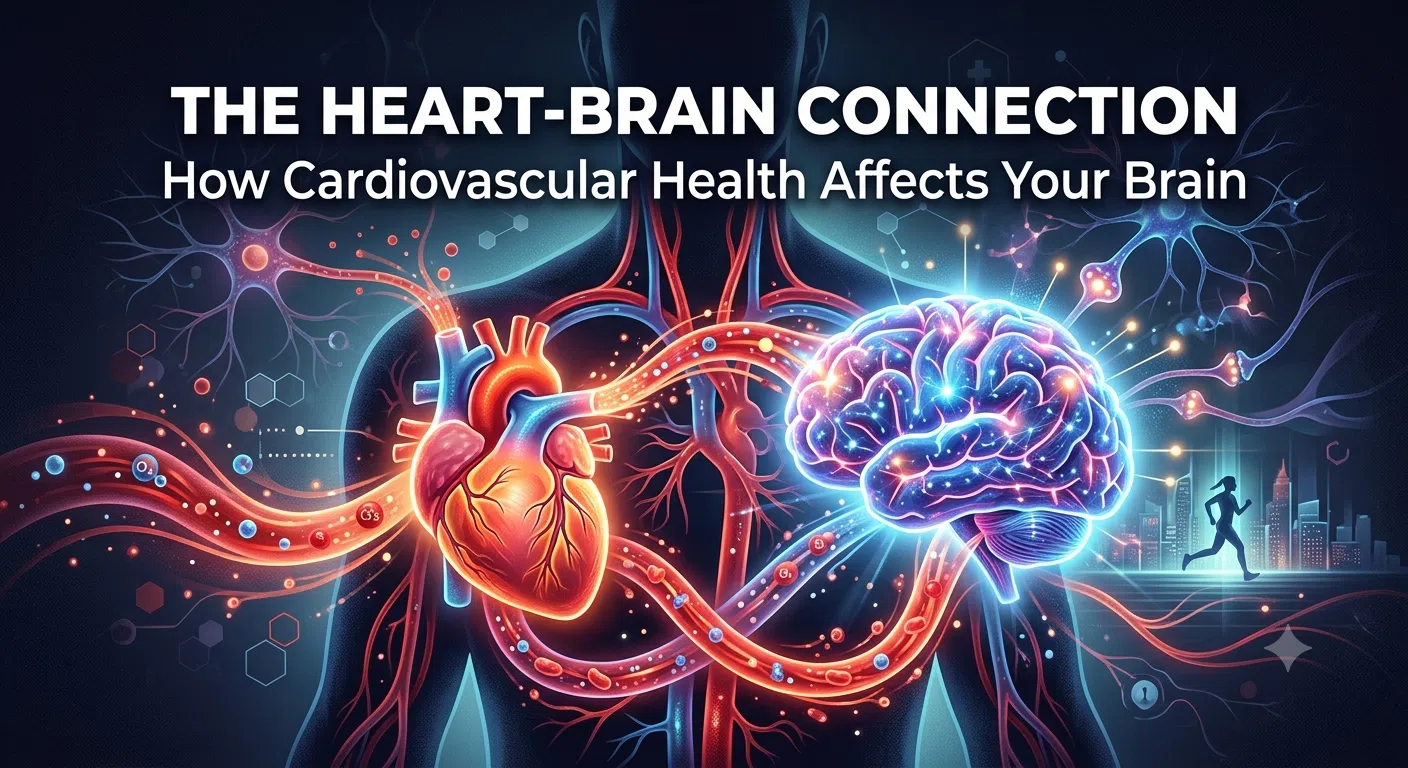
We tend to think of the heart and brain as two separate stories — one about blood pressure and cholesterol, the other about memory and mood. But your body doesn't see it that way. Every single thought, movement, and memory your brain produces depends on a steady, uninterrupted supply of blood from your heart. When that supply is compromised, even slightly, your brain feels it long before you notice any obvious symptoms.
It Starts with Blood Flow
Your brain makes up roughly 2% of your body weight, yet it uses about 20% of your blood supply. That's an enormous demand for a single organ. When your heart isn't pumping efficiently — because of arrhythmia, weakened heart muscle, or clogged arteries — your brain doesn't get the oxygen and nutrients it needs to function at its best. Over time, this shortage can affect memory, concentration, and even mood regulation.
High Blood Pressure Is Doing More Than You Think
Hypertension is often labeled a "heart problem," but it's just as much a brain problem. Constant high pressure damages the delicate blood vessels feeding the brain, increasing the risk of stroke and, over the years, contributing to cognitive decline. Many people don't realize that managing blood pressure well in your 40s and 50s can directly influence how sharp your memory stays in your 70s.
Atrial Fibrillation and the Stroke Risk Nobody Talks About
One of the clearest examples of the heart-brain link is atrial fibrillation, an irregular heart rhythm that allows blood to pool and form clots. If a clot travels to the brain, it can cause a stroke — often without warning. This is exactly why cardiac evaluation is now considered a standard part of stroke prevention, not an afterthought.
Why This Requires a Team, Not Just One Doctor
Because the heart and brain are so deeply connected, treating one without considering the other often isn't enough. If you're dealing with symptoms like irregular heartbeat, fainting spells, memory changes, or unexplained dizziness, it's worth consulting both sides of the equation. A neurology specialist in Gwalior can assess how your brain is responding, while a Heart Specialist in Gwalior can identify whether an underlying cardiac issue is driving the problem in the first place.
Choosing the Right Place for Coordinated Care
This kind of overlapping care works best when both specialists can actually communicate and collaborate — which is where the right facility matters. Look for the best hospital in Gwalior, one equipped with both cardiology and neurology departments under one roof, along with diagnostic tools that can catch these connections early rather than treating symptoms in isolation.
The Takeaway
Your heart and brain were never meant to be treated as separate systems. Protecting one is, in many ways, protecting the other. If something feels off — whether it's your heartbeat, your memory, or your energy levels — don't wait for a bigger red flag. A timely conversation with the right specialists can catch problems while they're still manageable, not after they've already left a mark.