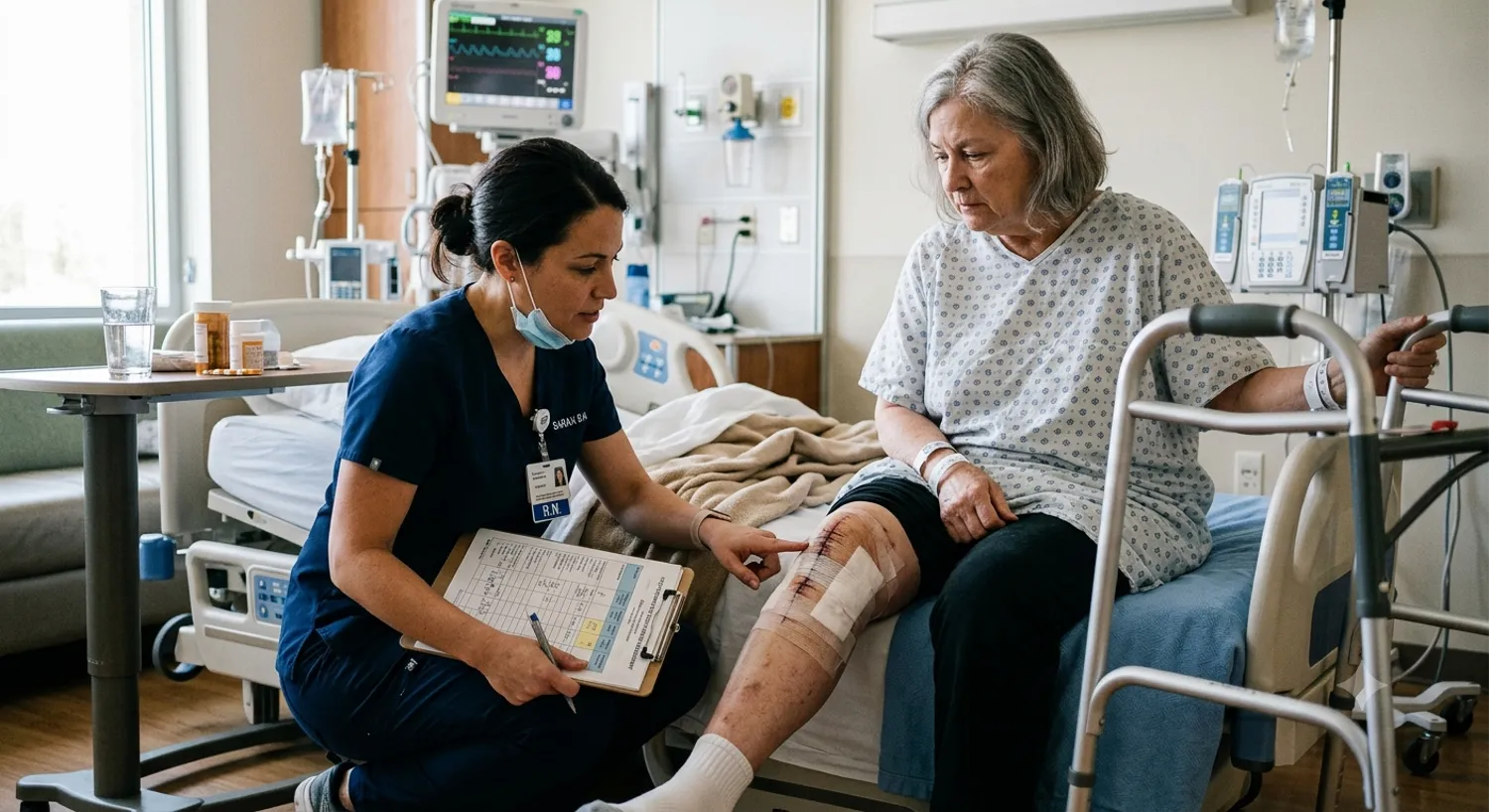
If you're weighing joint replacement in Gwalior, chances are you've already spent a few sleepless nights googling "what could go wrong." That's a fair instinct. Any surgery that involves cutting into bone and swapping out a joint for metal and plastic components deserves a hard look before you sign the consent form. So let's talk honestly about what can actually happen — not to scare you off the procedure, but so you walk into the operating room with your eyes open and your questions answered.
The Risks Nobody Skips Over: Infection and Blood Clots
Start with infection. It's the complication surgeons worry about most, and for good reason. Even with sterile operating rooms and prophylactic antibiotics, bacteria can find their way to the new joint, either during surgery or weeks later through a cut on your skin or a dental procedure. A surface infection might clear up with antibiotics. A deep one, though, sometimes means going back under the knife to clean out the joint or, in stubborn cases, removing the implant entirely and starting over months later. That's why surgeons are so insistent about wound care and why they'll often ask you to hold off on that root canal until you've healed.
Blood clots are the other big one. After hip or knee surgery, your circulation slows down, especially if you're not moving much in the first day or two. A clot in your leg (deep vein thrombosis) isn't just uncomfortable — if a piece breaks loose and travels to your lungs, it becomes a pulmonary embolism, which is a medical emergency. This is exactly why nurses will have you wiggling your ankles and taking short walks almost immediately after surgery, and why you'll likely go home with blood thinners for a few weeks.
Also Read: best Neurologist in Gwalior
Mechanical Problems: When the Joint Itself Misbehaves
Beyond infection and clotting, there's a whole category of issues specific to the hardware itself. Implants can loosen over time, particularly in younger, more active patients who put more wear on the joint across a longer lifespan. Dislocation is another concern, especially with hip replacements — the new ball-and-socket can pop out of place if you bend or twist in certain ways too soon after surgery, which is why physical therapists drill you on movements to avoid.
Then there's leg-length discrepancy. It sounds minor until you're the one limping slightly because one leg ended up a touch longer than the other. Surgeons work hard to avoid this, but the margins are tight, and occasionally patients notice a small difference that affects gait or comfort.
Nerve and blood vessel damage, while uncommon, can also occur during surgery simply because of how close these structures sit to the joint. Most nerve issues are temporary — numbness or tingling that fades over weeks — but in rare cases the effects linger longer.
The Less-Discussed Risks: Anesthesia and Recovery Setbacks
People often forget that anesthesia itself carries risk, particularly for patients with heart or lung conditions, or those who are older. Reactions can range from mild nausea to more serious cardiac or respiratory complications, which is why a thorough pre-surgical evaluation matters so much — it's not just paperwork, it's risk screening.
Stiffness is another quieter complication. Sometimes scar tissue builds up around the new joint and limits range of motion, a condition called arthrofibrosis. It can usually be managed with aggressive physical therapy, though occasionally a follow-up procedure is needed to break up the stiffness manually.
And then there's the emotional side that rarely makes it into brochures: recovery is slower and harder than most people expect. Weeks of limited mobility, dependence on family or caregivers, and the frustration of a body that isn't cooperating can take a toll on mental health. It's worth having that conversation with your surgeon or care team ahead of time rather than being blindsided by it.
Why Choosing the Right Surgical Team Matters
Here's the reassuring part: most of these risks are manageable, and many are preventable with the right precautions — experienced surgical teams, careful pre-op screening, and a patient who follows post-op instructions closely. The complication rates for joint replacement have dropped significantly over the past two decades as techniques, implants, and infection-control protocols have all improved.
That said, outcomes still depend heavily on who's holding the scalpel and what kind of facility is backing them up. A surgeon who performs these procedures regularly, works with a hospital that has strong infection-control practices, and takes the time to walk you through your specific risk factors — age, weight, activity level, existing health conditions — will generally get you a smoother result than one who treats it as routine.
Final Thoughts
No surgery is risk-free, and joint replacement is no exception. But knowing what could happen — and why — puts you in a much better position to ask smart questions, prepare properly, and recover well. If you're exploring joint replacement in Gwalior, take the time to sit down with your surgeon, ask about their complication rates, and make sure you understand exactly what your recovery plan will look like. That conversation alone can make all the difference between a good outcome and a great one.