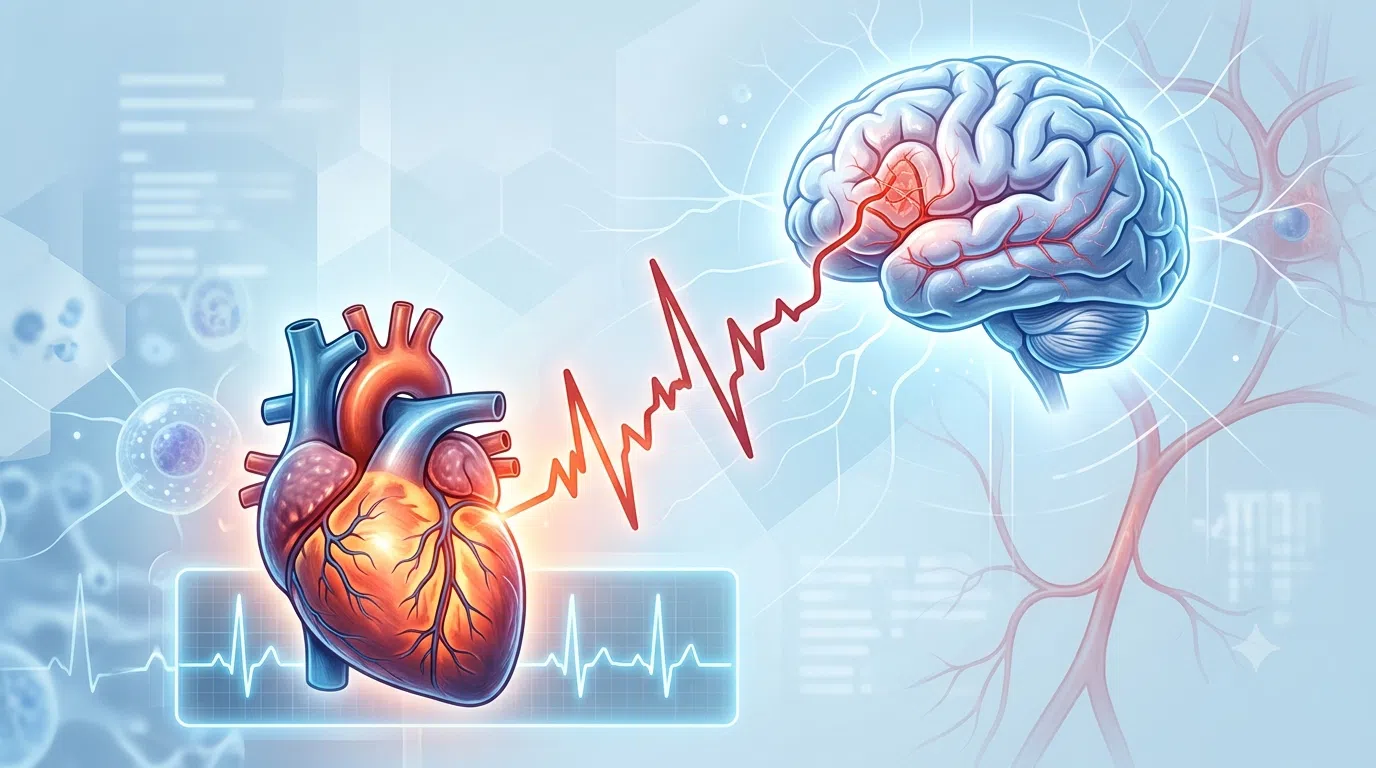
A fluttering chest after a strong cup of chai is one thing. A heartbeat that keeps losing its rhythm is another. Most people shrug off the odd skipped beat, and often that’s fair. But an irregular heartbeat, especially the kind doctors call atrial fibrillation, has a quieter side: it can raise the chance of a stroke. Here is how.
1. The top chambers stop pumping and start quivering
In a steady heart, the upper chambers squeeze neatly and push blood downward. In atrial fibrillation they tremble instead, like a phone buzzing on a table. The blood doesn’t leave as it should. It lingers.
2. Slow blood is sticky blood
Blood that sits still tends to clot. That is the heart of the problem, so to speak. A small pouch in the left upper chamber, called the left atrial appendage, is where many of these clots form.
3. A clot doesn’t stay where it was made
Once a clot breaks free, the bloodstream carries it along. If it travels up to an artery in the brain, it can block the supply and cause a stroke. This is why a cardiologist in Gwalior will often ask about pulse, palpitations and family history even when you walk in for something that seems unrelated.
4. You may not feel a thing
Here’s the awkward bit. Some people with an irregular rhythm feel nothing at all. No racing, no flutter, no warning. The first sign can be the stroke itself. That is why a quick pulse check or an ECG at a routine visit is worth more than it sounds.
5. It travels with other risk factors
Irregular heartbeat rarely shows up alone. High blood pressure, diabetes, a thyroid problem, sleep apnoea, heavy drinking and age all tend to turn up in the same household of risks. Each one adds to the stroke chance, and together they add up faster than people expect.
Some warning signs worth knowing:
Sudden weakness or numbness on one side of the body
Face drooping or a crooked smile
Slurred speech or trouble finding words
Sudden loss of vision or a severe headache with no clear cause
If any of these appear, don’t wait to see if they pass. Get to emergency care immediately.
6. Strokes linked to AF tend to hit harder
Studies have linked strokes from atrial fibrillation with more severe outcomes, because the clots can be large. A bigger clot blocks a bigger vessel. The difference between getting help in the first few hours and waiting overnight can be huge, so speed matters.
A neurologist in Gwalior will tell you much the same thing: time lost in a stroke is brain lost, and the early window for treatment is short.
7. Treatment gaps quietly undo the protection
Many people with an irregular rhythm are prescribed blood thinners, and they work well when taken as advised. The trouble begins when someone feels fine and stops the tablets, skips doses before a function, or doubles up to “make up”. Others never get a proper review as their health changes. The protection lasts only as long as the plan does.
Never start or stop a blood thinner by yourself. Changes should come from your doctor.
So what can you do?
Nothing dramatic, honestly. Learn to check your own pulse. Keep your blood pressure and sugar in range. Cut back on tobacco and alcohol, and sleep properly. If you’ve ever felt your heart race for no reason, mention it at your next visit rather than saving it for a rainy day.
For many families, the hardest part is knowing where to go first. At RJN Apollo Spectra Hospitals, heart and brain concerns are looked at together, so you don’t have to guess which door to knock on. A heart rhythm checks and a conversation about stroke risk can be sorted in one visit, and that’s a small price for peace of mind.
If you’ve been putting off a check-up, consider this your sign. Find a trusted hospital in Gwalior, book the appointment, and ask the questions that have been nagging you.
This article is for general awareness and doesn’t replace medical advice. Please consult a qualified doctor for any symptoms or concerns.