The motor is one of the main components of an industrial feed pellet mill. It provides the power needed to drive the machine during compression, and its specifications must match the equipment's operating requirements. Buyers often compare motors by rated kilowatts, but power is only one part of the selection. Voltage, frequency, starting method, electrical protection, and the available factory power supply also need to be considered.
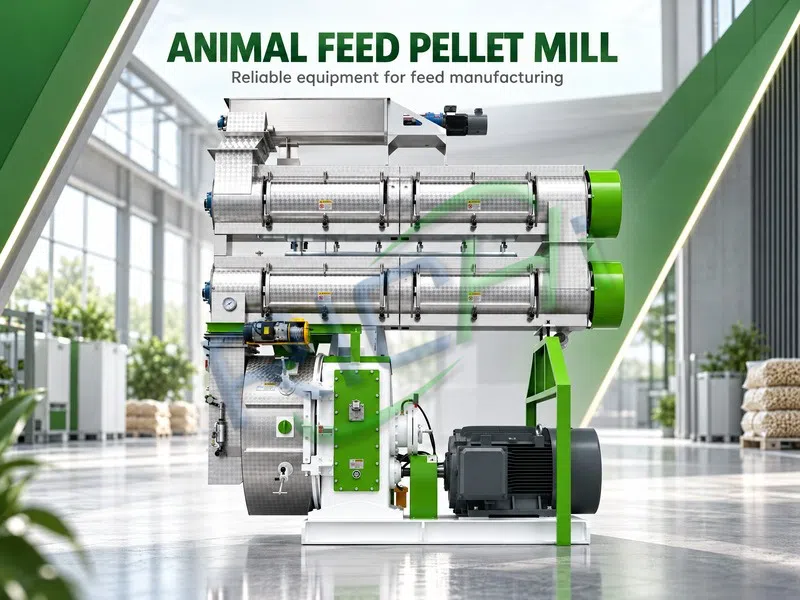
An animal feed pellet mill may operate under changing loads because the resistance during pelleting depends on the material, die specification, feeding rate, and process conditions. The motor needs to be suitable for the expected operating load and the mechanical structure of the machine. Its rated power should be considered together with the transmission system and the manufacturer's equipment design.
Motor power is commonly expressed in kilowatts. It indicates the motor's rated mechanical output under specified conditions, but it does not directly tell buyers how many tons of feed the machine will produce each hour. Actual output depends on the complete pelleting process. Two machines with similar motor power may have different production performance because of differences in die design, working structure, material feeding, and other technical factors.
An automatic chicken feed plant may contain several motors across the production line. Hammer mills, pellet mills, mixers, elevators, conveyors, fans, and packaging machines all require electrical power. The factory's electrical system should therefore be designed according to the total installed power and the expected operating sequence. The main supply should be checked before equipment is ordered.
Voltage and frequency are important because electrical standards vary between countries and regions. A machine designed for one supply condition may require a different motor or electrical configuration for another market. Buyers should provide the supplier with the local voltage, frequency, phase arrangement, and other relevant electrical information. This should be confirmed in the technical agreement rather than left until the equipment arrives.
The motor starting method also deserves attention. Large motors can draw a higher current during startup than during normal operation. Depending on the motor size and electrical system, the project may use a direct-on-line starter, soft starter, or variable-frequency drive where appropriate. The suitable method depends on the machine design, power supply conditions, and operating requirements. It should be selected by qualified electrical personnel.
Electrical protection helps protect the motor and related equipment against abnormal conditions. Depending on the design, protection may include overload protection, short-circuit protection, phase failure protection, and temperature monitoring. The specific arrangement should comply with applicable electrical standards and the manufacturer's recommendations. Operators should never bypass protective devices simply to keep the machine running.
Cooling and ventilation around the motor are also important. Motors need suitable airflow to dissipate heat during operation. If dust accumulates around cooling passages or the installation location restricts ventilation, operating temperature may increase. The workshop layout should provide enough space for inspection and cleaning. Maintenance personnel should also check the motor according to the recommended service schedule.
Motor efficiency can influence long-term electricity costs, particularly in factories that operate for many hours each day. Buyers can review the motor's efficiency rating and compare it with the expected operating schedule. However, energy efficiency should be evaluated alongside the suitability of the motor for the application. Selecting a motor that is not correctly matched to the machine can create operating problems even if its efficiency rating is attractive.
Investors should ask the supplier to clarify whether the quoted motor specifications refer to the main pellet mill only or include auxiliary equipment. A complete project may require several electrical cabinets and control devices, and the total installed power can be substantially different from the main machine's motor rating. This information is necessary when planning the factory's transformer capacity, cables, and distribution system.
Before purchasing a pellet mill for sale, buyers should confirm the motor model, rated power, voltage, frequency, starting method, and electrical protection arrangement.
A best site for technical comparison should provide clear specifications, but the final electrical configuration must be checked against the actual installation location.
The motor should be evaluated as part of the complete machine and factory electrical system. By confirming the supply conditions and protection requirements before purchase, investors can reduce installation difficulties and prepare the facility for reliable equipment operation.