Many feed factories manufacture more than one product. They may produce different formulas for poultry, pigs, cattle, sheep, or other animals, with variations in ingredients, particle sizes, and nutritional specifications. Changing from one product to another requires careful coordination. Without suitable procedures, changeovers can create delays, material waste, and the risk of unwanted ingredient carryover.
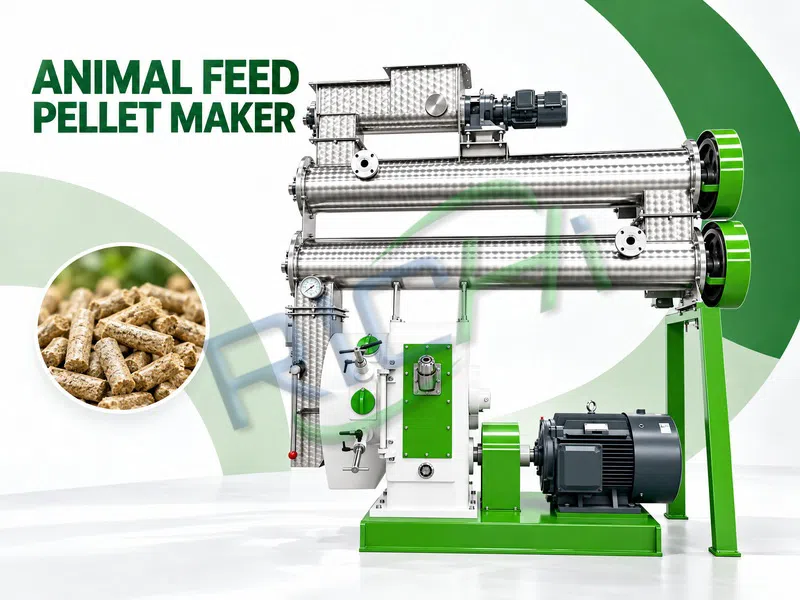
An animal feed pellet maker may be used for several formulas, but the machine needs to operate under conditions appropriate to each product. Differences in mash composition, moisture, and pellet dimensions can require adjustments to feeding and processing settings. The factory should identify which products can share the same equipment and which require additional cleaning or separate handling arrangements.
A changeover plan should begin with the production schedule. Managers can group compatible formulas where practical, reducing unnecessary transitions between products. The sequence should consider customer delivery dates, raw material availability, cleaning requirements, and the time needed to prepare the next formula. Scheduling decisions should never override product quality or separation requirements.
A chicken feed manufacturing plant may produce starter, grower, and finisher feed, as well as products for laying hens or breeding birds. These products may differ in ingredient proportions and physical specifications. The factory should maintain approved formula information and ensure that operators can identify the correct production order before starting each batch.
Raw material preparation is an important part of product changeover. The factory should verify that the correct ingredients are available and that weighing systems are configured for the intended formula. Ingredient bins and transfer routes should be clearly identified. This reduces the possibility of using the wrong material when several formulas are scheduled close together.
Cleaning requirements depend on the products and the factory's quality procedures. Some transitions may require removing residual material from mixers, conveyors, hoppers, or other equipment. The factory should define the areas that need inspection and the method used to confirm that cleaning is complete. Procedures should be practical enough for employees to follow consistently.
Batching and mixing records help maintain formula control. Before a new batch begins, operators should confirm the product identification and approved ingredient quantities. Any authorized formula revision should be reflected in the production documentation. The factory should avoid relying on informal verbal instructions when handling important formulation changes.
The pelleting section may also need adjustment. Different products may require different die specifications or operating settings, depending on the finished feed requirements. The factory should confirm whether the existing machine configuration can handle the next product or whether a component change is necessary. Such changes should be planned before the scheduled production time.
Finished product handling must remain clearly separated. Different formulas should have identifiable discharge routes, storage locations, and packaging labels. If products share conveyors or bins, the factory should establish procedures for confirming that the previous product has been cleared where required. Clear identification helps prevent confusion during packaging and dispatch.
Changeover time should be recorded. Managers can compare planned and actual transition times to identify repeated delays. If one changeover consistently takes longer, the factory can investigate whether the cause is cleaning access, material preparation, equipment adjustment, or operator coordination. The aim is to improve efficiency without reducing necessary quality controls.
Employee responsibilities should be clear. Production operators may handle machine adjustments, warehouse staff prepare ingredients, and quality personnel verify relevant checks. A designated supervisor can confirm that the previous production order is complete and that the next one is ready. This avoids uncertainty when several departments are involved.
Factories can use this link to review general feed manufacturing arrangements, but their changeover procedures should reflect their own formulas and quality requirements.
A well-organized pellet production line should make product identification, cleaning, and process adjustment manageable without unnecessary disruption.
Product changeovers are a normal part of multi-formula manufacturing. With suitable scheduling, clear records, defined cleaning procedures, and coordinated employee responsibilities, factories can reduce transition delays while maintaining control over the products they manufacture.