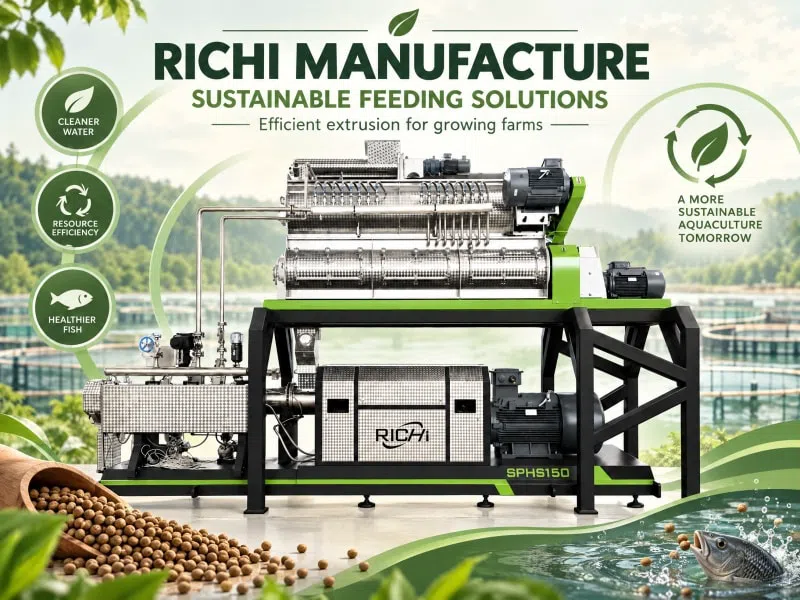
A commercial feed project is not complete when a commercial floating fish feed extruder machine has been selected. The factory must connect market demand with raw-material receiving, processing, utilities, packaging, warehousing, and distribution. Planning these elements together reduces the risk of building production capacity that the business cannot use efficiently.
Begin With the Commercial Objective
The project should define who will buy the feed, what products they require, and how much they are expected to purchase.
These answers establish the production target.
A complete floating fish feed production line can then be configured according to realistic annual demand, pellet specifications, and planned operating hours.
Starting with equipment before answering these commercial questions can result in inappropriate capacity.
Design the Process Around the Products
Raw materials need to move through suitable preparation before extrusion.
Depending on the project, this can include crushing, fine grinding, batching, mixing, and conditioning.
Extruded pellets then require drying, possible liquid application, cooling, screening, and packaging.
A general wikipedia reference may explain individual processing concepts, but actual equipment selection must reflect the feed products and target throughput.
Plan Raw-Material Storage
Commercial production requires enough ingredients to keep the factory operating between deliveries.
Storage capacity depends on purchasing schedules, supplier distance, production volume, and the number of ingredients used.
Bulk materials and smaller additives may require different handling arrangements.
Good storage planning reduces repeated manual movement and helps maintain orderly production.
Utilities Need to Support Full Operation
Electrical infrastructure should be sized for the complete plant rather than the extruder alone.
Wet extrusion may require steam, while drying requires an appropriate heat source.
Compressed air and water may also be needed depending on equipment configuration.
Utility limitations discovered after installation can prevent machinery from reaching its intended output.
Organize Material Flow Through the Building
The workshop should allow ingredients to move logically from receiving toward finished-product dispatch.
Crossing routes and unnecessary transfers add handling and can complicate operations.
Maintenance access should remain available around major equipment.
Raw-material vehicles and finished-feed trucks also need practical access outside the production building.
Consider Additional Feed Routes Carefully
Some commercial factories may install a pelletizer for conventional feed products alongside extrusion.
This can diversify the product range, but it changes equipment scheduling and may increase storage requirements.
Shared grinding, mixing, or packaging systems must have enough capacity to serve both routes.
Diversification should therefore be included in the original process plan where possible.
Staffing Should Match the Control Level
A highly automated plant may require fewer workers for repetitive handling but more technical capability in controls and maintenance.
A simpler factory may use more manual labor.
Neither arrangement is universally correct.
Local wages, available skills, production volume, and management preferences should guide the staffing model.
Warehousing Connects Production With Sales
Finished feed does not always leave the factory immediately.
The warehouse needs enough capacity for normal inventory and seasonal production patterns.
Dispatch organization should prevent older stock from being forgotten while new production continues to arrive.
Packaging and pallet handling should also fit the distribution method.
Leave a Practical Path for Growth
Commercial projects often develop after customers become familiar with the products.
Expansion can be easier when the original layout leaves space for additional extrusion, drying, storage, or packaging capacity.
This does not require installing oversized equipment from the beginning.
It requires engineering the first stage with future possibilities in mind.
Treat the Factory as One Commercial System
A complete feed plant connects suppliers, ingredients, machines, employees, warehouses, distributors, and customers.
Production equipment sits at the center of that system, but every surrounding element affects whether it operates profitably.
Planning the factory from this broader perspective helps investors avoid isolated equipment decisions.
The final objective is not simply to manufacture floating pellets. It is to produce the right feed in the required volume, store it correctly, and deliver it reliably to customers at a cost that supports a sustainable commercial business.