Small biomass producers often have a different financial objective from large industrial companies. Instead of maximizing output, they may want to process locally available miscanthus with a manageable investment.
For such businesses, understanding miscanthus pellet mill price is important because excessive equipment capacity can quickly increase the project budget.
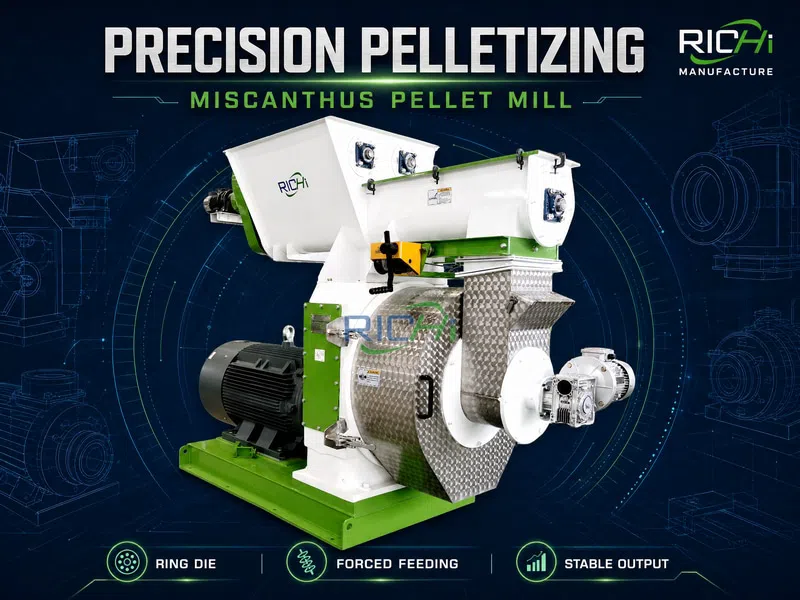
Start With the Available Biomass
The first step is calculating how much miscanthus is actually available.
If the material comes from a farm’s own fields, the producer can estimate annual harvest volumes. If it comes from local suppliers, transportation costs and seasonal availability should also be considered.
The machine should then be sized around realistic material availability.
Small Equipment Can Reduce Initial Complexity
A small grass pellet machine may require less power, less factory space, and fewer supporting systems than an industrial line.
This can make it suitable for farms, cooperatives, and small local fuel businesses.
However, smaller equipment still needs proper preparation. Crushing, drying, feeding, cooling, and storage requirements should not be ignored.
Calculate the Supporting Costs
A small pellet mill may appear inexpensive compared with a complete factory, but supporting equipment can still represent a significant portion of the budget.
If the miscanthus is wet, drying may be necessary.
If stalks are long, crushing equipment may be required.
If finished pellets are sold in bags, packaging equipment may be added.
The actual investment therefore depends on the material and business model.
Electricity Should Be Checked
Small rural facilities may have limited electrical capacity.
The combined power demand of the pellet mill, crusher, conveyors, cooler, and other machines should be compared with the available electricity supply.
If upgrades are required, those costs should be included in the project budget.
Storage Can Affect the Budget
Finished pellets need a dry place for storage.
Even a relatively small machine can produce several tons of pellets over a short period, so storage capacity should be planned before production begins.
Raw material storage is equally important, especially when the biomass is collected seasonally.
Avoid Buying Too Much Capacity
A machine that can produce far more than the local market requires may remain underutilized.
The better strategy is to match production capacity with actual sales potential and material availability.
This allows the business to preserve capital while learning how the local biomass market develops.
When reviewing online equipment information, a knockout post may help introduce the subject, but a technical quotation is needed before making a purchasing decision.
The availability of a pellet mill for sale does not necessarily mean that the machine is appropriate for a particular small-scale project.