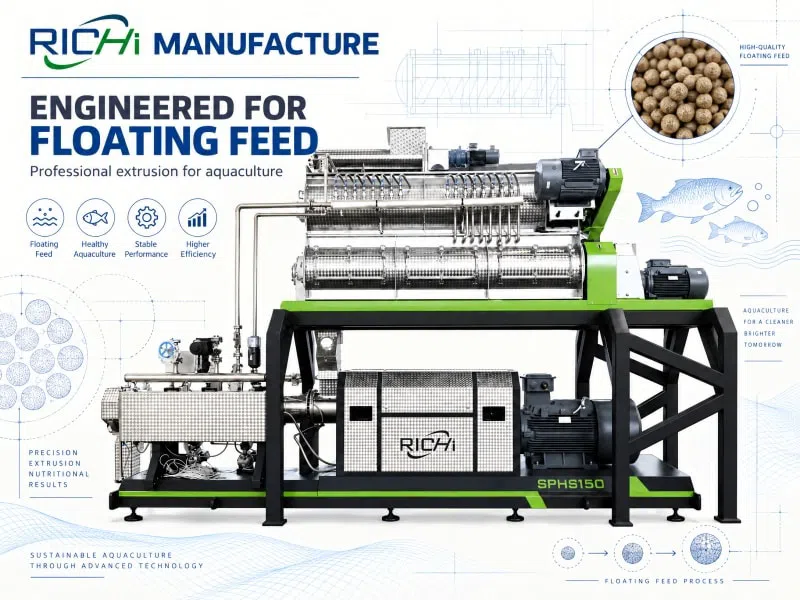
A new feed plant can be built with anything from relatively simple controls to extensive plant-wide automation. The presence of an automatic floating fish feed extruder machine does not mean every conveyor, bin, and packaging operation must be fully automated. The appropriate level depends on capacity, labor conditions, product variety, and how the factory will actually be managed.
Define the Operating Model First
A plant running a few hours per day with a limited product range has different control requirements from a factory operating several shifts and changing formulas regularly.
This distinction should be made before evaluating a floating fish feed production line for sale. Otherwise, buyers may pay for advanced functions they rarely use or select controls that become inadequate soon after production expands.
Staffing is another factor. Automation can reduce repetitive manual work, but skilled operators and maintenance personnel remain necessary.
Identify Repetitive Tasks
One practical way to choose automation is to examine every stage of production and identify tasks that occur repeatedly.
Ingredient weighing, feeding, material transfer, and bagging can become labor-intensive as production increases.
Automating these tasks may deliver more practical value than adding sophisticated controls to operations performed only occasionally.
Buyers can review typical equipment arrangements right here before deciding which sections deserve priority in the first investment stage.
Extrusion Deserves Focused Control
The extrusion process benefits from controlled feeding and accessible operating information because material conditions and machine load can influence pellet formation.
A touch-screen interface can centralize key machine functions and allow operators to adjust relevant parameters.
The value comes from improved process management, not from the screen itself.
Automatic Batching May Be a Separate Decision
Some new plants begin with manual ingredient weighing and upgrade later.
Others need automatic batching from the first day because they produce many formulas or operate at larger capacity.
The decision depends on batch frequency, required accuracy, labor, and investment.
Automatic batching also requires storage bins, weighing equipment, controls, and appropriate conveying, so it affects more than one machine.
Packaging Automation Depends Heavily on Output
Finished feed can accumulate quickly when extrusion and drying operate at commercial capacities.
Automatic weighing and bagging can prevent packaging from becoming a bottleneck.
At lower capacities, semi-automatic packing may provide sufficient throughput at a lower initial cost.
This makes packaging a good example of automation that should follow actual production volume.
Choose Controls That Can Be Maintained
A highly sophisticated system provides little value if local technicians cannot troubleshoot basic electrical problems.
Component availability, documentation, and remote support should be considered when choosing controls.
Richi manufacture provides individual extrusion equipment and complete aquatic feed production configurations, allowing automation to be considered according to the requirements of the overall project rather than as a fixed feature package.
Consider Future Upgrades
A plant does not necessarily need to install its final automation level on the first day.
Control cabinets, workshop layouts, and electrical infrastructure can sometimes be designed to accommodate later additions.
This allows businesses to begin with practical functions and introduce more automation as output and product complexity increase.
Do Not Confuse Automation With Production Capacity
Automation can help equipment operate more consistently, but it does not increase the physical capacity of an undersized dryer or crusher.
Mechanical process design still determines whether the plant can achieve its target output.
Controls should therefore be selected after major equipment capacities have been properly matched.
Build Automation Around Real Work
A useful automation plan connects each investment to a production requirement.
Controlled feeding supports extrusion stability. Automatic batching supports repeated formulas. Conveying reduces material handling. Automated packaging supports higher output.
When buyers evaluate automation function by function, the final control system becomes easier to justify financially and easier for operators to understand.
A new floating feed line does not need the highest possible level of automation. It needs the right level for its operating scale, with a sensible path for expansion as the business grows.