Dust management is an important part of bentonite cat litter manufacturing. Dust may be generated during raw material unloading, crushing, screening, conveying, mixing, and packaging. Without suitable collection and handling arrangements, it can affect the working environment and increase material loss.
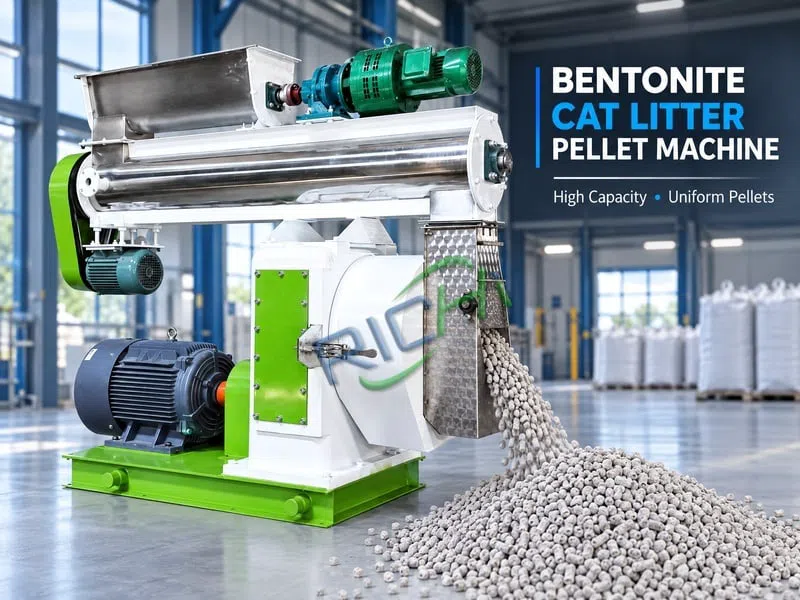
A bentonite cat litter pellet machine is only one part of the complete process. Manufacturers should consider dust control throughout the workshop when planning a production line.
Identify Dust Generation Points
The first step is to identify where dust is generated. Raw bentonite may contain fine particles before it enters the production process.
Crushing and screening can produce additional dust, especially when large quantities of material are processed. Transfer points between conveyors and storage bins may also release airborne particles.
Packaging is another area that requires attention because finished products are handled in large quantities.
Improve Raw Material Receiving
Raw material unloading should be planned to reduce unnecessary material disturbance. Storage areas should be arranged to support efficient transfer into the preparation section.
Suitable enclosed equipment and dust collection arrangements may be required, depending on the material and workshop layout.
Incoming materials should also be checked for moisture and particle size. Excessively dry or inconsistent materials may influence dust generation during handling.
Consider Dust Collection Around Crushing and Screening
Crushing and screening equipment are common dust generation points. Local extraction and suitable dust collection systems can help control airborne particles.
The collection system should be designed according to the equipment capacity, material characteristics, and number of dust generation points.
Regular inspection is necessary to maintain effective operation. Filters, ducts, and collection components should be checked according to the equipment manufacturer's recommendations.
Reduce Dust During Material Transfer
Conveyors and elevators connect different processing stages. Poorly designed transfer points may create unnecessary material drops and dust.
The layout should minimize excessive transfer distances and provide suitable enclosed connections where appropriate. Storage bins should also be designed to support stable material discharge.
These arrangements can help reduce material loss and improve workshop cleanliness.
Manage Dust in the Forming Section
The forming section should receive prepared bentonite through a stable feeding system. Unnecessary material accumulation and irregular discharge can make cleaning more difficult.
A wood cat litter production line may also require dust collection, but its material characteristics and equipment arrangement differ from those of bentonite processing.
Manufacturers should design dust control according to the actual raw material rather than copying a standard arrangement from another cat litter project.
Control Dust During Screening and Packaging
Screening separates particles according to size and removes excessive fines. The screening equipment should be enclosed or connected to suitable dust collection arrangements where required.
Packaging equipment should be selected according to the finished-product output and bag format. Material transfer into bags should be designed to minimize unnecessary dust release.
Operators should also follow suitable cleaning procedures and avoid practices that spread accumulated dust through the workshop.
Establish Regular Inspection Procedures
Dust collection systems require routine inspection and maintenance. Operators should check for blocked ducts, damaged connections, and filter conditions.
Cleaning schedules should be established for the production area. Workplace safety procedures and applicable environmental requirements should be followed.
Businesses can look here to review cat litter processing machinery and related equipment.
Richi Pellet Mill provides pellet processing equipment and production-line solutions for different applications. For bentonite cat litter projects, integrating dust collection into the initial workshop design helps create a more manageable production environment and supports efficient material handling.