Cracked or fragmented pellets can create difficulties during screening, packaging, storage, and transport. Excessive breakage may increase fines, reduce the quantity of acceptable finished product, and make the material less convenient to handle. However, cracks do not always originate in the pelletizing machine itself. The cause may be related to feedstock preparation, moisture, forming conditions, cooling, or downstream handling.
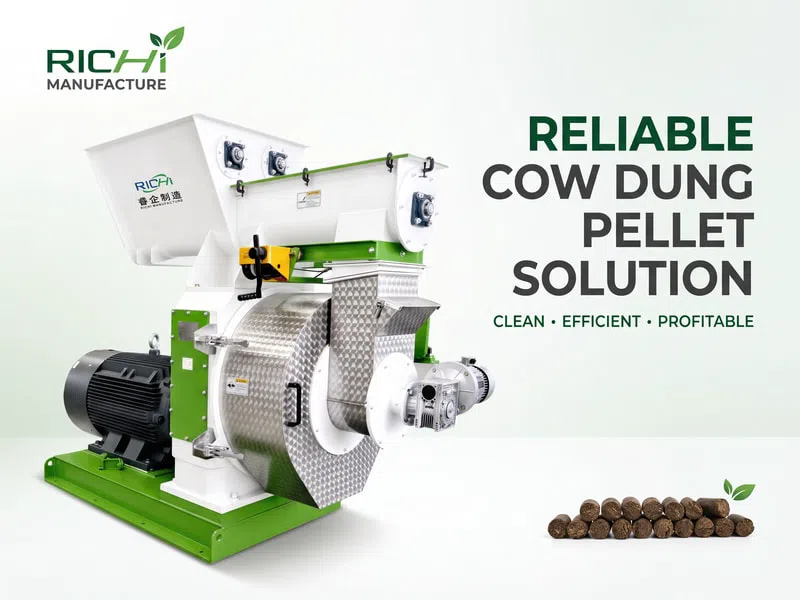
A cow dung pellet press should therefore be assessed as part of the entire production process when pellet quality changes. Rather than immediately adjusting the machine, operators should identify where the defect first appears and compare the affected batch with the normal production condition.
Determine When the Cracks Develop
The first diagnostic step is to establish the stage at which cracking occurs. Pellets may appear intact at the machine outlet but develop cracks during cooling, screening, conveying, packaging, or transport. The location and timing of the damage can provide important clues about its cause.
Operators should collect samples at suitable points along the process and record their appearance. The same sampling method should be used when comparing different stages or batches. This helps distinguish a forming problem from damage introduced after the pellets leave the machine.
A visual inspection alone may not identify every issue, but it can reveal patterns. For example, if the pellets are intact immediately after forming and become fragmented after a transfer point, the team should examine that transfer operation before changing the pelletizer settings.
Review Feedstock Preparation
Check Moisture Consistency
Moisture can influence the behavior of prepared manure during compression and after forming. If the feedstock varies significantly between batches, pellet quality may become inconsistent even when the equipment settings remain unchanged.
The correct moisture condition depends on the formulation and machine design. Operators should measure moisture using the site's approved method and compare the result with the operating range established for the material. Adding water or extending drying time without measuring the actual condition can create new problems.
If moisture varies across a batch, the team should investigate mixing effectiveness, storage conditions, and the consistency of upstream drying. A representative sample is more useful than a reading taken from one isolated area of a nonuniform mixture.
Examine Particle Size and Formulation
Oversized pieces or unevenly prepared material can affect the consistency of the feed entering the press. Excessively fibrous material may also behave differently from a more uniform formulation. The appropriate particle size depends on the feedstock and equipment, so operators should follow the approved preparation specification rather than automatically grind everything more finely.
Changes in formulation can influence pellet formation. If the proportion of manure, straw, rice husk, or another ingredient changes, the existing operating conditions may no longer produce the same result. Production records should show whether the affected batch differs from the normal recipe.
Inspect the Forming Equipment
Once feedstock preparation has been reviewed, the team can examine the machine and its relevant components. Wear, damage, material buildup, or unsuitable operating conditions may affect how the feed is compressed and discharged. Any inspection involving access to hazardous moving parts must follow the site's shutdown and isolation procedure.
Operators should record unusual noise, vibration, motor-load changes, or feeding interruptions. These observations can help maintenance personnel determine whether the machine is operating outside its normal condition.
The goal is to avoid unnecessary adjustments. Changing several machine settings simultaneously can make it difficult to identify the cause of a defect. Controlled changes, documented with their results, provide a more reliable troubleshooting method.
Assess Cooling and Downstream Handling
Pellets may still be vulnerable to damage after forming. If cooling or subsequent handling is not appropriate for the product, the material may develop cracks or break during transfer. The required cooling and handling conditions depend on the equipment configuration and the characteristics of the finished pellets.
The team should check whether conveyors, chutes, screens, and packaging equipment create unnecessary drops or repeated impacts. Material accumulation may also cause pellets to rub or press against one another in ways that increase damage.
If the cracks appear only after a particular stage, the team should investigate that stage first. Reducing unnecessary transfer points and adjusting the handling arrangement may improve the amount of acceptable product without changing the formulation or the pelletizer.
Establish a Consistent Quality Check
A troubleshooting procedure should define how pellet damage is evaluated. Relevant measurements may include the quantity of fines, the proportion of visibly damaged pellets, and other agreed physical characteristics. The sampling method and acceptance criteria should be consistent across production runs.
The team should also record the feedstock condition, formulation, machine identification, operating period, and any changes made during the trial. These details make it easier to compare a defective batch with a satisfactory one.
When comparing the organic fertilizer pellet machine price of different equipment options, buyers should consider whether suppliers can explain the conditions required to achieve the intended product specification. A purchase price alone does not establish that a machine will produce the desired pellet quality under every operating condition.
Use Troubleshooting Records to Prevent Recurrence
Each investigation should end with a documented finding, even if the exact cause remains uncertain. The record should state what was observed, which checks were completed, what changes were tested, and whether the result improved.
Staff should be able to read the current troubleshooting procedure and identify when a problem requires technical assistance. Procedures should distinguish routine checks from work that must be completed by qualified maintenance personnel.
Recurring defects may indicate that the operating specification needs to be reviewed. If a formulation repeatedly produces cracked pellets, the plant may need further material trials or technical guidance rather than repeated adjustments during routine production.
Evaluate the Complete Process Before Replacing Equipment
A pellet making machine should be evaluated in relation to the whole system, including material preparation, forming, cooling, screening, and packaging. Replacing the machine without investigating upstream or downstream causes may leave the underlying problem unresolved.
A structured diagnosis helps the team identify the stage where the defect begins and test appropriate corrective actions. This approach can reduce unnecessary downtime, improve process understanding, and support more consistent handling of finished cow dung pellets.