A shrimp feed pellet production line transforms prepared ingredients into finished aquatic feed through several connected stages. Each machine performs a different function, and the production line must maintain a continuous flow of material between them.
Preparing the Ingredients
Raw materials are first received and stored. Ingredients selected for a particular feed formula may include grains, protein sources, minerals, vitamins, oils, and additives. Depending on their physical characteristics, some materials require cleaning or grinding before entering the mixing section. Fine particle preparation can be especially useful for shrimp feed because the finished pellets may have relatively small diameters. After grinding, the ingredients are weighed and mixed according to the formula. The purpose is to create a uniform mixture before conditioning.
Conditioning and Pelleting
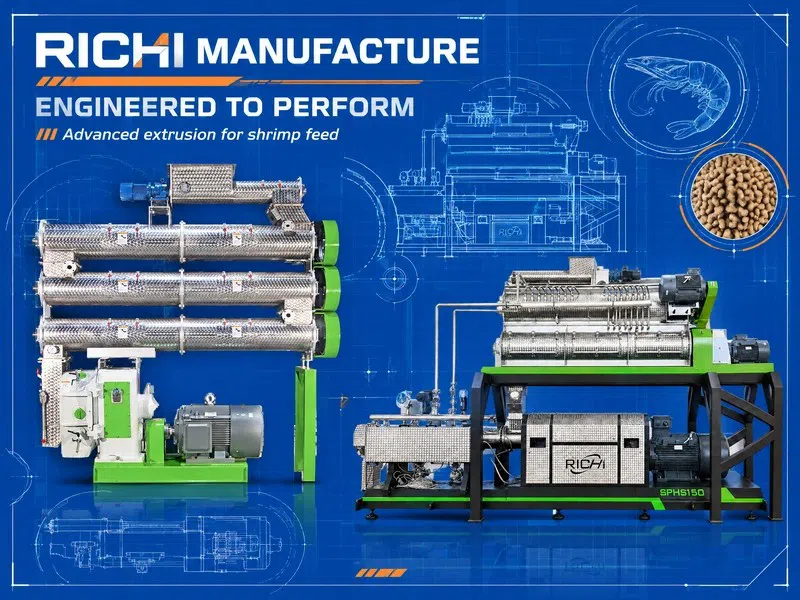
The mixed material enters the conditioner before pelleting. Steam and moisture are introduced to prepare the material for compression. The conditioning system can have a significant influence on how the material behaves when it reaches the die. After conditioning, the material enters the pellet mill through the feeder. Rollers compress the feed against the ring die, forcing it through the die holes. The extruded material is then cut into pellets. view the process as a connected sequence because pellet formation depends on the conditions created by the grinding, mixing, and conditioning stages before it.
Cooling and Screening
Newly formed pellets have higher temperature and moisture than the finished product should normally have. Cooling equipment reduces the temperature and stabilizes the pellets. The cooled material then enters the screening section. Fines and oversized particles are separated from the acceptable pellets. Depending on the production design, some separated material can return to the processing system. The capacity of the cooler and screen should correspond with the pellet mill so that downstream equipment does not restrict the line.
Storage and Packaging
After screening, finished shrimp feed can be transferred to storage bins or packaging equipment. Conveyors and elevators provide the necessary connections between the different processing stages. A complete fish feed mill plant therefore includes more than the pellet mill itself. The complete process also requires material handling, grinding, mixing, conditioning, cooling, screening, and packaging equipment.
The pellet press is the forming center of the system, but the finished product depends on the performance of the entire line. A well-designed production system keeps material moving efficiently from raw ingredients to finished feed while providing operators with practical access for maintenance and control.