Consistency Is Essential for Repeat Business
A customer purchasing cat litter expects the next bag to perform much like the previous one. Major differences in pellet dimensions, dust, moisture, or handling behavior can undermine confidence even when the product remains broadly similar in appearance.
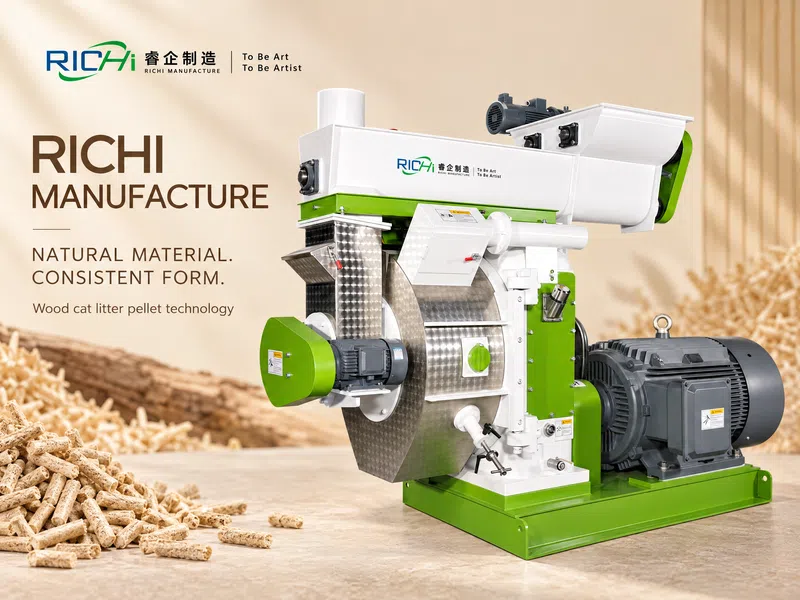
For manufacturers, quality consistency requires a defined production process and a reliable method of checking results. A pine cat litter pellet machine is an important part of that process, but product quality is influenced by every stage from raw material receiving to finished-goods storage.
A quality control system should therefore establish what to inspect, when to take samples, how to record results, and what actions to take when a batch falls outside the required specification.
Control Quality at the Receiving Stage
Establish Raw Material Acceptance Criteria
Pine feedstock may vary in species, particle size, moisture, and cleanliness. A manufacturer should define which materials are acceptable and document the conditions that require further inspection or rejection.
Receiving checks can include visual inspection, moisture measurement, supplier identification, and verification that the material is consistent with the agreed specification. Where appropriate, the factory should maintain records of the source and delivery date.
These checks are especially important when several suppliers contribute to the same production operation. Differences in incoming material can otherwise be mistaken for equipment problems later in the process.
Keep Unsuitable Material Out of Production
Foreign objects, contaminated wood, and unsuitable timber residues can create product quality and equipment risks. Storage and handling procedures should keep accepted material separate from rejected or unverified loads.
A clear receiving process helps prevent problems before they reach the crusher or pellet mill. It also provides a record that can be used if an issue appears in a finished batch.
Monitor Preparation and Pelletizing
A kitty litter production line may include crushing, drying, mixing, pelletizing, cooling, screening, and conveying. Each stage can influence the quality of the final product, so the factory should identify the critical operating conditions for its chosen formulation.
Moisture measurements can help determine whether material is suitable for pelletizing. Particle-size checks can reveal changes in the crushing process, while monitoring feed rate and machine load can help identify irregular operation.
The factory should establish acceptable operating ranges through trials and technical evaluation. Settings suitable for one pine feedstock may not produce identical results with another material source.
Inspect Pellet Dimensions and Appearance
Pellet length and diameter should be checked against the product specification. Excessive variation may indicate problems with feeding, die condition, cutting arrangements, or upstream material preparation.
Visual inspection can identify obvious defects, but appearance alone is insufficient. The factory should also measure relevant performance characteristics using consistent sampling and testing procedures.
Evaluate Cooling, Screening, and Handling
Freshly formed pellets may retain heat and moisture. Cooling prepares them for subsequent handling, while screening separates acceptable granules from excessive fines and oversized material.
Quality checks should be performed after cooling as well as immediately after pelletizing. This helps determine whether changes in the finishing stage influence the final product.
The factory should also inspect the material after conveying and packaging. A batch that meets specification at the machine outlet may develop excessive fines during transfer if the handling system causes unnecessary impact or abrasion.
Where reprocessing is used, the plant should define how recovered material is collected and returned. Reuse should remain subject to cleanliness and product quality requirements.
Build a Practical Testing Program
Sample Consistently
Sampling methods should represent the batch rather than relying on a single convenient handful of pellets. The factory should define when samples are collected, how they are labeled, and how long retained samples are stored.
Relevant tests may include moisture, dimensions, fines, durability, absorption, and other product performance characteristics. The specific program should reflect the manufacturer's claims and the requirements of its customers.
Records should link each test result to the raw material batch, production date, equipment settings, and packaging lot. This makes it easier to identify patterns when quality changes.
Respond to Problems Systematically
When a batch fails a quality check, the factory should investigate the likely source before making major adjustments. For example, excessive fines could originate from weak pellet formation, unsuitable cooling, rough conveying, or damage during packaging.
Changing several settings at once makes it difficult to determine which action solved the problem. A controlled investigation should compare the evidence, adjust appropriate variables, and verify the result with another sample.
Use Quality Data to Improve Operations
Over time, production records can reveal recurring relationships between feedstock characteristics and finished-product performance. These findings help the factory refine purchasing requirements, reduce avoidable waste, and plan maintenance more effectively.
Manufacturers can visite site to review the available machinery information and identify equipment categories relevant to their production process. Technical discussions should focus on the intended product, the feedstock, and the quality checks required at each stage.
A suitable pellet maker machine must be evaluated alongside the supporting equipment and quality control procedures. Reliable output depends on the complete manufacturing process, not simply the machine's rated capacity.
Conclusion
A consistent quality control system links raw material inspection, process monitoring, finished-product testing, and corrective action. By maintaining traceable records and checking pellets at multiple stages, pine cat litter manufacturers can identify problems earlier and improve the reliability of the products they deliver.