The livestock industry continues to embrace efficient feed processing solutions, and the animal feed pellet mill has become essential equipment for converting grains, protein meals, and forage into nutritious, dense pellets for cattle and sheep. Modern feed operations rely on these machines to process materials like corn, soybean meal, alfalfa, and straw into high-quality pellets that improve feed conversion ratios and reduce waste . The animal feed mill plant for cattle and sheep stands at the heart of this process, transforming raw ingredients into valuable livestock feed through integrated, efficient systems.
Understanding Animal Feed Pellet Mill Technology
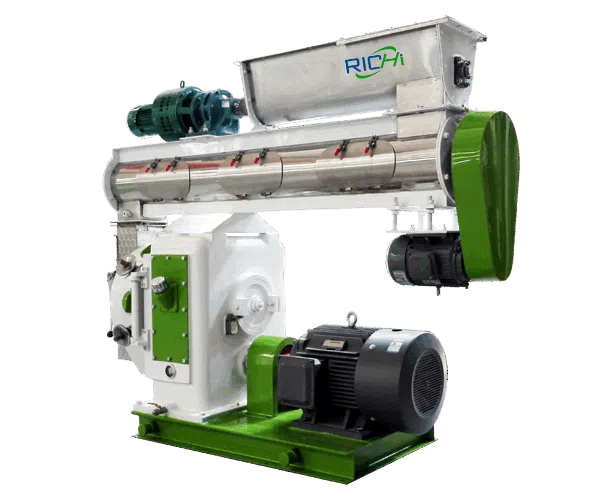
An animal feed pellet mill is a specialized ring die pelletizer designed to produce uniform, durable pellets for cattle, sheep, pigs, and other livestock . Unlike poultry feed machines that focus on small-diameter pellets, livestock feed pellet mills typically produce larger pellets ranging from 4 to 12 millimeters, with 6-8mm being the most common size for cattle and sheep feed . The pellet line operates by forcing prepared feed materials through a rotating ring die under high pressure, creating dense pellets that resist breakage during handling and transport .
The main transmission system employs gear-driven technology, achieving approximately 15% higher output than belt-driven systems. High-precision gear grinding ensures stable, low-noise operation . The feeder, conditioner, and door cover are constructed from stainless steel to prevent contamination and extend service life . For feed formulations containing high-fiber materials like alfalfa and straw, specialized conditioning systems adjust moisture and temperature to enhance pellet formation and digestibility .
For more detailed information on animal feed pellet mill options, you can read more comprehensive resources from Richi Machinery.
Animal Feed Mill Plant for Cattle and Sheep Models and Specifications
When evaluating an animal feed mill plant for cattle and sheep, capacity and configuration are key considerations. RICHI Machinery offers the SZLH series ring die pellet mills specifically for livestock feed processing, with capacities ranging from 1 to 40+ tons per hour . The SZLH250 model produces 1-2 tons per hour with a 22 kW motor, suitable for small farms and start-up operations. The SZLH320 delivers 2-5 tons per hour with a 37 kW motor, ideal for mid-sized commercial operations . For larger operations, the SZLH420 achieves 3-14 tons per hour with a 90-110 kW motor, while the SZLH508 produces 4-20 tons per hour with a 110-160 kW motor . The largest models, such as the SZLH678 and SZLH768, can achieve 8-35 tons per hour with 200-315 kW motor power .
The cattle and sheep feed production line is a complete automated system that processes grains, protein raw materials, and forage into nutritionally balanced feed products through raw material receiving, crushing, mixing, conditioning, pelletizing, cooling, screening, and packaging . The pellet line can produce pure forage (grass) pellets, complete diet feed pellets, concentrated feed pellets, and premix feed pellets .
Key features of animal feed mill plant for cattle and sheep designs include:
Gear transmission system offering 15% higher output than belt-driven models
High-precision gear grinding for stable, low-noise operation
Stainless steel construction for feeders, conditioners, and door covers
Advanced steam conditioning to improve pellet quality and feed digestibility
Variable-frequency forced feeder ensuring continuous, even material flow
Overload protection and strong magnetic security devices for safe operation
For more detailed information on animal feed mill plant for cattle and sheep options, you can read more comprehensive resources from Richi Machinery.
Complete Production Line Integration
A comprehensive pellet line solution integrates multiple stages beyond the pellet mill. The complete cattle and sheep feed production line includes receiving and cleaning systems to remove impurities, hammer mills for grinding raw materials to proper particle size, batching and mixing systems for blending ingredients, conditioners for steam treatment, the ring die pellet mill for compression, counter-flow coolers to reduce pellet temperature, vibrating screens to remove fines, and automatic packaging equipment .
The production process follows a structured sequence: raw materials are cleaned to remove impurities, ground to proper particle size, then batched and mixed according to nutritional formulations . The conditioned material is fed into the pellet mill where it is compressed into uniform pellets. Freshly formed pellets are cooled to harden and strengthen them, screened to remove fines, and packaged for storage and distribution .
A successful implementation example is the 0.8-1.2 tons per hour cattle and sheep feed pellet production line installed in Uzbekistan . This compact line was designed for a first-time investor with limited space (6m x 5m workshop) and a diverse product portfolio including 8mm ruminant pellets for cattle and sheep, 4mm poultry pellets, and 2.5mm fish feed sinking pellets. The core equipment included an SFSP grinder, single-roller double rotary mixer, and an upgraded SZLH ring die pellet machine with three interchangeable dies .
Quality Considerations and Best Practices
Achieving consistent feed pellet quality requires careful attention to several parameters. Raw material moisture content should be controlled for optimal pellet formation. Particle size must be reduced appropriately before pelletizing. Freshly formed pellets require cooling to ambient temperature to harden and strengthen them prior to bagging .
For ruminant feed, pellet size recommendations are 4.5-8mm for cattle and 4-6mm for sheep . The conditioning process is particularly important for high-fiber materials—proper steam conditioning improves pellet quality, enhances digestibility, and ensures the pellets maintain their structure during handling .
view details: https://www.richimanufacture.com/animal-feed-pellet-machine-for-sale/
Summary
Investing in an animal feed pellet mill with an animal feed mill plant for cattle and sheep offers a strategic opportunity to convert grains and forage into valuable livestock feed. The combination of advanced ring die technology with integrated processing systems delivers consistent quality and operational efficiency. For detailed specifications and equipment options, you can read more comprehensive manufacturing solutions from Richi Machinery tailored to your specific capacity requirements and raw material sources.