Creating New Value from Rice Farming Residues
Rice is one of the most widely cultivated crops in the world, providing food for billions of people. However, rice production also generates large amounts of straw after harvesting. For many agricultural regions, managing this residue has become a challenge because traditional disposal methods often require extra labor and may cause environmental concerns.
Instead of viewing rice straw as waste, modern agricultural industries are discovering its potential as a renewable biomass resource. Through advanced processing technology, rice straw can be transformed into compact fuel pellets that are easier to store, transport, and utilize.
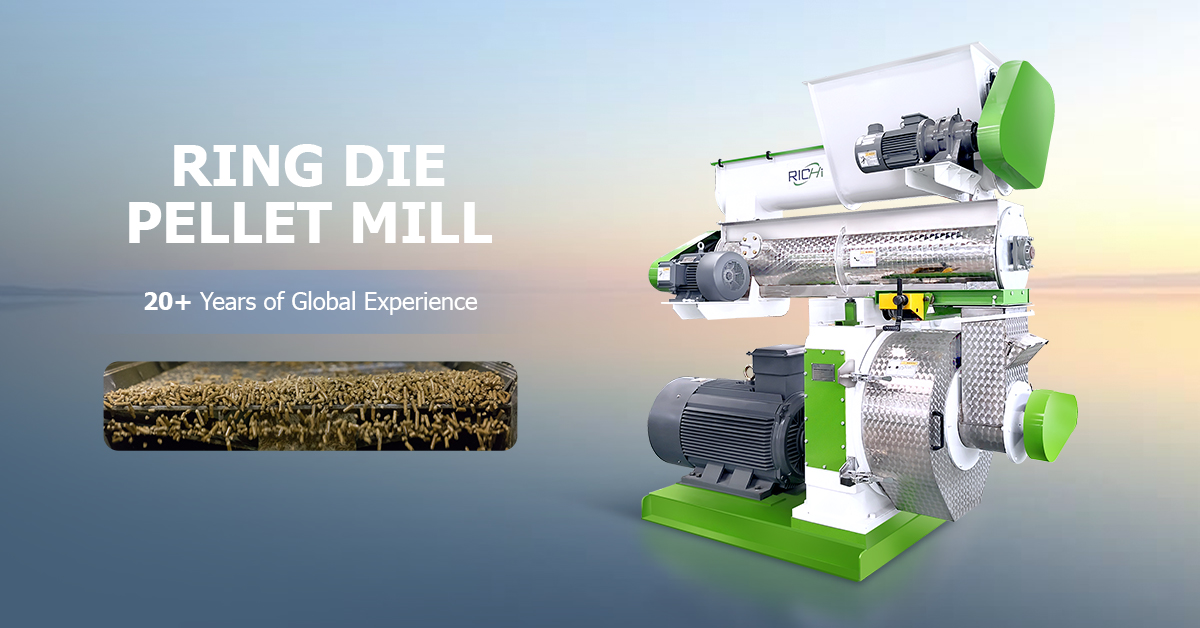
A professional rice straw pellet machine provides an efficient solution for converting loose straw into valuable biomass fuel. This technology allows farmers, agricultural companies, and energy producers to participate in the growing renewable energy market while improving resource utilization.
The Importance of Rice Straw Utilization
Rice straw contains natural organic components, including cellulose and lignin, which make it suitable for biomass pellet production. However, untreated straw has several limitations, such as low density, large storage requirements, and inconvenient transportation.
Pelletizing solves these challenges by improving the physical properties of rice straw.
The main advantages include:
Reduced Storage Space
Compressed pellets have a much higher density compared with loose straw. This allows businesses to store larger amounts of fuel in limited areas.
Easier Transportation
Uniform pellet size makes loading, transportation, and handling more efficient, reducing logistics costs.
(Related Post: https://biomasspelletizer.com/corn-stalk-pellet-machine/)
Cleaner Energy Application
Rice straw pellets can replace part of traditional fossil fuels in industrial heating systems, supporting cleaner energy development.
How Rice Straw Pellets Are Produced
A successful pellet production process requires several carefully controlled stages.
Raw Material Preparation
Fresh rice straw usually contains impurities and uneven structures. Before processing, it needs to be collected, cleaned, and prepared to ensure stable production.
Crushing and Processing
Because rice straw fibers are long and flexible, crushing is necessary to achieve suitable particle sizes. Proper preparation improves pellet quality and reduces equipment pressure.
Moisture Adjustment
Moisture content directly affects the pelletizing process. Maintaining the correct moisture level helps improve binding performance and creates stronger pellets.
Compression and Pellet Formation
During pelletizing, biomass particles are compressed under high pressure. The natural bonding characteristics of plant materials help form dense and durable pellets.
For businesses planning larger biomass projects, equipment such as 3-4 T/H rice husk pellet mill for sale can offer useful references when selecting production solutions for agricultural residue processing.
Choosing Equipment Based on Production Goals
Different biomass projects require different equipment configurations. Before investing, businesses should carefully analyze their raw materials, market demand, and expected production capacity.
Small-Scale Agricultural Applications
Small farms may focus on producing fuel for local heating or farm energy needs. Compact systems with simple operation can be suitable for these applications.
Commercial Biomass Fuel Production
Companies supplying biomass pellets to industrial customers need reliable equipment with continuous production capability.
Important factors include:
- Machine stability
- Production efficiency
- Energy consumption
- Maintenance requirements
Complete Biomass Processing Systems
A professional pellet production system may include crushing machines, conveyors, drying equipment, pelletizing units, cooling systems, and packaging equipment.
Choosing a complete solution helps improve production efficiency and ensures consistent pellet quality.
Many businesses evaluate technologies from pellet machine suppliers to compare equipment performance and identify suitable solutions for different agricultural materials.
Economic Opportunities in Rice Straw Pellet Production
Rice straw pellet production creates benefits throughout the agricultural supply chain. Farmers can gain additional income by supplying unused straw resources, while biomass companies can develop new fuel businesses.
The economic advantages include:
- Lower agricultural waste management costs
- New revenue opportunities
- Increased rural employment
- Growing renewable fuel market potential
This business model supports a circular economy by connecting agricultural production with renewable energy development.
Technology Development and Future Trends
The biomass pellet industry is continuously improving through technological innovation. Future production systems will focus on automation, efficiency, and flexibility.
Key trends include:
- Intelligent production monitoring
- Lower energy consumption
- Improved pellet durability
- Multi-material processing capability
These improvements will help biomass businesses achieve better productivity and stronger market competitiveness.
Companies looking for additional information about modern biomass solutions can you can look here to explore more insights into pellet production technologies and industry applications.
Conclusion
A rice straw pellet machine provides an effective way to transform agricultural residues into valuable renewable fuel. By improving waste utilization, reducing environmental pressure, and creating new business opportunities, rice straw pellet production has become an important direction for sustainable agriculture.
With the continuous growth of renewable energy demand, efficient biomass processing technology will help farmers and businesses unlock the hidden value of crop residues and contribute to a cleaner energy future.