Goat farming has become an important agricultural activity in many regions because goats require relatively flexible feeding systems and can adapt to different farming environments. From small family farms to commercial livestock operations, improving feed quality is one of the most effective ways to increase productivity and profitability.
Although goats can consume various forage materials, balanced nutrition is still essential for healthy growth, reproduction, and milk production. Traditional feeding methods often depend on loose forage and manually mixed feed, which may create challenges related to storage, transportation, and nutrient consistency.
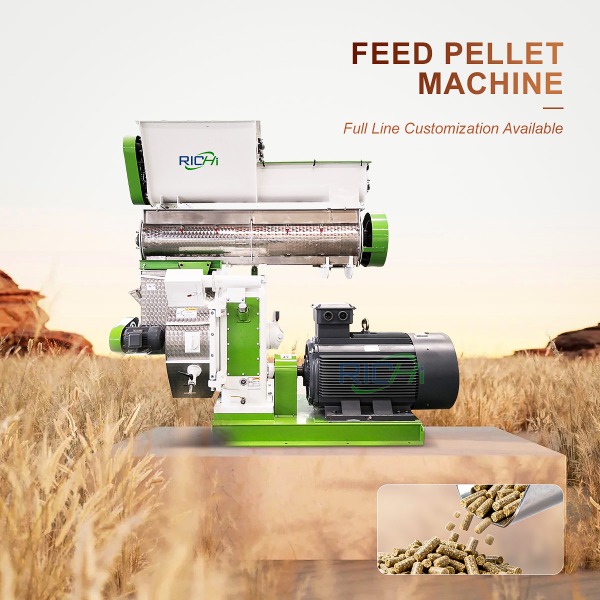
With the development of modern agricultural processing technology, more farmers are exploring pellet production as a practical solution. A professional goat feed pellet making machine helps transform grass, hay, grains, and other agricultural materials into compact feed pellets that are easier to manage and store.
By producing feed independently, goat farmers can achieve better control over feed quality while reducing dependence on external suppliers.
Why Feed Management Is Important in Goat Farming
The success of goat farming depends on several factors, including:
- Breed selection
- Farm management
- Disease prevention
- Housing conditions
- Nutrition planning
Among these factors, nutrition has a direct influence on animal performance.
A balanced goat diet supports:
Healthy Growth
Young goats require sufficient nutrients for proper development.
Better Reproductive Performance
Breeding goats need appropriate energy and mineral supply.
Improved Milk Production
Dairy goats require carefully managed nutrition to maintain milk yield.
Because nutritional requirements change during different growth stages, flexible feed production becomes increasingly valuable.
Challenges of Traditional Goat Feeding Methods
Many small farms still rely on traditional feeding approaches. While these methods are simple, they may create several limitations.
Seasonal Feed Availability
Forage availability can change depending on weather conditions and agricultural seasons.
During dry periods, farmers may experience feed shortages.
Storage Difficulties
Loose grass and agricultural materials require large storage spaces.
Poor storage conditions may also reduce feed quality.
Uneven Nutrition
When different ingredients are fed separately, animals may selectively consume certain materials.
This can lead to inconsistent nutrient intake.
Pellet production helps solve these issues by combining ingredients into uniform products.
Common Materials Used for Goat Feed Production
Goats can utilize many agricultural resources.
Common materials include:
- Alfalfa
- Grass
- Hay
- Corn
- Barley
- Wheat bran
- Soybean meal
- Agricultural by-products
The availability of local resources often determines the most economical feed formula.
For example:
- Grassland areas may focus on forage-based feed
- Grain-producing regions may use cereal ingredients
- Agricultural areas may utilize crop residues
The Process of Producing Goat Feed Pellets
A complete goat feed pellet production process usually includes several stages.
Raw Material Preparation
Before processing, raw materials need proper preparation.
This may involve:
- Cleaning
- Drying
- Cutting
- Moisture adjustment
Proper preparation improves production stability.
Crushing and Size Reduction
Large or irregular materials need to be processed into suitable particle sizes.
This improves:
- Mixing efficiency
- Pellet formation
- Feed consistency
High-fiber materials such as grass and hay usually require appropriate size control before pelletizing.
Ingredient Mixing
A balanced formula requires accurate mixing.
Modern mixing systems ensure that:
- Nutrients are evenly distributed
- Each batch maintains consistent quality
- Production remains stable
Pellet Production Technology for Goat Feed
The pelletizing stage compresses prepared materials into compact feed products.
During this process, mechanical pressure creates uniform pellets with improved density and handling characteristics.
A suitable livestock feed system can process different materials according to production requirements.
For farms interested in processing various biomass and agricultural materials, a straw pellet mill for goat feed pellet production provides another application within the broader agricultural processing industry.
Although straw pellets and goat feed pellets serve different markets, both rely on efficient biomass processing technology.
Advantages of Pellet Feed for Goat Farms
Pellet feed offers several benefits compared with traditional loose materials.
Better Feed Management
Pellets are easier to measure and distribute.
Farmers can better control daily feeding quantities.
Reduced Storage Space
Compressed pellets require less storage area than loose forage materials.
This is especially useful for farms with limited storage facilities.
Improved Transportation Efficiency
Pellets are easier to transport between storage areas and feeding locations.
Lower Material Waste
Compact pellets reduce losses caused by dust, separation, and handling.
Factors to Consider When Choosing Goat Feed Equipment
Selecting suitable equipment requires understanding farm conditions and production goals.
Farm Size
Small farms may require flexible systems, while commercial operations need higher production capacity.
Raw Materials
Different materials influence equipment requirements.
For example:
- Grass and straw require stronger processing capability
- Grain-based materials may have different production conditions
Feed Requirements
The equipment should support different formulas according to:
- Goat age
- Production purpose
- Nutritional requirements
Automation in Modern Livestock Feed Production
Automation technology is improving agricultural manufacturing efficiency.
Modern systems can control:
- Material feeding
- Production parameters
- Equipment operation
- Packaging procedures
Benefits include:
Improved Production Accuracy
Automatic systems reduce human errors.
Lower Labor Requirements
Farm workers can focus on other management tasks.
Better Quality Control
Digital monitoring helps maintain stable production results.
Sustainable Goat Feed Production
Sustainable agriculture encourages better use of available resources.
Goat feed production can support this goal by utilizing:
- Agricultural residues
- Local forage resources
- Crop processing by-products
Instead of allowing these materials to become waste, farmers can transform them into useful feed products.
This creates a more efficient agricultural cycle.
Building a Commercial Goat Feed Business
For investors planning to produce goat feed commercially, several factors should be considered.
Market Demand
Understanding local livestock development helps determine production scale.
Raw Material Supply
Stable access to ingredients ensures continuous operation.
Equipment Investment
The selected system should balance:
- Production capacity
- Operating costs
- Future expansion
Professional suppliers can help design suitable solutions based on specific project requirements.
Companies such as Richi manufacture provide customized equipment solutions for livestock and agricultural processing industries.
Future Trends in Goat Feed Manufacturing
The goat feed industry is expected to develop toward more efficient and sustainable production.
Future trends include:
Smart Production Systems
Digital technologies will improve factory management.
Alternative Feed Resources
More agricultural materials will be used effectively.
Customized Nutrition
Farmers will increasingly focus on targeted feed formulas.
Conclusion
Modern goat farming requires efficient feed management strategies to achieve stable growth and profitability.
By using pellet production technology, farmers can transform different agricultural resources into convenient and consistent feed products.
A professional goat feed production system helps improve storage, transportation, and feeding efficiency while supporting sustainable agricultural development.
As livestock industries continue evolving, advanced feed processing equipment will provide valuable opportunities for farms seeking better productivity and long-term growth.
More technical discussions about agricultural processing solutions can be found through go to website resources.
Related Post: https://pelletizerequipment.com/horse-feed-pellet-machine/