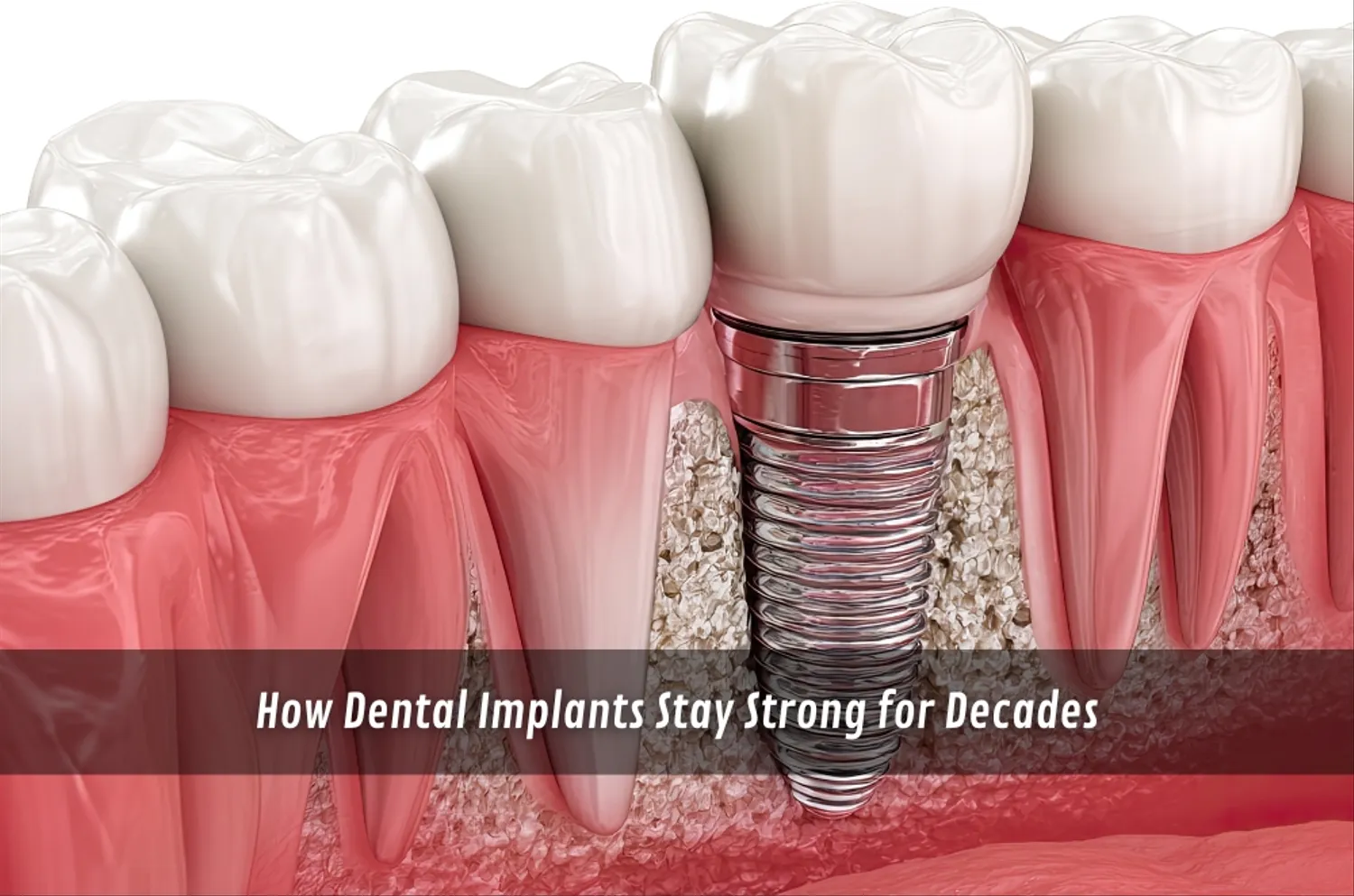
Dental implants have an impressive track record, yet not every fixture endures in the same way. Longevity hangs on the choices made before surgery, the precision executed on the day, and the routines that play out for years afterwards. Whether you are weighing up your first implant or planning maintenance for work done years ago, understanding these factors will help you ask sharper questions and protect your investment.
If you are starting to compare options, a comprehensive implant dentistry resource maps out the full treatment journey, including common consultation checkpoints and realistic healing timelines.
Materials Under the Microscope
Titanium has anchored implants since the 1960s, but alloys, surface textures and alternative ceramics continue to evolve. Each variable affects how bone integrates and how the prosthetic copes with everyday bite forces.
Titanium Versus Zirconia
Titanium remains the mainstay because it bonds predictably with bone (a process called osseointegration) and flexes slightly under load, lowering fracture risk. Zirconia, a white ceramic, appeals when patients prefer metal-free solutions or have rare metal sensitivities. While early zirconia posts showed higher breakage rates, next-generation composites and tapered designs have narrowed the gap.
Why Surface Treatment Counts
Modern implants are rarely smooth. Acid etching, micro-grooving and calcium-phosphate coatings all aim to increase the surface area that bone can grip. A rougher, chemically active surface can shave weeks off early healing, but quality control matters; an inconsistent coating may flake or harbour bacteria. Reputable suppliers validate their surface morphology with scanning electron microscopy rather than marketing slogans. As part of this step-by-step guide to Melbourne implants, understanding how implant surface technology influences healing can help patients make more informed decisions about their treatment options.
Material
Typical Strength Under Load
Integration Speed
Notes on Longevity
Titanium alloy (grade 4–5)
High, slight elasticity
3–4 months to full load
Decades of clinical data, forgiving under micro-movement
Zirconia (monolithic)
Very high, rigid
4–6 months to full load
Aesthetically tooth-coloured; avoid extreme bruxism
Titanium with hydroxy-apatite coat
High
2–3 months to full load
Faster early bone contact; monitor for coating wear in smokers
The table highlights that no single material is “best” in every scenario. Your bite force, bone density, and even night-time grinding patterns influence which column wins for you.
Surgical Skill and Planning
Beyond the metal or ceramic itself, biomechanics and biology decide the outcome. Cone-beam CT scans allow dentists to gauge bone volume and nerve position down to fractions of a millimetre. A stent or 3-D printed guide then translates that plan into theatre, helping the surgeon angle the post within the densest part of the jaw.
Poor angulation or overheating bone with an over-enthusiastic drill can create micro-gaps that never fully heal. Those gaps turn into chronic inflammation years later, even when the crown initially feels rock-solid. Technical finesse today prevents revision work a decade down the road.
Cone-beam data also informs whether you need a sinus lift, ridge expansion or bone graft. If supplementary grafting is advised, expect a staged timeline; attempting to rush bulk grafts and implant placement on the same day raises failure odds, especially in the thin posterior maxilla.
For a closer look at how upgraded biomaterials help implants behave like natural teeth, see how modern implant materials mimic natural teeth. The article breaks down why certain alloys and ceramics flex, fuse and age differently under real chewing loads.
Daily Habits That Protect the Fixture
Once bone has locked around the post, biology hands the baton to you. Everyday routines decide whether bacteria slip under the gum and trigger peri-implantitis.
- Floss or interdental brush at least once daily. A thin film of plaque hardens into calculus faster on titanium than on enamel.
- Book professional cleans every six months. Hygienists use instruments and powder polishers designed for implant surfaces.
- Address grinding. A custom night guard disperses the 600 N of force an adult molar can deliver in a clench.
- Steer clear of unfiltered vaping and heavy smoking. Both constrict capillaries, starving the bone of the circulation needed for ongoing remodelling.
Early Warning Signs
- Pinkish fluid when you floss around the crown
- A metallic or sour taste that lingers
- Slight mobility in the crown during chewing
- Gum tissue looking puffy or shiny compared with neighbouring teeth
Catch these hints early, and a hygienist can debride the surface, apply local antimicrobials and reset the clock. Ignore them and the inflammatory cascade can spiral into bone loss faster than around natural roots.
Putting the Pieces Together
Long-term success is rarely about a single catalyst. Material science, surgical accuracy and patient-led maintenance overlap like concentric safety nets. Remove one and the risk curve shifts upward. Most Melbourne practices offer recall schedules tailored to implant patients; keep those appointments even when the crown feels trouble-free.
For independent upkeep guidelines—covering everything from brush head selection to when to ring your clinician—see the latest Australian Dental Association guidance. It distils peer-reviewed evidence checkpoints you can fold into your nightly routine.
A thoughtfully planned and diligently maintained implant can share dinner with you for decades. Understanding the forces at play gives you the agency to make choices today that still pay dividends in 2046.