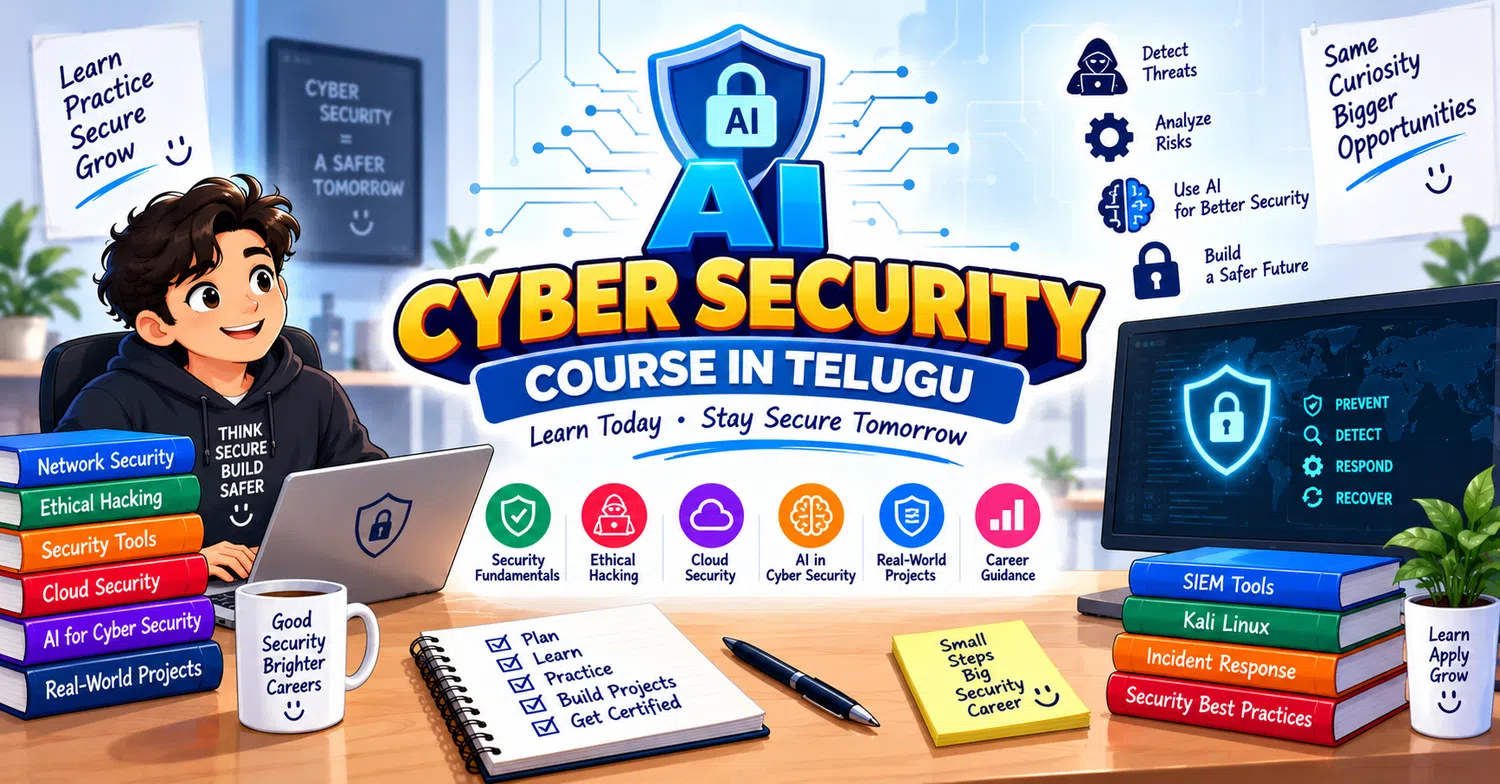
Ethical hacking becomes valuable when learners understand how security weaknesses are identified, evaluated, documented, and fixed within an authorized environment. It is not simply about running security tools or finding vulnerabilities. Practical learning requires knowledge of networking, operating systems, web security, access controls, vulnerability assessment, security monitoring, and responsible testing. An AI Cyber Security Course in Telugu can help learners combine these foundations with AI-assisted analysis to better understand security findings, investigate unusual activity, and develop defensive thinking. For beginners, working in controlled labs provides a safe way to build these skills without interacting with systems they are not authorized to test.
Begin with the Rules of Ethical Security Testing
The word “ethical” is an essential part of ethical hacking. Security testing should only be performed on systems you own or environments where you have clear permission to conduct the agreed testing.
Imagine a training lab that represents a fictional property rental platform. It contains a web application, test user accounts, a database, and simulated network activity. Learners can examine this environment without affecting real users or external systems.
Before beginning any assessment, they should understand:
Which systems are included
What testing is permitted
Which activities are restricted
How findings should be recorded
When testing should stop
This introduces professional discipline alongside technical knowledge.
Build Networking Skills Before Studying Security Weaknesses
Many security observations make more sense when learners understand how computers communicate.
IP addresses identify network locations, ports are associated with network services, DNS helps systems resolve names, and protocols define how communication occurs.
A learner exploring a controlled lab should understand normal network behaviour before trying to identify something unusual.
Important networking concepts include:
IP addressing
TCP and UDP basics
Common ports
DNS
HTTP and HTTPS
Firewalls
Network traffic flow
These fundamentals make security assessment results easier to interpret.
What Does Practical Ethical Hacking Actually Involve?
Practical ethical hacking involves examining authorized systems for potential weaknesses, validating findings safely, understanding their possible impact, and communicating useful remediation information.
The process should be systematic rather than random.
In a controlled environment, learners may begin by understanding the assets within scope. They can then review configurations, examine permitted security findings, study application behaviour, and document weaknesses that require attention.
The objective is to understand risk and improve security rather than simply produce a long list of technical findings.
Learn Vulnerability Assessment with a Risk Mindset
Security assessment tools can identify potential vulnerabilities, but their output requires interpretation.
Suppose a lab scan reports several findings. A beginner may assume the finding with the highest displayed severity should always receive attention first.
Real security decisions can require more context.
Learners may need to consider:
Which asset is affected
Whether the system is exposed
How important the system is
Whether protective controls already exist
What impact the weakness could have
Whether the finding has been validated
This turns vulnerability assessment into analytical work rather than simple tool operation.
Understand Web Application Security Concepts
Web applications are common areas of cybersecurity study because they combine users, authentication, application logic, APIs, and databases.
Learners should understand how poor input handling, weak access controls, insecure configurations, and authentication problems can increase security risk.
For example, a property rental application may contain different roles for customers, property managers, and administrators. Security controls should prevent ordinary users from accessing functionality intended only for authorized roles.
An AI Cyber Security Course in Telugu can help connect these application-security concepts with broader monitoring and investigation skills.
How Can AI Support Ethical Hacking Workflows?
AI can support authorized security assessments by helping professionals organize information, summarize findings, recognize patterns, and prioritize areas that may require closer human review.
Security assessments can generate significant amounts of data. AI-assisted capabilities may help with tasks such as:
Grouping related findings
Summarizing security observations
Identifying recurring patterns
Supporting risk prioritization
Organizing assessment notes
Comparing defensive security events
AI should not be treated as automatic proof that a vulnerability exists. Important findings still need appropriate validation.
Connect Security Assessment with Log Analysis
Practical ethical hacking becomes more useful when learners also understand what defensive teams can observe.
Suppose an authorized activity is performed inside the training environment. Application or authentication logs may record related events.
Learners can then examine:
When the activity occurred
Which account was involved
Which application generated the event
Whether related events appeared elsewhere
What information would help a defender investigate it
This provides two useful perspectives: understanding security assessment and understanding defensive visibility.
Use AI to Explore Patterns in Security Data
AI becomes particularly relevant when the amount of security information grows.
Imagine that the training environment generates hundreds of authentication and application events. Most represent normal activity, while a small number are intentionally unusual for the exercise.
AI-assisted analysis can help highlight behavioural differences or organize related events.
Learners can then verify the results manually.
This teaches an important lesson: AI can direct attention toward potentially useful information, but security professionals remain responsible for understanding whether the identified pattern is meaningful.
Learn Why False Positives Need Verification
Security tools do not always produce perfect results.
A scanner may identify a possible weakness that does not apply exactly as expected. An anomaly-detection system may flag legitimate behaviour because it differs from previous patterns.
These are reasons to investigate further rather than immediately declaring a confirmed security problem.
A useful validation workflow can involve:
Reviewing the original evidence
Checking the affected asset
Understanding normal behaviour
Comparing related logs
Documenting the reason for the final assessment
Developing this habit can improve the quality of security analysis.
Practice Reporting Alongside Technical Skills
Finding a security issue is only useful if the information can be communicated clearly.
A practical ethical hacking project should therefore include documentation.
A security finding can explain what was observed, where it appeared, why it matters, what evidence supports the finding, and what defensive improvement may be considered.
Reports should be understandable to the intended audience.
Practicing documentation also helps learners prepare for interviews because they become more comfortable explaining their technical reasoning instead of only naming security tools.
Build a Safe Portfolio Project
A controlled lab project can bring several cybersecurity concepts together.
For example, learners could assess the fictional property rental environment and study its defensive logs. The project could include authorized vulnerability observations, access-control review, security event analysis, AI-assisted pattern identification, and a final report.
Such a project can demonstrate:
Networking understanding
Security assessment methodology
Vulnerability awareness
Log investigation
AI-assisted analysis
Risk interpretation
Security documentation
The strongest portfolio explanation focuses on what the learner understood and investigated rather than claiming expertise based only on tool usage.
Frequently Asked Questions
Can beginners start ethical hacking without advanced programming knowledge?
Yes. Beginners can start with computer fundamentals, networking, operating systems, web concepts, and cybersecurity basics. Programming knowledge can be developed gradually as their security learning progresses.
Why should ethical hacking practice be done in a controlled lab?
A controlled lab provides explicit boundaries for learning and prevents unauthorized interaction with real systems. It also allows learners to repeat exercises safely.
How can AI help during a security assessment?
AI can assist with organizing findings, summarizing information, identifying patterns, and supporting prioritization. Security professionals should still validate important findings independently.
Is vulnerability scanning the same as ethical hacking?
No. Vulnerability scanning is one part of security assessment. Ethical hacking involves broader understanding of scope, evidence, risk, validation, defensive impact, and responsible reporting.
What should an ethical hacking portfolio project demonstrate?
It should demonstrate a clear methodology, security fundamentals, responsible testing, investigation skills, evidence-based conclusions, and useful documentation rather than simply displaying a collection of tools.
Conclusion
Practical ethical hacking skills develop through a combination of technical understanding, responsible behaviour, investigation, and communication. Networking, web security, vulnerability assessment, log analysis, access control, and risk interpretation provide a strong foundation for authorized security work.
AI can support these activities by helping learners organize security information and identify patterns that deserve attention. When AI-assisted analysis is combined with controlled lab practice, manual verification, and clear reporting, learners can develop a more realistic understanding of ethical hacking while building skills relevant to defensive cybersecurity projects and interviews.