Introduction
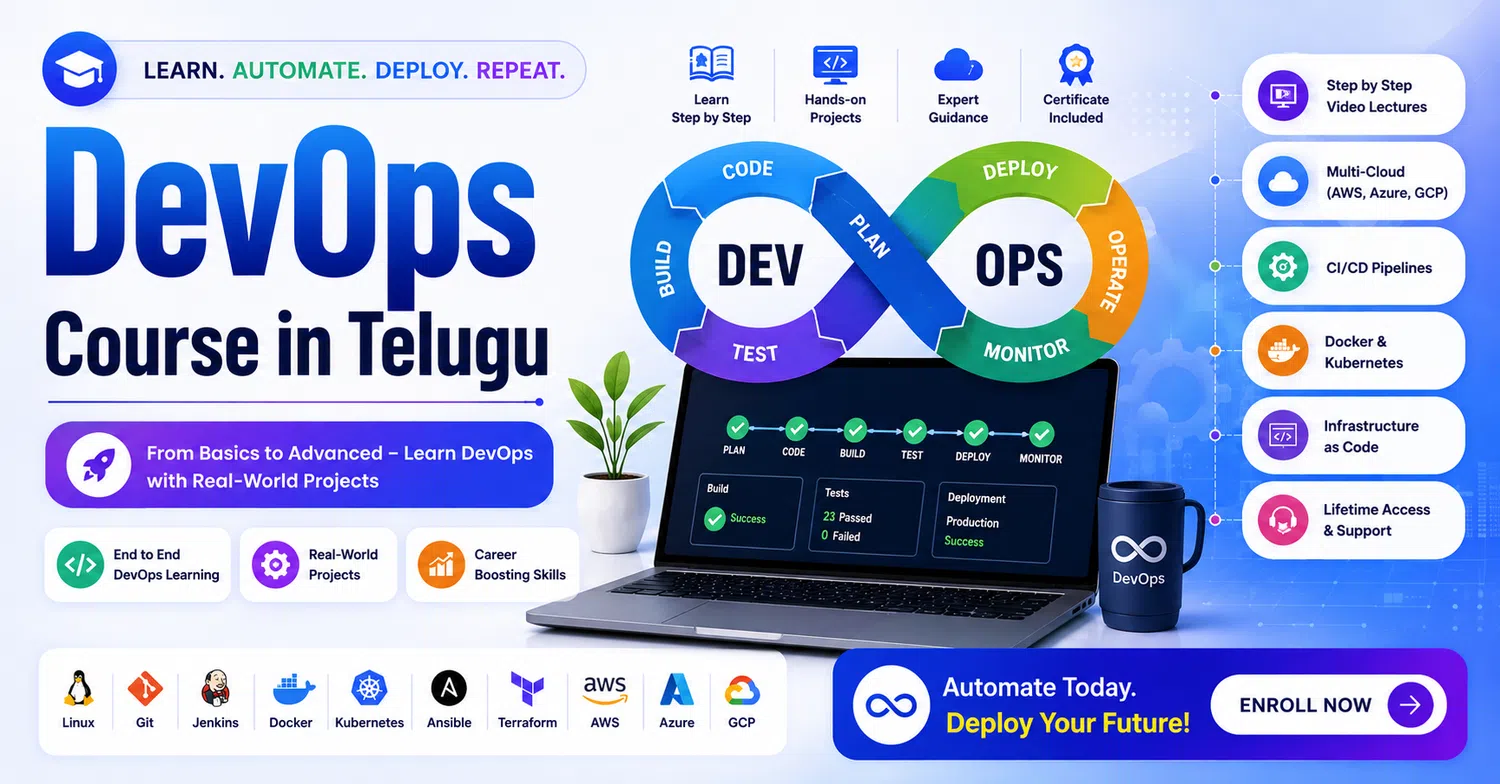
Maintaining the performance and reliability of applications requires continuous observation of servers, services, and infrastructure. Businesses rely on monitoring solutions to detect issues before they affect users, making monitoring an essential part of modern IT operations. A DevOps Course in Telugu helps learners understand the purpose of monitoring tools and how they contribute to maintaining healthy applications, improving system availability, and supporting efficient software delivery.
Why Monitoring Is Essential in Modern Infrastructure
Applications run across multiple servers, databases, cloud platforms, and network components. Even a small issue in one part of the infrastructure can impact the overall user experience. Monitoring provides real-time visibility into system behavior, allowing technical teams to identify problems early and respond before they become critical.
Continuous monitoring also helps organizations maintain service quality while reducing unexpected downtime.
Understanding What Monitoring Tools Track
Monitoring platforms collect information from various components of an application environment. This data helps administrators evaluate system performance and identify unusual activity.
Common areas monitored include:
Server resource utilization
Application performance
Network activity
Database health
Storage capacity
System availability
Service status
Error occurrences
Analyzing this information allows teams to make informed operational decisions.
Measuring Infrastructure Performance
Performance monitoring enables organizations to understand whether systems are operating efficiently under different workloads. Instead of reacting after failures occur, teams can identify gradual performance degradation and address it proactively.
Performance analysis often focuses on:
CPU usage
Memory consumption
Disk activity
Response times
Request processing
Resource allocation
These measurements support better infrastructure planning and optimization.
Detecting Problems Before Users Notice
One of the biggest advantages of monitoring is the ability to identify warning signs before they affect customers. Early detection reduces downtime and improves service reliability.
Monitoring systems help identify situations such as:
Resource exhaustion
Service interruptions
Slow application responses
Configuration inconsistencies
Hardware limitations
Unexpected traffic spikes
Prompt detection enables faster corrective action and minimizes operational impact.
Exploring Monitoring Concepts Through DevOps Course in Telugu
A structured DevOps Course in Telugu introduces monitoring as an important part of infrastructure management rather than an isolated topic. Learners understand how collecting system metrics, analyzing logs, and tracking application health support reliable deployments and continuous improvement across software environments.
Learning the Importance of Alerts
Monitoring becomes more effective when combined with automated alert mechanisms. Instead of continuously checking dashboards manually, administrators receive notifications whenever predefined conditions are exceeded.
Alert systems may notify teams about:
High resource utilization
Service failures
Application crashes
Storage limitations
Network disruptions
Security-related events
Well-configured alerts help organizations respond quickly to changing system conditions.
Understanding Log Analysis
Logs provide valuable information about application behavior, user requests, system events, and operational errors. Learning how to interpret logs is an essential skill for diagnosing technical problems.
Effective log analysis helps professionals:
Investigate failures
Trace application behavior
Identify recurring issues
Verify successful deployments
Understand system activity
Support troubleshooting efforts
Accurate log interpretation often reduces the time required to resolve incidents.
Supporting Better Decision-Making
Monitoring data enables organizations to make decisions based on measurable information instead of assumptions. Historical metrics reveal usage patterns, infrastructure growth, and recurring operational challenges.
Data-driven decisions can improve:
Capacity planning
Infrastructure upgrades
Performance optimization
Maintenance scheduling
Resource allocation
Service reliability
Using operational data effectively contributes to long-term system stability.
Developing Practical Troubleshooting Skills
Monitoring platforms provide valuable insights when investigating technical problems. Practical experience helps learners understand how different metrics relate to application behavior.
Important troubleshooting activities include:
Reviewing performance trends
Comparing system metrics
Identifying resource bottlenecks
Correlating logs with incidents
Validating corrective actions
Monitoring recovery progress
These analytical skills become increasingly valuable in professional IT environments.
Preparing for Professional Responsibilities
Organizations expect infrastructure professionals to maintain application reliability while minimizing downtime. Understanding monitoring principles helps learners contribute effectively to daily operational activities.
Practical monitoring knowledge supports responsibilities such as:
Observing system health
Investigating alerts
Supporting deployment verification
Monitoring infrastructure changes
Identifying performance issues
Assisting operational teams
These responsibilities are common across modern technology organizations.
Career Benefits of Monitoring Expertise
Monitoring skills complement several technology roles because nearly every organization depends on reliable applications and infrastructure.
Career opportunities that benefit from monitoring knowledge include:
DevOps Engineer
Site Reliability Engineer
Cloud Engineer
Infrastructure Engineer
Systems Administrator
Platform Engineer
Operations Engineer
Technical Support Engineer
Developing expertise in monitoring increases versatility while supporting career growth across multiple technical domains.
Conclusion
Monitoring tools play a vital role in maintaining stable, secure, and high-performing technology environments. By tracking system health, analyzing performance metrics, reviewing logs, and responding to alerts, organizations can prevent issues before they affect users. Learning these concepts through practical implementation helps aspiring professionals build strong analytical and troubleshooting abilities while preparing them for real-world responsibilities. A solid understanding of monitoring practices becomes an important asset for anyone pursuing a successful career in modern IT infrastructure and software operations.