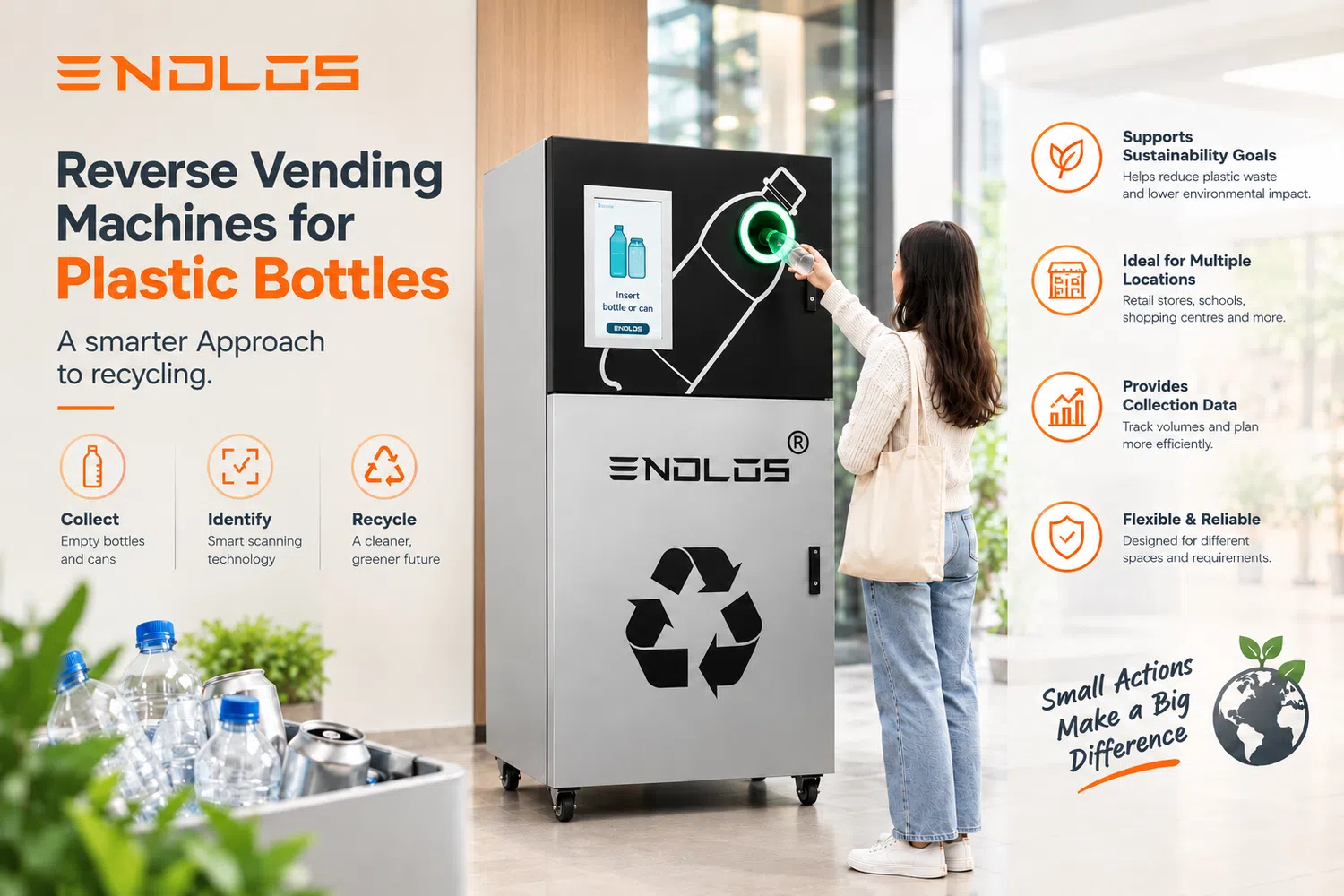
Plastic bottle waste is a growing challenge for businesses, public spaces, and communities. Although many plastic bottles can be recycled, collecting and sorting them efficiently remains an important part of the recycling process. This is where reverse vending machines can help by making bottle collection more organised, convenient, and accessible.
A reverse vending machine for plastic bottles allows users to return eligible empty bottles through an automated system. Depending on the machine and its configuration, it can identify containers, collect them, and support the recycling process. These machines are increasingly useful for retailers, educational institutions, shopping centres, and organisations looking to improve their recycling facilities.
What Is a Reverse Vending Machine?
A reverse vending machine (RVM) is an automated machine that accepts used beverage containers, such as plastic bottles and aluminium cans. Unlike a traditional vending machine that dispenses products, an RVM collects containers after use.
Some machines can recognise accepted containers using scanning and identification technology. They may also compact or store the collected materials, depending on the model. In deposit return systems, an RVM can help process eligible containers and support the return process according to the scheme's requirements.
For businesses and institutions, installing an RVM can provide a designated collection point and make it easier for people to return empty containers instead of placing them in general waste bins.
How Does a Reverse Vending Machine Work?
The exact process depends on the machine's features and the recycling programme in which it is used. Generally, the process follows a few simple steps:
Container insertion: A user places an accepted empty bottle or can into the machine.
Container identification: The machine checks whether the container meets its acceptance criteria.
Collection and storage: The accepted container is directed into the machine's collection or storage system.
Data recording: Depending on the configuration, the machine may record transaction or collection data.
Collection for recycling: The stored containers are removed and sent through the appropriate recycling process.
When an RVM is used as part of a deposit return scheme, the system may also support deposit validation and refunds, depending on the scheme rules and machine configuration.
Benefits of Using a Plastic Bottle Recycling Machine
A plastic bottle recycling machine can help organisations manage the collection of used containers more efficiently. The actual benefits depend on the machine's capacity, features, installation environment, and collection arrangements.
1. More organised bottle collection
A dedicated collection point gives people a clear place to return empty bottles. This can help organisations manage recyclable containers separately from general waste.
2. A convenient recycling experience
Automated collection can make bottle returns easier for customers, employees, students, and visitors. A simple and accessible return process may encourage more people to participate in recycling programmes.
3. Support for deposit return schemes
In markets operating deposit return systems, compatible reverse vending machines can help retailers and other collection points handle eligible containers. Organisations should check local scheme requirements before selecting equipment.
4. Useful collection data
Depending on the model and software, an RVM may provide information about collection volumes and machine activity. Such information can help operators monitor performance and plan collection schedules.
5. Better use of recycling facilities
Reverse vending machines can provide a structured way to collect bottles and cans in places where people regularly purchase or consume beverages. Suitable locations may include supermarkets, universities, shopping centres, offices, and public facilities.
Where Can Reverse Vending Machines Be Used?
Reverse vending machines can be installed in a range of environments, depending on available space, expected container volumes, and operational requirements.
Retail stores and supermarkets: To provide customers with a convenient place to return eligible containers.
Universities and educational institutions: To support recycling initiatives across campuses.
Shopping centres: To make container collection accessible to visitors.
Corporate offices: To support workplace waste-management and sustainability programmes.
Public facilities: To provide designated collection points in suitable high-footfall locations.
Before installation, organisations should consider footfall, the types of containers accepted, storage capacity, accessibility, servicing requirements, and local recycling regulations.
Factors to Consider When Choosing an RVM
Not every reverse vending machine is suitable for every location. Choosing the right model starts with understanding how and where it will be used.
Container compatibility: Check whether the machine accepts the required types and sizes of plastic bottles, cans, or other containers.
Expected return volume: A busy supermarket may need a different capacity from a small office or campus collection point.
Available installation space: Measure the proposed location and consider access for users, maintenance teams, and container collection.
Software and reporting: Depending on operational needs, features such as remote monitoring, transaction records, and collection reports may be useful.
Maintenance and support: Ask about installation, servicing, spare parts, software support, and the expected maintenance schedule.
Deposit return requirements: If the machine will be used in a deposit return scheme, confirm that its capabilities and configuration meet the applicable requirements.
Understanding Reverse Vending Machine Cost
The reverse vending machine can vary considerably depending on the machine's capacity, supported container types, identification technology, software, and installation requirements. The operating environment and level of after-sales support can also affect the overall investment.
When comparing options, organisations should look beyond the initial purchase price. It is worth considering installation, servicing, maintenance, collection logistics, software requirements, and any integration needed for a deposit return system.
The most suitable machine is not necessarily the one with the lowest upfront price. Instead, businesses should compare the features and ongoing requirements against their expected container volumes and operational goals. Requesting a quotation based on the intended location and use case can help make comparisons more meaningful.
Making Recycling More Convenient with Reverse Vending Machines
Reverse vending machines provide an organised way to collect used beverage containers and can support recycling initiatives in retail, education, commercial, and public environments. When selected according to container requirements, expected volumes, and local regulations, they can help make the return process more convenient for users and more manageable for operators.
For organisations exploring automated container collection, understanding the available machine features, installation requirements, and long-term operating costs is an important first step. A well-planned solution can support more effective recycling operations while helping businesses work towards their sustainability objectives