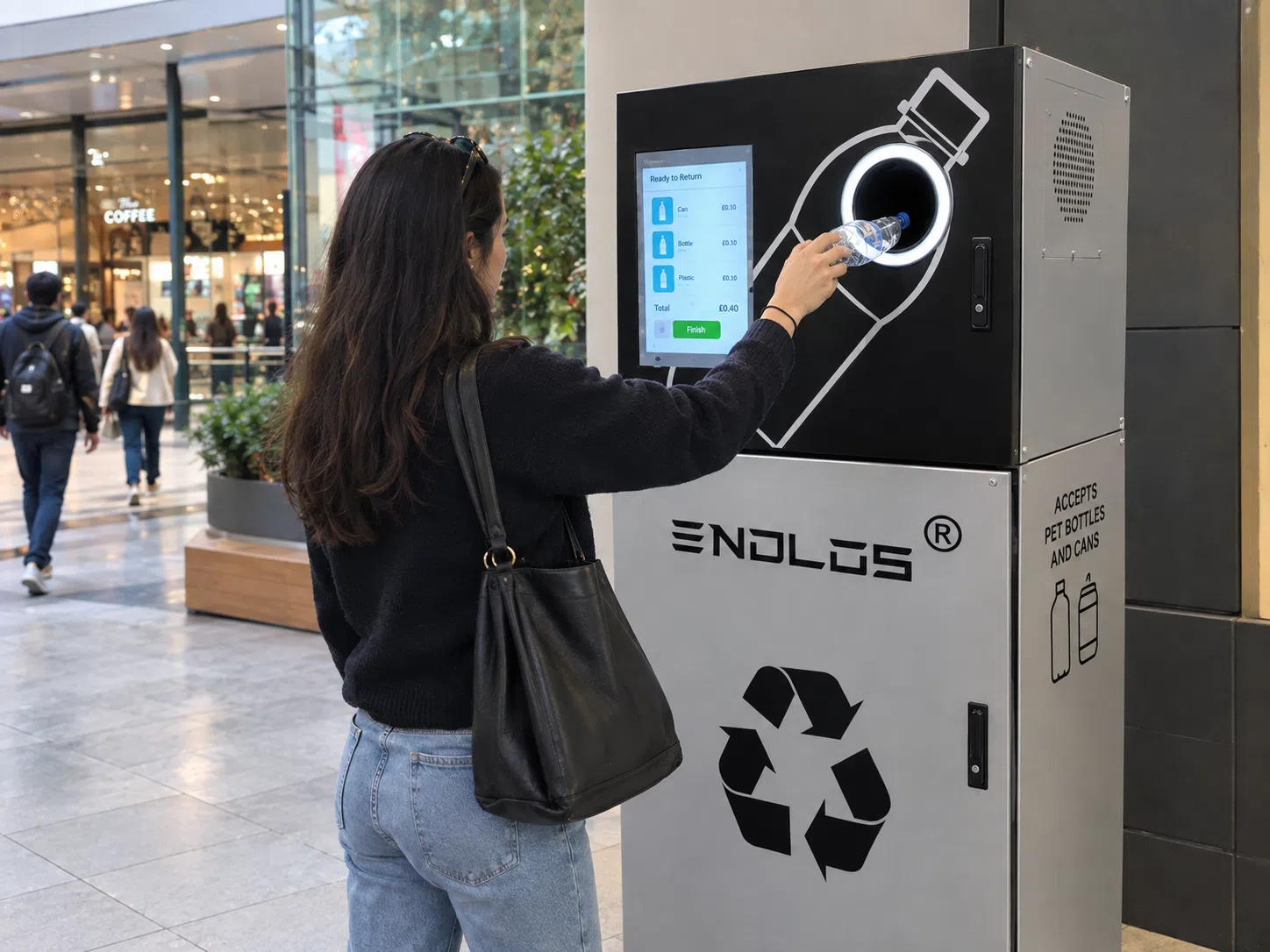
If you're planning to set up a recycling program in your society, mall, railway station, college campus, or corporate office, one of the first questions you'll run into is, "How much does a reverse vending machine actually cost?
The honest answer is—it depends. A reverse vending machine (RVM) isn't a single standardized product; it's a category of machines with different capacities, sensors, and automation levels, and the price reflects that. Here's a breakdown to help you understand where your budget should go.
What Decides the Price of an RVM?
1. Capacity and throughput Smaller, single-material machines meant for low-footfall areas (like a small office or a co-working space) cost far less than high-capacity units designed for railway stations, malls, or public deposit-return points that need to process hundreds of bottles or cans per hour.
2. Material recognition technology Basic RVMs simply crush and count. Advanced RVMs use optical and infrared sensors to differentiate PET, aluminum, and glass, sort them separately, and reject contaminated or wrong items. The more intelligent the recognition system, the higher the machine cost—but also the higher the resale value of the sorted material.
3. Compaction and storage Machines with built-in compactors reduce the frequency of manual collection, which lowers your long-term operating cost even though the upfront price is higher. If you're deploying in a high-traffic public space, this is usually worth the extra investment.
4. Connectivity and reward systems Machines that issue instant coupons, cashback, UPI rewards, or connect to a deposit-return system (DRS) backend typically cost more because of the added IoT and software layer—but they also drive far higher user participation.
5. After-sales support and AMC Don't just compare sticker price. Factor in installation, annual maintenance contracts (AMC), and spare parts availability, especially if you're buying from an overseas brand versus a domestic Indian manufacturer.
A Rough Price Range
Globally, entry-level reverse vending machines start around the equivalent of a few lakh rupees, while advanced, high-capacity units with multi-material sorting and compaction can run significantly higher. In India specifically,
the reverse vending machine cost varies widely depending on whether you're buying a basic bottle-crusher-style unit or a fully automated, sensor-driven RVM meant for commercial deployment — so it's worth getting a direct quote based on your exact use case (location, expected daily volume, and materials you want to collect) rather than relying on a generic number.
Why It's Worth Talking to a Manufacturer Directly
Because so many variables affect the final cost—machine size, sorting technology, reward mechanism, installation site, and volume of units ordered—the most accurate way to budget is to get a tailored quote instead of going purely off average market figures. Indian manufacturers can also offer faster servicing, lower import costs, and support in line with local recycling infrastructure compared to importing a machine from abroad.
If you're evaluating options, it's worth checking the reverse vending machine cost and specifications listed by Endlos Innovations—they manufacture RVMs across multiple configurations (Eco, Pro, Premium, and DRS series) suited for everything from small offices to large-scale public deposit-return deployments, which makes it easier to match the machine and the cost to your actual requirement rather than overpaying for capacity you don't need.
Final Thought
Don't chase the cheapest reverse vending machine you can find. Chase the one that matches your expected volume, material type, and long-term maintenance needs—because the real cost of an RVM is what you pay across its lifetime, not just on day one.
Source by : Reverse Vending Machine Cost in India: What to Know Before You Buy