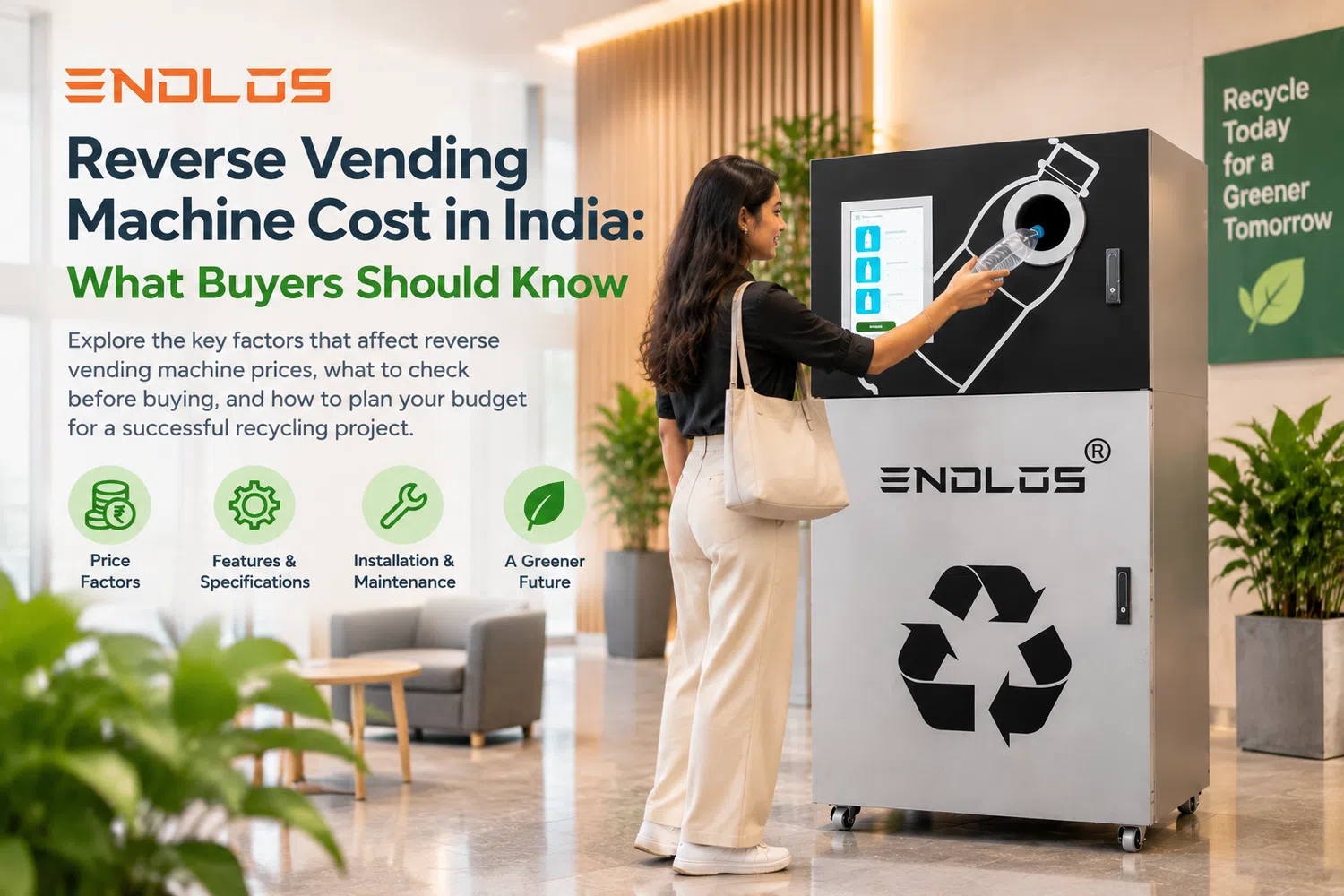
Finding the reverse vending machine cost in India can be difficult because many suppliers do not publish fixed prices. The final cost depends on the machine’s capacity, accepted materials, software features, installation requirements, and maintenance support.
This guide explains the main factors that influence reverse vending machine prices, what buyers should check before purchasing, and how to plan a suitable budget for a bottle collection project.
How Much Does a Reverse Vending Machine Cost in India?
Public project costs can provide a useful starting point, but they should not be treated as current market quotations.
For example:
Vellore, Tamil Nadu: A reported public recycling initiative involved machines valued at approximately ₹5 lakh each, with a stated capacity of up to 2,500 bottles.
Ludhiana, Punjab: A Smart City project reported a total cost of ₹41 lakh for ten plastic bottle recycling machines, equivalent to approximately ₹4.1 lakh per machine before considering differences in project scope and included services.
These are historical project examples, not confirmed prices for all reverse vending machines available in India in 2026. The total project cost may include different combinations of equipment, installation, software, and maintenance.
For an accurate quotation, buyers should share their requirements with suppliers and compare the complete cost of ownership.
How Does a Reverse Vending Machine Work?
A reverse vending machine (RVM) allows people to return empty beverage containers at a designated collection point. Depending on the model, the machine identifies the container, checks whether it meets the acceptance criteria, and records the returned item.
Some machines provide rewards such as points, coupons, or discounts. Others support collection tracking and reporting. Certain models also crush or compact containers to reduce the space required for storage.
The exact features depend on the machine and its software.
For a more detailed introduction, read what a reverse vending machine is and how it works.
Reverse Vending Machine Cost by Type
The following comparison describes relative cost levels, not fixed market prices.
Machine typeTypical applicationRelative costPlastic bottle RVMCollecting eligible PET bottlesGenerally lowerPlastic bottle and can RVMCollecting eligible bottles and aluminium cansDepends on configurationMulti-material RVMAccepting multiple container types, potentially including glassGenerally higherDRS-ready RVMSupporting deposit-return requirements, container identification, and reportingDepends on system requirements
The most suitable option depends on the materials being collected, expected usage, storage requirements, and the project's operational needs.
For example, a corporate office collecting plastic bottles may not need the same configuration as a public collection point designed to support a Deposit Return System (DRS).
Six Factors That Affect Reverse Vending Machine Prices
1. Types of Containers Accepted
A machine designed for plastic bottles may have different hardware and identification requirements from one that accepts several types of containers.
Before purchasing, confirm whether the machine supports the materials you plan to collect, including any restrictions on container shape, size, or condition.
2. Storage Capacity
Capacity affects how frequently the machine needs to be emptied. A high-footfall location may require greater storage capacity than a small office or school.
Ask suppliers to specify the expected container capacity and explain whether that figure assumes containers are stored whole or compacted.
3. Crushing and Compaction
Some reverse vending machines compact accepted containers to reduce their storage volume. This can help reduce collection frequency and transportation effort.
However, the benefits depend on the volume of containers collected, the collection schedule, and the operating costs. Compare these factors before paying extra for compaction features.
4. Software and Reward Features
Software can support transaction records, collection reports, user engagement, and reward programmes. Depending on the system, additional features may require separate integration or ongoing service fees.
Ask whether software access is included in the purchase price and whether recurring subscription charges apply.
5. Deposit Return System Requirements
A machine used in a Deposit Return System may need to identify eligible containers, record transactions, and exchange information with other systems.
These requirements can affect the hardware, software, and integration work needed. Confirm the relevant scheme requirements before choosing a model.
6. Construction and Customisation
Outdoor installation, weather protection, custom branding, specialised dimensions, and additional security features may affect the final quotation.
Buyers should confirm the intended installation environment and request a specification that matches the actual site conditions.
What to Check Before Buying a Reverse Vending Machine for Plastic Bottles
If plastic bottles are your main collection target, review the following specifications before comparing quotations.
Bottle size range: Confirm the accepted bottle dimensions and capacity range, including larger bottles.
Storage capacity: Choose a capacity appropriate for the site's expected collection volume.
Compaction: Check whether bottles are stored whole or compacted.
Reward options: Determine whether rewards are necessary and which options the machine supports.
Power and installation: Confirm electricity requirements, physical dimensions, and installation conditions.
Maintenance: Ask how often the machine needs servicing and how faults are handled.
Reporting: Check whether the system provides the collection data required for your project.
You can review reverse vending machine cost to explore available options and compare the specifications relevant to your requirements.
Reverse Vending Machine vs. Plastic Bottle Recycling Machine
These terms can refer to different types of equipment.
A reverse vending machine is generally used at the collection stage. It accepts eligible containers from users and may provide rewards or record collection data.
A plastic bottle recycling machine usually refers to equipment used to process collected plastic, such as shredders, crushers, or washing systems.
The equipment required depends on the project. An organisation collecting bottles from the public may need an RVM, while a recycling facility processing collected plastic may require industrial processing equipment. Some larger operations use both as part of a wider recycling process.
Costs Beyond the Purchase Price
The initial machine price is only one part of the overall budget. Buyers should also consider:
Installation: Site preparation, delivery, and installation work.
Electricity and connectivity: Ongoing power and network requirements.
Maintenance: Cleaning, inspection, servicing, and repairs.
Collection and transportation: Labour and transport needed to empty and move collected containers.
Software fees: Recurring charges or integration costs, where applicable.
Rewards: The cost of coupons, discounts, points, or other incentives.
Awareness and training: Signage, user instructions, and staff training.
Request an itemised quotation so that you can compare suppliers on a like-for-like basis.
Why Reverse Vending Machine Projects Need Careful Planning
Installing a machine does not automatically ensure that people will use it. Placement, reliable power, clear instructions, and a suitable collection process all influence the success of a project.
Consider these three points before installation:
Choose an accessible location. Consider footfall, visibility, convenience, and the safety of users.
Confirm site readiness. Check power, connectivity, installation space, and arrangements for emptying the machine.
Explain how it works. Clear signage and user instructions can help people understand how to return containers and whether rewards are available.
A machine that matches the site's needs and is properly maintained is more likely to deliver practical value than one selected solely because of its initial price.
Which Reverse Vending Machine Is Suitable for Different Buyers?
BuyerImportant considerationsMunicipalities and public projectsCapacity, durability, accessibility, servicing, and reportingShopping malls and retailersCustomer convenience, rewards, branding, and collection frequencyCorporate offices and CSR projectsCollection tracking, ease of use, and sustainability reportingSchools and campusesSimple operation, safety, capacity, and user awarenessBeverage brands and DRS operatorsContainer identification, data reporting, integration, and scheme requirements
These are general guidelines. The right configuration depends on the project budget, location, expected usage, and operational objectives.
Seven Questions to Ask an RVM Supplier
Before placing an order, ask the supplier:
What is the total price, including delivery, installation, software, and training?
Which container types and sizes does the machine accept?
What is the storage capacity, and does the machine compact containers?
Which reporting, integration, and reward features are included?
What are the estimated annual maintenance costs?
What warranty, spare parts, and after-sales support are available in India?
Can the supplier provide references or arrange a demonstration of an operational installation?
Comparing the answers will help you evaluate the full offering instead of choosing based only on the purchase price.
Is a Reverse Vending Machine Worth the Investment?
The value of a reverse vending machine depends on how it supports the project's objectives. Potential benefits may include:
Collection tracking: Recording the containers returned through the machine.
Public engagement: Encouraging people to return eligible containers through a convenient collection point.
Sustainability initiatives: Supporting measurable collection and recycling programmes.
Material separation: Collecting eligible containers separately from mixed waste.
Customer engagement: Offering incentives where these suit the business model.
Before investing, define what success means for your project. Relevant measures may include the number of containers collected, machine usage, operating costs, collection frequency, and maintenance requirements.
Do not assume that rewards, environmental benefits, or financial returns will automatically cover the cost of the machine. Evaluate the expected results against the total project budget.
Common Mistakes to Avoid
Choosing a machine based only on its initial price.
Paying for features that the project does not require.
Failing to confirm container size and material compatibility.
Ignoring maintenance, software, and collection costs.
Installing the machine without checking footfall and site readiness.
Failing to plan user awareness and ongoing operation.
Frequently Asked Questions
How much does a reverse vending machine cost in India?
The cost depends on capacity, accepted materials, software, construction, and installation requirements. Historical Indian public projects have reported per-machine figures of approximately ₹4.1 lakh to ₹5 lakh, but these figures are not verified 2026 market prices. Request a current quotation for an accurate estimate.
What affects the price of a reverse vending machine for plastic bottles?
Important factors include bottle size compatibility, storage capacity, compaction, software features, construction, installation, and maintenance requirements.
Can a reverse vending machine accept plastic bottles and aluminium cans?
Some models accept both, while others are designed for particular container types. Confirm the accepted materials and size limits with the supplier before purchasing.
How many bottles can a reverse vending machine store?
Capacity varies by model and container type. Ask the supplier for the rated capacity and clarify whether the figure refers to whole or compacted containers.
Are software features included in the machine price?
Not always. Software, reward systems, dashboards, integrations, and ongoing subscriptions may be included or charged separately. Check the quotation for a clear breakdown.
What should I check before choosing an RVM supplier?
Compare specifications, total cost, warranty, maintenance arrangements, spare parts availability, software support, and evidence of relevant installations.
Conclusion
Choosing a reverse vending machine involves more than comparing advertised prices. Buyers should evaluate container compatibility, capacity, software, installation, maintenance, and after-sales support before making a decision.
Historical project costs can provide context, but the right budget depends on the specific requirements of each installation. A clear specification and an itemised quotation make it easier to compare options and select a machine suited to the project's goals.
Source by : Reverse Vending Machine Cost in India: Price Factors and Buyer’s Guide