Plastic bottles are a convenient part of everyday life, but what happens after the bottle is empty?
When collected and processed correctly, plastic bottles get recycled and turned into material for new products. The real challenge isn't recycling the plastic itself — it starts much earlier, with making sure used bottles are actually collected, identified, sorted, and sent into the right recycling stream.
This is where better collection systems and technologies like reverse vending machines play an important role.
In this guide, we'll look at what plastic bottle recycling is, how the recycling process works, why proper collection matters, and where reverse vending machines fit into the overall recycling journey.
What Is Plastic Bottle Recycling?
Plastic bottle recycling is the process of collecting used plastic bottles, sorting them, processing the material, and converting it into recycled plastic that gets used to make new products.
Most beverage bottles are made from PET (polyethylene terephthalate), a widely used plastic that's well-suited for recycling.
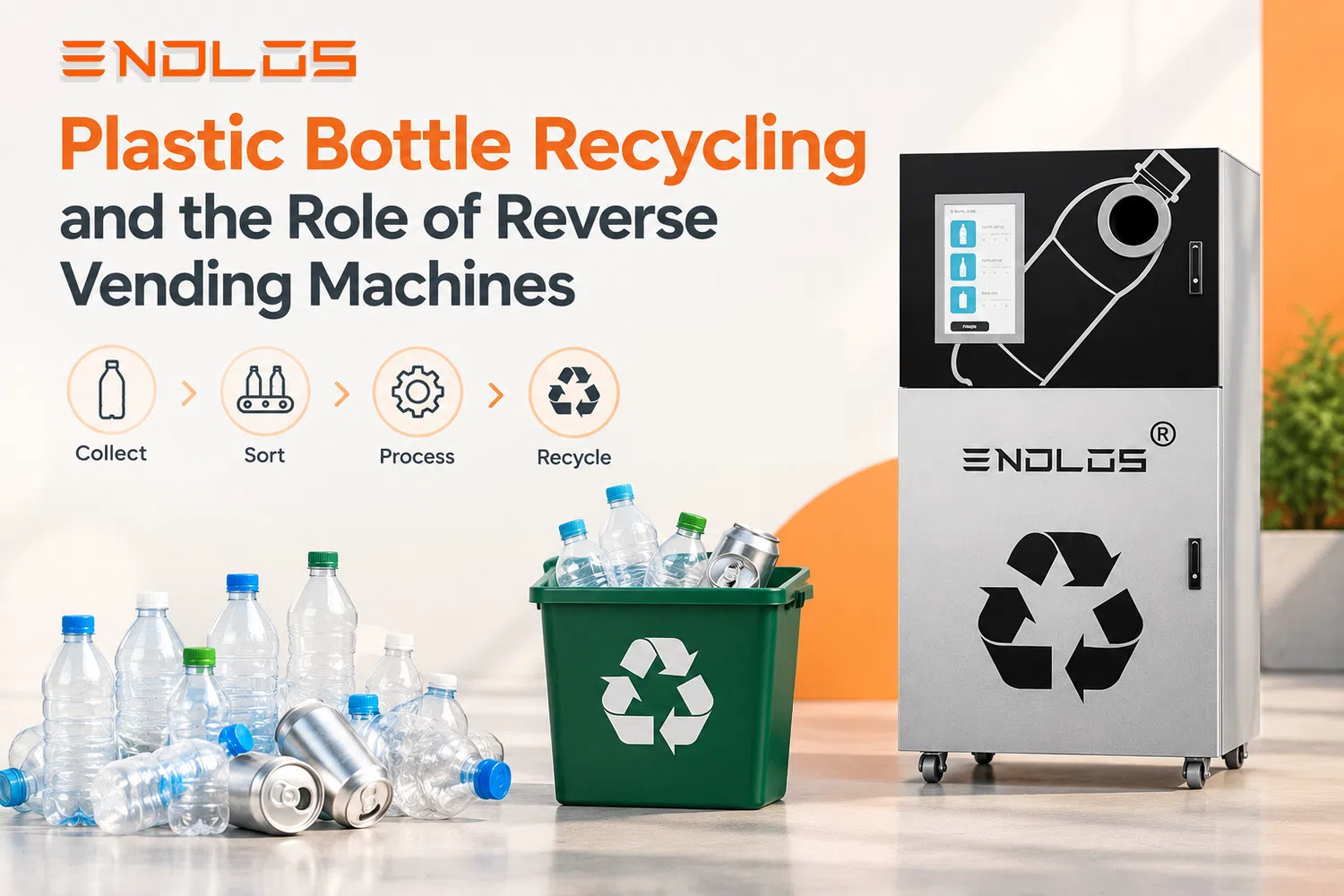
The recycling journey looks like this:
Collection → Sorting → Processing → Recycling → New Products
Successful recycling depends heavily on what happens at the very first stage. If recyclable bottles get mixed with other waste, contaminated, or sent to the wrong waste stream, recovering the material becomes far more difficult — sometimes impossible. That's why improving how bottles are collected is one of the most important parts of building an effective recycling system.
Why Plastic Bottle Recycling Matters
Plastic bottle recycling delivers real environmental and resource benefits when the collection and recycling system is properly managed.
1. It Recovers Valuable Materials
A used plastic bottle doesn't have to become waste. Through proper collection and recycling, the material gets recovered and used again — supporting a more circular approach to resources, where materials stay in circulation for longer instead of ending up in a landfill after a single use.
2. It Reduces the Amount of Plastic Going to Waste
Better collection makes it easier to direct recyclable bottles away from general waste streams and toward recycling facilities. The more effectively recyclable material gets captured at the source, the greater the opportunity to recover and reuse it.
3. It Supports a Circular Economy
Plastic bottle recycling is a core part of the broader circular economy. Instead of following a simple:
Make → Use → Dispose
model, recycling creates a more circular flow:
Make → Use → Collect → Recycle → Reuse
Collection systems are the critical connection between everyday consumers and recycling infrastructure.
4. It Encourages More Responsible Recycling Habits
Convenience matters. When people have a clear, accessible way to return their empty bottles, recycling stops being a chore and becomes a habit. This is exactly why automated collection technologies are gaining ground alongside traditional recycling systems.
How Does the Plastic Bottle Recycling Process Work?
The exact process varies depending on the type of plastic, the collection system, and the recycling facility — but the journey generally follows several key stages.
Step 1: Collection
The first step is collecting used plastic bottles. Bottles get collected through several systems, including:
Household recycling
Recycling bins
Collection centres
Retail collection points
Reverse vending machines
Deposit return systems
The quality of material entering the recycling stream is directly shaped by how well containers are collected and separated right here, at this first step.
Step 2: Sorting
After collection, bottles get sorted. Sorting separates materials and identifies different container types — through manual processes, automated equipment, or a mix of both, depending on the facility. Accurate sorting is what ensures materials end up in the right processing stream instead of being wasted on contamination.
Step 3: Preparation and Processing
Once sorted, plastic bottles get prepared for further recycling, which typically includes:
Removing unwanted materials
Compacting or preparing collected containers
Shredding or size reduction
Washing
Separating materials
Producing plastic flakes or other processed material
The exact process depends on the recycling facility and the material being handled.
Step 4: Conversion Into Recycled Material
After processing, the recovered plastic gets converted into usable recycled material — ready to become an input for manufacturing new products.
Step 5: Manufacturing New Products
Recycled plastic enters another production cycle. This is the heart of the circular economy: material that's already been used becomes a resource for another product, instead of being discarded after a single use.
How Are Plastic Bottles Collected for Recycling?
Collection is the single most important part of the recycling chain.
Traditional collection methods like recycling bins and collection centres remain essential, but technology makes container returns far more structured and convenient.
One example is the reverse vending machine (RVM) — an automated system designed to accept used beverage containers, identify them, and process eligible containers before storing or preparing them for onward recycling.
What Role Do Reverse Vending Machines Play in Plastic Bottle Recycling?
Reverse vending machines act as an automated collection point between consumers and the wider recycling system.
Instead of tossing an empty bottle into a general waste bin, a user returns an eligible container through an RVM. The system identifies the container using technologies like barcode scanning, size, weight, and material recognition, then collects, sorts, or processes it for more efficient handling.
ENDLOS RVM solutions, for example, are built to handle plastic, aluminium, and glass containers, with configurations that include material identification, segregation, compaction, and shredding.
How an RVM Supports the Collection Stage
A reverse vending machine strengthens the collection process in several concrete ways:
Convenient returns: Users get a dedicated point to return eligible containers.
Container identification: The machine verifies containers using built-in recognition technology.
Material handling: Containers get separated and processed on the spot, making downstream handling faster and more efficient.
Data collection: Connected RVMs track transactions and collected containers, giving businesses real visibility into recycling activity.
Consumer engagement: Many RVM configurations support rewards, vouchers, or other incentives that keep people coming back.
These capabilities make RVMs especially valuable for organisations serious about improving how recyclable beverage containers are collected.
Plastic Bottle Recycling vs. Traditional Waste Collection
Plastic bottles get collected through many different systems, and there's no single solution suitable for every location.
Traditional recycling collection relies heavily on people placing recyclable materials into designated bins. An RVM introduces a different approach entirely: the container is returned directly through a machine that identifies and handles it immediately.
Both approaches serve a purpose and often work best side by side. In many cases, a reverse vending machine vs traditional recycling comparison comes down less to which method is "better" and more to which fits a specific location's needs.
The real question isn't which technology looks more advanced — it's how effectively the overall system collects, sorts, and moves recyclable materials toward the right recycling facilities.
What Happens to Plastic Bottles After They're Collected?
Collection is only the beginning. Once bottles reach the right recycling stream, they go through further sorting and processing before becoming recycled material.
Used Bottle → Collection → Sorting → Processing → Recycled Material → New Products
This is why collection technology should be seen as one part of a much larger recycling ecosystem. An RVM doesn't replace the entire recycling process — its role is at the front end, helping collect and identify containers before they move into the next stages of the chain.
What Are the Benefits of Better Plastic Bottle Collection?
Improving collection delivers benefits well beyond simply increasing the number of bottles returned.
Better Material Recovery
Separating recyclable containers from general waste creates real opportunities for material recovery that would otherwise be lost.
Greater Convenience
Convenient collection points make it genuinely easier for people to participate in recycling.
Improved Visibility
Connected collection systems provide data that helps organisations understand usage and container-return activity in real time.
Better Consumer Engagement
Where reward or incentive systems are in place, technology gives consumers a real, tangible reason to participate.
How Can Businesses Support Plastic Bottle Recycling?
Businesses can play a direct role in better bottle recycling by rethinking how containers get collected at their locations. Depending on the environment, this can include:
Providing clearly labelled recycling points
Making collection points easy to find
Educating users about correct disposal
Separating recyclable containers from general waste
Tracking collection activity
Exploring automated collection technologies
Partnering with the right recycling providers
For supermarkets, offices, educational institutions, public spaces, and other high-footfall environments, the right collection approach depends on expected container volumes, available space, user behaviour, and the downstream recycling infrastructure in place.
The Future of Plastic Bottle Recycling
Plastic bottle recycling isn't only about what happens inside a recycling facility — the journey starts the moment someone decides what to do with an empty bottle.
Better collection, clearer recycling systems, improved sorting, and the right technology all contribute to a more efficient recycling chain. Reverse vending machines are one technology helping connect consumers with organised collection systems — and when combined with the right recycling infrastructure, data systems, and consumer engagement, they become part of a much bigger approach to recovering valuable materials.
The goal is simple: make it easier for recyclable materials to move in the right direction.
Conclusion
Plastic bottle recycling involves far more than dropping an empty bottle into a bin. It's a connected process that begins with collection and continues through sorting, processing, and the creation of new recycled material.
Improving the collection stage is one of the most important levers in the entire recycling system. Reverse vending machines support this stage directly — through automated container identification, collection, and material handling. They're not a replacement for the full recycling process, but they form a critical link between consumers and recycling infrastructure.
As recycling systems continue to evolve, combining better collection practices with the right technology is how we build a more efficient, truly circular approach to managing plastic bottles.
If you're exploring automated container collection, ENDLOS Reverse Vending Machines are built to support businesses and institutions looking to improve how they collect and process recyclable containers.