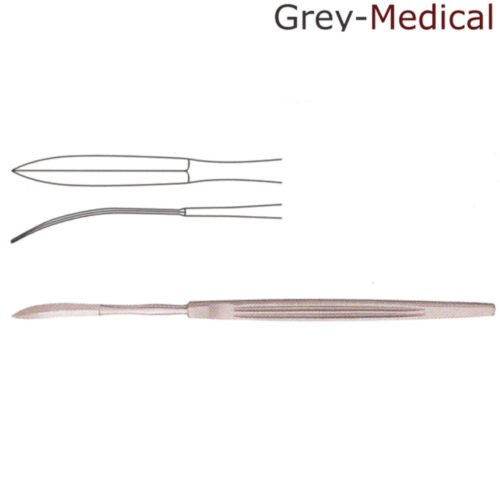
In the realm of orthopedic and surgical procedures, precision tools like chisels and osteotomes play a crucial role. While both instruments are used for cutting and shaping bone, they have distinct features and applications. Understanding the differences between chisels and osteotomes can help in selecting the appropriate tool for specific surgical needs, ensuring optimal outcomes for patients.
Design and Structure
Chisel
A chisel is a hand-held cutting instrument with a flat, beveled blade. It typically features a handle that allows for a firm grip and precise control. The blade of a chisel is designed to be struck with a mallet or hammer, enabling the surgeon to apply controlled force. Chisels are commonly used in procedures that require the removal of bone or the creation of precise cuts.
Chisels come in various sizes and shapes, tailored to different surgical tasks. Some have straight blades for making linear cuts, while others have curved blades for more intricate work. The sharpness and angle of the bevel can vary, influencing the tool's cutting efficiency and the smoothness of the cut.
Osteotome
An osteotome, on the other hand, is similar in appearance to a chisel but differs in its blade structure. It has a double-beveled edge, allowing it to cut bone in two directions. This design makes osteotomes particularly useful for splitting or sectioning bone. Like chisels, osteotomes are used with a mallet to apply force and make precise cuts.
Osteotomes also come in a range of sizes and configurations, with some having straight blades and others angled or curved. The versatility of osteotomes makes them suitable for a variety of surgical procedures, from orthopedic surgeries to craniofacial reconstructions.
Applications in Surgery
Use of Chisels
Chisels are primarily used in procedures that require precise bone cutting or shaping. In orthopedic surgery, they are employed to remove bone spurs, reshape joints, or prepare bone surfaces for implants. Their ability to make clean, controlled cuts makes them ideal for tasks that require high precision.
Chisels are also used in dental surgery for tasks such as removing bone around a tooth or creating space for implants. The flat blade of the chisel allows for precise cuts in hard-to-reach areas, ensuring minimal damage to surrounding tissues.
Use of Osteotomes
Osteotomes are often used in procedures that involve splitting or sectioning bone. In orthopedic surgeries, they are employed to cut through dense bone structures or to perform osteotomies, which involve the cutting and repositioning of bone. The double-beveled edge of the osteotome allows for efficient cutting with less force, reducing the risk of bone fragmentation.
In craniofacial surgery, osteotomes are used to reshape the facial bones, correct deformities, or perform reconstructive procedures. Their ability to make precise cuts with minimal trauma to the bone is crucial in these delicate surgeries.
Advantages and Considerations
The choice between a chisel and an osteotome depends on the specific requirements of the procedure. Chisels are preferred for tasks that require straight cuts and precise shaping, while osteotomes are better suited for splitting bone or making cuts in dense bone structures.
Both instruments require skill and precision to use effectively. Proper handling and technique are essential to avoid complications such as bone splintering or tissue damage. Surgeons must also consider the patient's anatomy and the specific surgical goals when selecting the appropriate tool.
Conclusion
Chisels and osteotomes are indispensable tools in surgical practice, each with unique features and applications. Understanding the differences between these instruments allows surgeons to choose the right tool for each procedure, enhancing precision and patient outcomes. As surgical techniques continue to evolve, the importance of selecting the appropriate instruments remains a cornerstone of successful surgical intervention.