Organizations spend considerable effort perfecting the exit interview — a structured conversation with someone who has already decided to leave. Far fewer invest similar effort into the mirror-image conversation: asking currently engaged, valued employees directly what would make them consider staying for years to come, before there's any sign they're thinking about leaving. This proactive conversation, often called a stay interview, is one of the more underused tools available for companies serious about learning how to reduce employee turnover before it happens, rather than only understanding it after the fact.
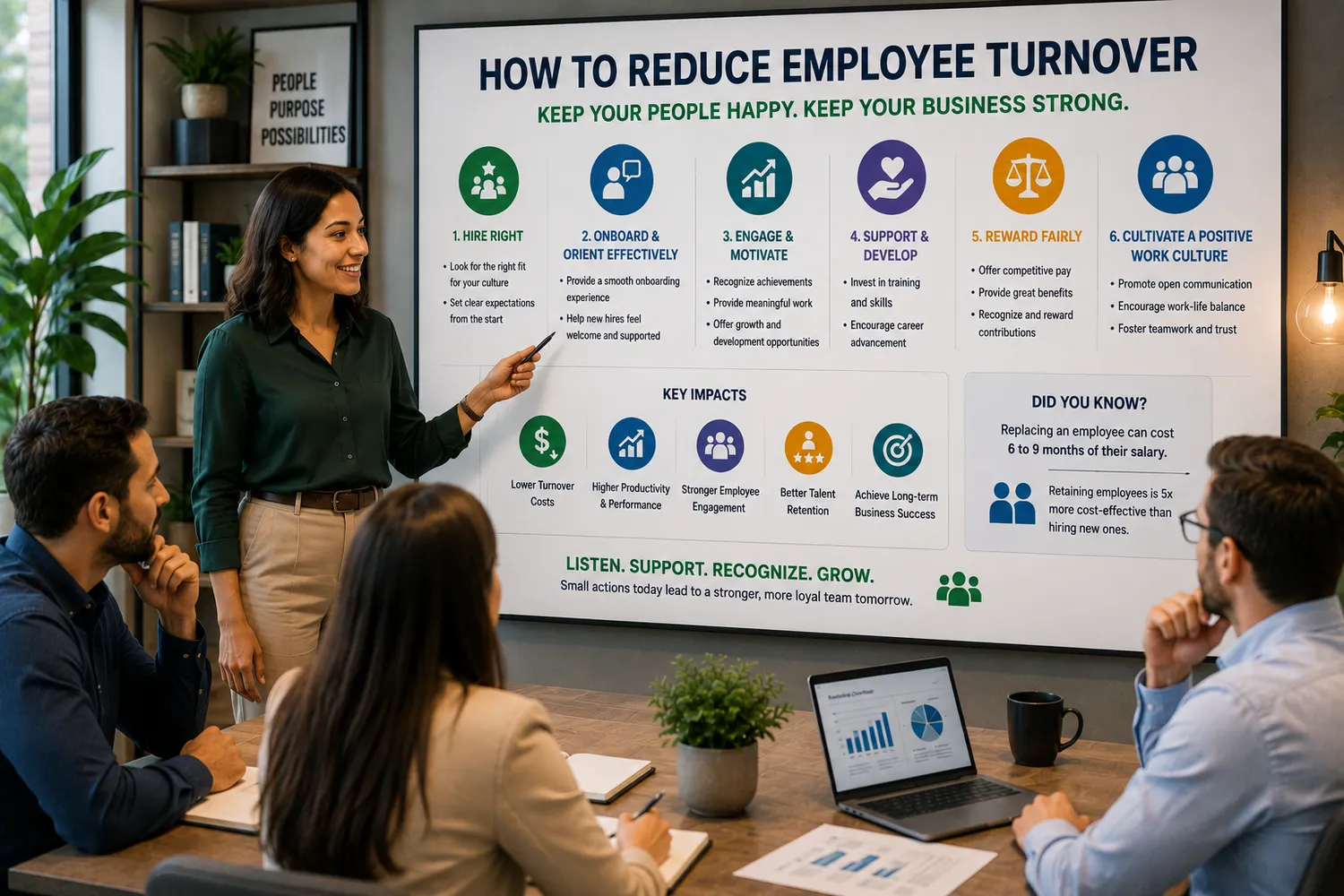
The logic behind stay interviews is straightforward once stated directly: exit interviews tell you why people who already decided to leave made that choice, which is useful but arrives too late to change that specific outcome. Stay interviews, conducted with employees who haven't yet decided anything, provide a chance to identify and address concerns while there's still genuine opportunity to influence the outcome, rather than learning about a problem only once someone has already resigned.
Building a Genuine Stay Interview Practice
Choosing Who to Interview and When
Stay interviews work best when conducted proactively with employees the organization genuinely wants to retain, rather than only in response to a specific concern or performance issue. This typically means prioritizing high performers, employees in critical or hard-to-replace roles, and anyone showing early, subtle signals of disengagement even if nothing formal has been raised yet. Waiting until an employee shows obvious signs of flight risk before conducting a stay interview defeats much of the purpose, since the goal is catching and addressing concerns while they're still relatively minor and more easily resolved.
Timing matters too. Conducting stay interviews on a regular cadence — annually at minimum, more frequently for particularly high-value or high-risk roles — tends to produce more useful, ongoing insight than a one-time exercise. This is also where a broader employee retention plan benefits from building stay interviews in as a standard, recurring practice rather than an occasional special initiative that gets deprioritized once other demands compete for time.
Asking Questions That Actually Surface Useful Information
Generic questions like "are you happy here" tend to produce equally generic, unhelpful answers. Effective stay interviews use more specific, targeted questions designed to surface concrete information — what makes a typical day genuinely satisfying versus frustrating, what would make the employee consider an external opportunity even if they're not currently looking, what they'd change about their role or team if they had the authority to do so, and what specifically would make them recommend the company enthusiastically to a friend considering a similar role.
These more specific questions tend to reveal considerably more actionable information than generic satisfaction questions, partly because they don't require an employee to make a binary judgment about overall happiness, which many people are reluctant to answer critically even when they have genuine concerns, and partly because specific questions naturally invite specific, useful answers rather than vague reassurance.
Who Should Conduct the Conversation
A stay interview conducted by an employee's direct manager carries real advantages — an ongoing relationship and context that makes follow-through more natural — but also real risk, since employees may be reluctant to raise concerns directly about that same manager, or about workload and team dynamics the manager themselves is responsible for. Some organizations address this by having a skip-level manager or HR representative conduct at least some stay interviews, particularly for employees whose primary concerns might reasonably relate to their direct supervisor.
Bringing in an outside employee retention consultant to conduct a round of stay interviews can be particularly valuable when an organization suspects deeper, more sensitive issues that employees might hesitate to share candidly even with a skip-level internal representative, since a neutral outside party carries less risk of any internal political consequence for candid feedback.
Turning Individual Conversations Into Organizational Insight
A single stay interview provides useful information about one specific employee's situation, but the real strategic value emerges when responses are aggregated across many conversations, revealing patterns that point toward broader organizational issues rather than isolated individual concerns. If multiple stay interviews across different teams independently surface concerns about a specific benefit, a particular process friction, or a common frustration with how a certain policy gets applied, that convergence signals something worth addressing at a systemic level rather than treating each mention as an isolated individual preference.
This aggregation approach is where efforts to reduce staff turnover benefit from treating stay interview data with the same analytical rigor typically applied to exit interviews or engagement surveys, rather than treating each conversation as a standalone check-in disconnected from the broader pattern it might represent alongside other similar conversations happening across the organization.
Following Through Is What Makes the Practice Credible
Nothing damages the long-term value of stay interviews faster than employees sensing that concerns raised in these conversations never lead to any visible change. If a stay interview surfaces a genuine, addressable concern and nothing happens as a result, that employee — and often their colleagues who hear about the lack of follow-through informally — become considerably more skeptical about the value of being candid in future conversations, whether stay interviews, engagement surveys, or any other feedback mechanism the organization relies on.
Building a clear internal process for tracking what stay interviews reveal and following up on commitments made during those conversations, even informal ones, is what separates a genuinely valuable practice from a well-intentioned exercise that quietly erodes trust once employees realize their honest input doesn't translate into any real action.
Combining Stay Interviews With Broader Data Sources
Stay interviews work best as one input within a broader retention system rather than a standalone practice operating in isolation. Insights from stay conversations can help interpret patterns showing up in survey data or flagged by an employee retention platform, adding qualitative context and nuance that quantitative risk scores alone can't fully capture. Conversely, quantitative data can help identify which employees or teams to prioritize for stay interviews in the first place, ensuring limited time gets directed toward conversations most likely to surface genuinely valuable, actionable insight.
Handling Sensitive or Difficult Responses Constructively
Stay interviews sometimes surface concerns that are genuinely difficult to address directly, such as an employee expressing frustration with a decision that isn't likely to change, or raising a concern about compensation the organization currently can't meet. How these harder responses get handled matters considerably for whether the practice retains credibility over time. Dismissing or deflecting difficult feedback tends to signal that the stay interview process only welcomes easy, resolvable concerns, which discourages genuinely candid input in future conversations. A better approach acknowledges the concern directly, explains honestly what can and can't realistically change, and looks for whatever adjacent adjustments might be possible even when the core concern itself can't be fully resolved.
This kind of honest, even if imperfect, response tends to preserve trust in the practice considerably better than either false promises to fix something that realistically won't change, or a dismissive response that discourages the employee from raising similarly candid concerns in future conversations.
Documenting Without Creating an Intimidating Paper Trail
There's a balance to strike in how stay interview conversations get documented. Some record is necessary to track patterns and follow-through commitments over time, but overly formal documentation can make employees more guarded during the actual conversation, worried about how candid comments might be recorded and potentially referenced later. Lighter-touch documentation — brief, theme-focused notes rather than verbatim transcripts — tends to preserve the conversational, genuinely open quality that makes stay interviews valuable in the first place, while still providing enough of a record to track patterns and commitments across multiple conversations over time.
Asking Before It's Too Late to Matter
The fundamental value of stay interviews lies in their timing — they create space to identify and address concerns while an employee genuinely hasn't decided to leave, rather than learning about the same concerns only after that decision has already been made. Organizations that build this proactive conversation into regular practice, rather than relying solely on reactive exit interviews after someone has already resigned, tend to catch and resolve issues while there's still real opportunity to change the outcome.
If your organization has never conducted a genuine stay interview, it's worth starting with a handful of high-value employees you'd be most concerned about losing, and building the practice out from there based on what those initial conversations reveal.
Want help building a stay interview practice that actually surfaces useful insight? Calculate your cost of turnover first, then explore how proactive conversations can help prevent it before it happens.
Frequently Asked Questions
How can how to reduce employee turnover strategies benefit from adding stay interviews?
By identifying and addressing employee concerns before a resignation decision is made, rather than only learning about those same concerns after the fact through exit interviews that arrive too late to change the outcome.
How can companies reduce staff turnover using stay interview data effectively?
By aggregating responses across many conversations to identify systemic patterns, rather than treating each stay interview as an isolated conversation disconnected from broader organizational issues it might reveal.
How can an employee retention plan incorporate stay interviews as a standard practice?
By building a recurring cadence, at minimum annually for high-value roles, into the broader retention plan rather than treating stay interviews as an occasional special initiative that easily gets deprioritized.
How can an employee retention consultant help conduct more effective stay interviews?
By providing a neutral outside perspective for particularly sensitive conversations, reducing the risk employees may feel discussing concerns related to their direct manager or broader organizational issues.
How can an employee retention platform work alongside stay interview practice?
By using quantitative risk data to prioritize which employees to interview first, while qualitative stay interview insights help add context and nuance to patterns the platform's data alone can't fully explain.