Quick Answer:
Height safety training is important because falls from height remain one of the leading causes of workplace death and serious injury in Australia. Proper training teaches workers to use edge protection, MEWPs, and safety harness systems correctly, helping businesses meet legal duties and keep every worker safe.
Working at height is part of daily life on construction sites, warehouses, telecommunications towers, and maintenance jobs across Australia. Yet it remains one of the riskiest tasks a worker can perform. Height safety training gives workers the knowledge and practical skills to identify hazards, use the right equipment, and respond correctly if something goes wrong. Without it, even a short job on a ladder or roof can turn into a life-changing accident.
This article explains why height safety training matters, what it covers, and how it helps businesses stay compliant while protecting their people.
What Is Height Safety Training?
Height safety training is a structured course that teaches workers how to plan, prepare for, and carry out tasks above ground level. It covers hazard identification, safe use of access equipment, and correct fall protection systems. Courses are usually delivered by registered training organisations and lead to a nationally recognised statement of attainment.
Height safety training isn't a one-off box-ticking exercise. It builds practical, repeatable habits that reduce risk every single day a worker is on the job.
Why Height Safety Training Matters
Falls Are a Leading Cause of Workplace Harm
Falls from height consistently rank among the top causes of serious workplace injury and death in Australia. Roofers, scaffolders, electricians, and warehouse staff are all at risk when working above ground without the right skills or equipment.
It Builds Real Hazard Awareness
Height safety training teaches workers to spot dangers before they become accidents. This includes unstable surfaces, poor weather conditions, unsecured tools, and gaps in edge protection. Trained workers think ahead instead of reacting after something has already gone wrong.
It Reduces Business Risk and Downtime
An incident at height doesn't just harm the worker. It can shut down a site, trigger an investigation, and damage a company's reputation. Height safety training lowers the chance of these disruptions by embedding safe practices from day one.
Key Benefits of Height Safety Training
Height safety training delivers value well beyond compliance. Businesses and workers both benefit in practical, measurable ways.
Fewer incidents and near misses — trained workers recognise risks earlier
Lower insurance and liability costs — fewer claims mean better outcomes for employers
Stronger safety culture — teams that understand risk look out for one another
Improved productivity — confident workers complete tasks efficiently and correctly
Better equipment use — training reduces wear and misuse of costly gear
What Does a Height Safety Training Course Cover?
A quality height safety training course is hands-on and practical. It combines classroom learning with real equipment so workers leave job-ready.
Edge Protection
Edge protection refers to physical barriers, guardrails, and covers that stop workers and objects from falling from an open edge. Training covers how to install, inspect, and maintain these systems correctly, since poorly fitted edge protection is a common cause of incidents.
MEWP Operation
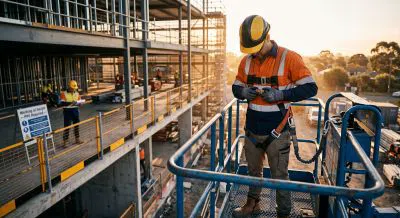
A MEWP, or mobile elevated work platform, includes scissor lifts and boom lifts used to reach elevated work areas safely. Courses teach pre-start checks, safe operating limits, and emergency lowering procedures. Because MEWPs involve moving machinery, hands-on practice is essential before a worker operates one unsupervised.
Safety Harness Systems
Safety harness systems are a core part of any working at height course. Workers learn how to fit a harness correctly, connect to an anchor point, and inspect equipment for wear or damage before every use. A poorly fitted harness offers little protection, so this section of training is always delivered practically, not just in theory.
Working at Height Course Fundamentals
Beyond specific equipment, a working at height course covers risk assessment, rescue planning, and the hierarchy of fall control. Workers learn to eliminate risks first, then apply engineering controls like edge protection, and use personal fall protection systems as a last line of defence.
Height Safety Training and Compliance in Australia
Under work health and safety laws, employers have a duty to manage risks associated with working at height. Height safety training supports this duty by giving workers verified, documented competency. It also helps businesses demonstrate due diligence if an incident is ever investigated.
Height safety compliance isn't just about ticking a legal box. It reflects a genuine commitment to sending workers home safely at the end of every shift. Regular refresher training keeps skills current, especially as equipment, standards, and site conditions change over time.
Who Needs Height Safety Training?
Anyone who works at height, even occasionally, benefits from training. This includes:
Construction and scaffolding workers
Roofers and building maintenance staff
Telecommunications and utility technicians
Warehouse staff using elevated platforms
Facilities and maintenance teams accessing plant rooms or roofs
Supervisors and site managers also benefit from training, since they're responsible for planning safe work at height and checking that fall protection systems are used correctly.
Choosing the Right Height Safety Training Provider
Not all courses are equal. Look for a provider that offers nationally recognised qualifications, hands-on practical assessment, and access to real equipment such as harnesses, edge protection systems, and MEWPs. Experienced trainers with genuine industry background add real value, since they can share practical insights that go beyond the course manual.
Key Takeaways
Falls from height are a major cause of workplace injury and death in Australia
Height safety training builds hazard awareness and reduces incidents on site
Courses cover edge protection, MEWP operation, and safety harness systems
Training supports legal compliance and demonstrates employer due diligence
Anyone working at height, even occasionally, should be trained and assessed
Choosing a quality provider with hands-on assessment matters as much as the certificate itself
FAQs
How long does height safety training take?
Most courses run for one day, though this can vary depending on the provider and the specific units covered, such as MEWP operation or harness use.
Does height safety training expire?
Many employers require refresher training every 1–3 years, particularly for high-risk activities or when equipment and site conditions change.
Is height safety training a legal requirement in Australia?
Employers have a legal duty to manage risks at height under work health and safety laws. Training is the most practical way to meet this duty and prove worker competency.
What's the difference between a harness and edge protection?
A safety harness is personal fall protection worn by the worker. Edge protection is a physical barrier, such as guardrails, that prevents falls before they happen. Most sites use both as part of a layered safety approach.
Can I operate a MEWP without training?
No. Operating a mobile elevated work platform without proper training is unsafe and, in most workplaces, against company policy and legal requirements.