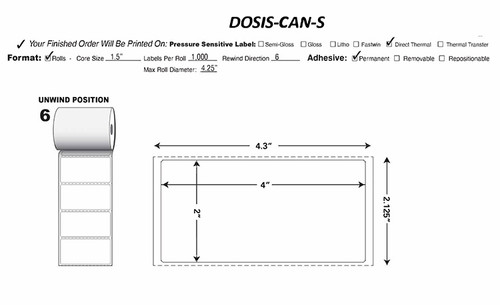
Perforated labels are a practical and efficient labeling option designed with small, evenly spaced cuts that allow easy tearing or separation between sections. These labels combine the functionality of traditional adhesive labeling with the convenience of tear-off sections, making them ideal for industries that require flexibility, organization, and efficiency in product handling or customer communication.
This article explores the design, uses, and advantages of perforated labels—and how they improve workflow, packaging, and labeling across multiple applications.
What Are Perforated Labels?
Perforated labels are adhesive-backed sheets or rolls that include small cuts or “perfs” between labels, allowing users to tear off individual sections without damaging the printed surface. The perforation may divide labels on a sheet, separate detachable portions for receipts, or create easy peel-and-apply functionality.
They can be produced in rolls, fanfold stacks, or sheets compatible with laser, inkjet, or thermal printers, depending on the specific application.
Common Uses of Perforated Labels
Perforated labels are used in many industries due to their adaptability and convenience:
- Retail and E-Commerce: For price tags, receipts, and promotional labels that can be easily torn and handed to customers.
- Logistics and Shipping: Tracking labels and inventory stickers that include tear-off sections for documentation or internal records.
- Healthcare: Used for specimen labeling, medication tracking, and patient forms that require both an adhesive and removable copy.
- Manufacturing: For quality control processes or product batch labeling where part of the label remains on the product and part goes to recordkeeping.
- Food Service: Helpful for date rotation, inventory management, and compliance labeling in kitchens and food distribution centers.
- Event Management: Ideal for tickets, wristbands, or promotional coupons that require easy separation.
The ability to combine multiple labeling needs—such as identification and documentation—makes perforated labels a cost-effective and time-saving solution.
Key Features of Perforated Labels
Perforated labels offer several defining characteristics that make them practical for high-volume and detailed applications:
- Easy Separation: Designed with precision-cut perforations for clean tearing.
- Custom Configurations: Available in single or multiple perforations per sheet or roll.
- Printer Compatibility: Works with thermal transfer, direct thermal, laser, and inkjet printers.
- Durable Adhesives: Ensures secure attachment on a wide range of surfaces, from packaging boxes to plastic containers.
- Material Options: Available in paper, polyester, polypropylene, and synthetic films for different environments.
- Tear-Resistant and Smudge-Proof: Maintains legibility and integrity even with frequent handling.
Types of Perforated Labels
1. Continuous Roll Labels
Ideal for high-speed printing applications, these rolls feature evenly spaced perforations that allow individual labels to be torn or dispensed easily.
2. Two-Part or Multi-Part Labels
Include a detachable section for recordkeeping or receipts—often used in shipping, healthcare, or manufacturing documentation.
3. Fan-Fold Labels
Stacked in a zig-zag fold pattern with perforations between sheets, these are convenient for printers that feed labels continuously.
4. Sheet Labels
Perforated sheets are compatible with office printers and are commonly used for administrative tasks, order forms, and multi-copy labeling.
Benefits of Using Perforated Labels
Perforated labels offer multiple advantages that simplify operations and enhance productivity:
- Improved Efficiency: Quick tear-off design reduces handling time and speeds up labeling tasks.
- Multi-Use Functionality: One label can serve multiple purposes, such as identification and documentation.
- Clean Appearance: Perforations ensure neat separation without uneven edges or residue.
- Versatility: Suitable for a wide range of surfaces and environmental conditions.
- Reduced Waste: Allows users to print or use only the portions needed.
- Cost-Effective: Combines multiple labeling needs into a single printing process.
Design and Customization Options
Perforated labels can be customized in terms of:
- Size and Layout: Labels can include one or multiple perforations depending on workflow.
- Shape and Format: Options include rectangles, circles, or custom contours.
- Printing Method: Compatible with full-color graphics, barcodes, serial numbers, and variable data.
- Adhesive Strength: Choose from permanent, removable, or repositionable adhesives.
- Finish and Coating: Glossy, matte, or weather-resistant finishes available for durability and presentation.
Customized perforated labels are especially valuable for branding, compliance, and traceability.
Industry Applications
- Pharmaceuticals: For prescriptions and lab samples that require duplicate information for records.
- Food Production: For lot tracking and labeling that separates between packages and log sheets.
- Warehousing: Simplifies inventory tracking by providing detachable copies for documentation.
- Retail: For coupons, special offers, and receipts integrated with product labels.
- Automotive and Manufacturing: Used in parts tracking, inspection records, and maintenance logs.
Perforated labels enhance efficiency wherever precise labeling and documentation are required.
Environmental and Safety Considerations
Modern perforated labels can be made using eco-friendly materials, such as recyclable paper or biodegradable films. Manufacturers are also adopting sustainable printing techniques, including water-based inks and reduced liner waste, to minimize environmental impact.
For sensitive industries like food and healthcare, FDA-compliant adhesives and materials ensure product safety and compliance with industry standards.
Conclusion
Perforated labels provide a smart, flexible, and efficient solution for modern labeling needs. Their easy-tear design and multi-purpose functionality make them ideal for industries that rely on speed, accuracy, and organization.
Whether used for shipping, product labeling, documentation, or promotions, perforated labels offer the perfect blend of practicality and performance—enhancing workflow and maintaining professional presentation across all stages of production and distribution.