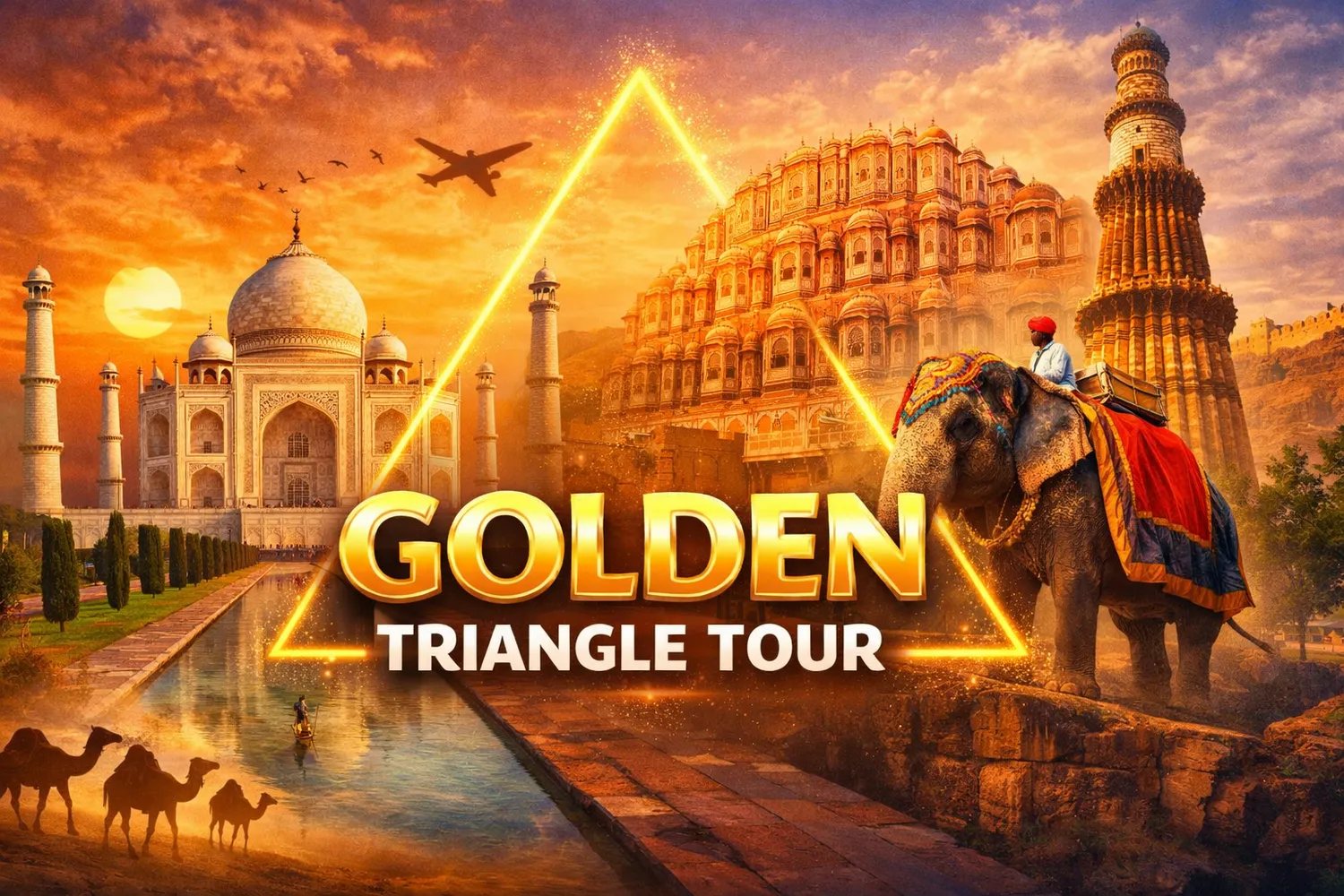
The Golden Triangle is India’s most iconic travel circuit, connecting the national capital, Delhi, with the Mughal city of Agra and the royal "Pink City" of Jaipur. This route forms a triangle on the map of North India, offering a concentrated dose of the country’s diverse history, vibrant culture, and architectural brilliance. For many travelers, this journey serves as the perfect introduction to the land of maharajas and emperors.
Covering a distance of roughly 700 to 800 kilometers in total, the circuit is designed for those who wish to experience the grandeur of the Mughal Empire alongside the chivalry of the Rajputana. Each city tells a distinct story, from the bustling narrow lanes of Old Delhi to the ivory-white marble of the Taj Mahal and the hilltop forts of Rajasthan.
The Journey Begins in Delhi: A Tale of Two Cities
Delhi is often the starting point for most travelers. As a city that has been destroyed and rebuilt seven times, it offers a fascinating contrast between the old and the new. In Old Delhi, the 17th-century Red Fort stands as a testament to Mughal power, while the nearby Jama Masjid—one of India’s largest mosques—overlooks the chaotic yet charming bazaars of Chandni Chowk. A rickshaw ride through these streets provides an authentic sensory experience, filled with the aroma of spices and street food.
Moving into New Delhi, the atmosphere shifts to wide avenues and colonial-era architecture designed by Edwin Lutyens. Key highlights include the India Gate, a war memorial dedicated to Indian soldiers, and the towering Qutub Minar, a UNESCO World Heritage site that dates back to the 12th century. The city’s ability to balance ancient ruins with modern high-rises makes it a compelling first stop. To navigate this sprawling metropolis with ease, many travelers opt for official golden triangle tour packages that provide private vehicles and expert guides to ensure no landmark is missed.
Agra: Witnessing the Epitome of Mughal Grandeur
After soaking in the energy of Delhi, the journey continues south to Agra. Once the capital of the Mughal Empire, Agra is synonymous with the Taj Mahal. Built by Emperor Shah Jahan in memory of his beloved wife Mumtaz Mahal, this "monument of love" is widely considered the finest example of Mughal architecture. Visiting the Taj Mahal at sunrise is highly recommended, as the changing light reflects beautifully off the white marble, creating a truly ethereal sight.
Agra is not just about a single monument, however. The Agra Fort, a massive red sandstone fortress, offers a deep dive into the lives of the emperors who once ruled from its walls. From the fort's balconies, one can catch a distant, poignant view of the Taj Mahal across the Yamuna River. Another hidden gem is the Tomb of Itmad-ud-Daulah, often called the "Baby Taj," which features intricate marble inlay work that served as a precursor to the designs found on the Taj Mahal itself.
Jaipur: Entering the Royal Heart of Rajasthan
The final leg of the triangle leads to Jaipur, the capital of Rajasthan. Known as the Pink City because of the terracotta-pink color of its buildings, Jaipur is a masterpiece of early 18th-century urban planning. The city is home to some of India’s most photogenic forts and palaces. The Amber Fort, perched on a hill overlooking Maota Lake, is the star attraction. Its blend of Hindu and Mughal artistic elements, including the stunning Sheesh Mahal (Mirror Palace), leaves every visitor in awe.
Back in the city center, the Hawa Mahal, or "Palace of Winds," stands with its unique five-story honeycomb facade. It was designed to allow royal ladies to observe street festivals without being seen. Nearby, the City Palace continues to house the former royal family and features a museum with extensive collections of royal costumes and weaponry. Jaipur is also a shopper's paradise, famous for its hand-block printed textiles, blue pottery, and precious gemstones.
Making the Most of Your Golden Triangle Experience
Planning a trip of this magnitude requires careful coordination to ensure comfort and authenticity. While the cities are well-connected by expressways and luxury trains, traveling by road offers the flexibility to visit offbeat stops like the abandoned Mughal city of Fatehpur Sikri or the ancient stepwells of Abhaneri.
Rajasthan Tour Services specializes in creating seamless itineraries that cater to diverse preferences, whether you are looking for a quick 4-day highlights tour or an extended 7-day cultural immersion. By providing experienced local drivers and knowledgeable guides, they help bridge the gap between just visiting a monument and truly understanding its history. Their expertise ensures that travelers can enjoy the local flavors of each city—like the paranthas of Delhi, the petha of Agra, and the dal baati churma of Jaipur—without the stress of logistics.
Why the Golden Triangle Remains a Classic
The reason this circuit remains the most popular in India is its accessibility and the sheer density of heritage it provides. It is a journey that transcends time, taking you from the medieval era to the colonial period and finally into the colorful traditions of the desert.
Whether you are a history buff, an architecture enthusiast, or a photographer looking for the perfect shot, the Golden Triangle delivers. It captures the soul of Northern India in a single, manageable loop. To ensure your trip is as majestic as the destinations themselves, consider exploring the variety of delhi agra jaipur travel options available to customize your path through these historic corridors. With the right planning, a visit to these three cities becomes more than just a vacation—it becomes a lifelong memory of India’s golden age.