In today’s competitive business environment, finance accuracy is no longer optional—it is essential for sustainable growth. One overlooked yet highly impactful area is purchase order recosting. When costs fluctuate due to vendor revisions, logistics charges, or tax updates, failing to recost purchase orders can lead to mismatched books, inaccurate margins, and audit challenges. Implementing structured Purchase Order Recost best practices helps organizations maintain financial clarity, improve compliance, and make data-driven decisions with confidence.
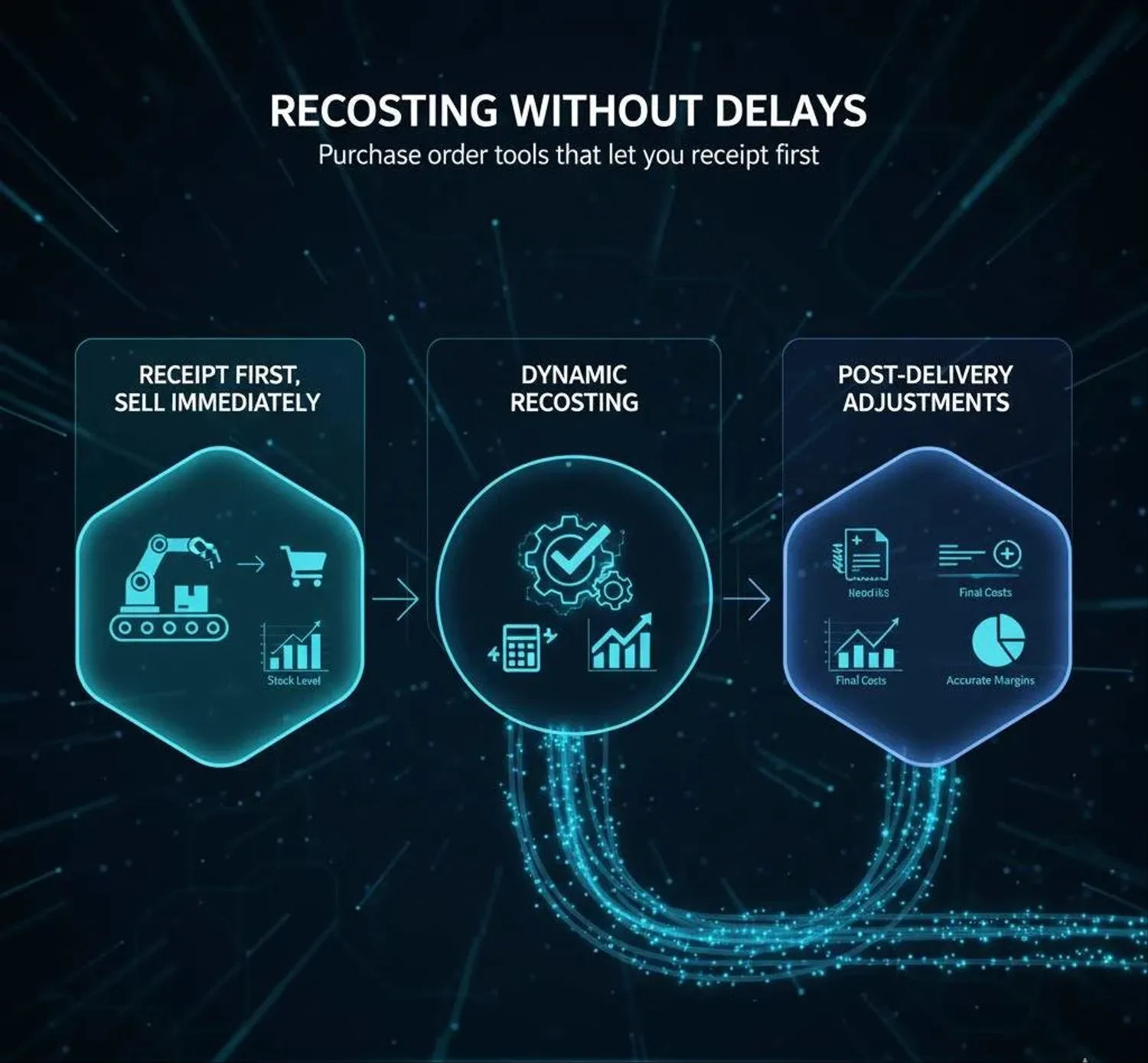
Understanding Purchase Order Recosting in Finance Operations
Purchase order recosting refers to the process of updating previously created purchase orders when actual costs differ from initial estimates. These variations may arise from freight adjustments, currency exchange changes, supplier price revisions, or indirect costs like duties and taxes. According to industry insights, nearly 30% of procurement discrepancies occur due to untracked cost changes after order approval, directly impacting financial reporting accuracy.
By systematically recosting purchase orders, finance teams ensure that inventory valuation, cost of goods sold (COGS), and profit margins reflect real-world expenses rather than outdated assumptions.
Why Accurate Recosting Is Critical for Financial Health
Accurate purchase order recosting directly influences core financial outcomes. When recosting is ignored or delayed, businesses often face reconciliation issues between procurement and accounting systems. This not only increases month-end closing time but also raises audit risks.
Key financial benefits include:
- Improved budget control and variance analysis
- Accurate inventory and asset valuation
- Reliable profit margin calculations
- Stronger compliance with accounting standards
Research shows that companies using automated cost-adjustment workflows reduce financial discrepancies by up to 40%, highlighting the importance of disciplined recosting practices.
Best Practices to Implement Purchase Order Recost Effectively
To achieve consistent finance accuracy, organizations should follow structured recosting methods that integrate procurement and accounting seamlessly.
1. Establish Clear Cost Update Triggers
Define events that automatically initiate recosting, such as supplier invoice mismatches, logistics bill updates, or tax changes. This prevents manual oversight and ensures real-time financial adjustments.
2. Maintain Version Control and Audit Trails
Every cost revision should be logged with timestamps and approval records. This transparency simplifies audits and strengthens internal financial controls while supporting regulatory compliance.
3. Integrate Procurement and Finance Systems
Disconnected systems often cause data gaps. Integrated platforms ensure updated costs flow directly into accounting, inventory, and reporting modules without duplication or delays.
4. Standardize Approval Workflows
Implement role-based approvals for cost changes to maintain accountability. Structured workflows reduce errors and ensure only validated adjustments affect financial statements.
5. Monitor Cost Variances Proactively
Regular variance analysis helps finance teams identify recurring supplier or logistics issues. Studies indicate that proactive variance tracking can improve procurement forecasting accuracy by over 25%.
Leveraging Automation for Purchase Order Recost Accuracy
Manual recosting increases the risk of errors, especially for high-volume transactions. Automation eliminates repetitive tasks and ensures calculations remain consistent across departments. Modern finance tools can recalculate costs instantly, adjust inventory valuation automatically, and reflect changes across financial reports in real time.
This is where intelligent solutions like Plan-IT add measurable value. With smart cost recalculation, real-time visibility, and seamless system integration, businesses can turn recosting from a reactive task into a strategic advantage. By using Purchase Order Recost features effectively, finance teams gain tighter control over spending and more accurate financial insights. Plan-IT empowers organizations to simplify recost workflows, reduce financial risk, and scale operations with confidence.
Measuring Success and Continuous Improvement
To ensure long-term effectiveness, organizations should track key performance indicators such as recost cycle time, variance resolution rate, and audit discrepancies. Continuous monitoring allows teams to refine processes, negotiate better supplier terms, and improve cost predictability over time.
As businesses grow and procurement complexity increases, disciplined purchase order recosting becomes a cornerstone of finance accuracy and operational resilience.
Take the next step with Plan-IT
Adopting structured recosting best practices supported by intelligent automation helps businesses stay audit-ready, financially accurate, and growth-focused. Plan-IT enables finance teams to manage cost changes efficiently, maintain transparency, and make confident decisions backed by real data.
Contact Details:
- 📞 Mobile: +91-9958474631
- 📧 Email: sales@plan-it.pro