Most people do not realise their gear failed them until hour six.
The shirt that felt fine at launch is now stiff with salt and binding at the shoulders every time you cast. The shorts are still carrying water from two hours ago. The jacket is either too warm or completely useless, depending on which half of the day you're asking about. A full day on the water does not forgive gear built for only part of it.
The question is not whether the gear looks right. It is whether it can handle the full arc — early morning cool, midday open-water heat, the wind that picks up in the afternoon, and the dock you walk back to when it is all over. That is a range most coastal apparel is not honestly designed for.
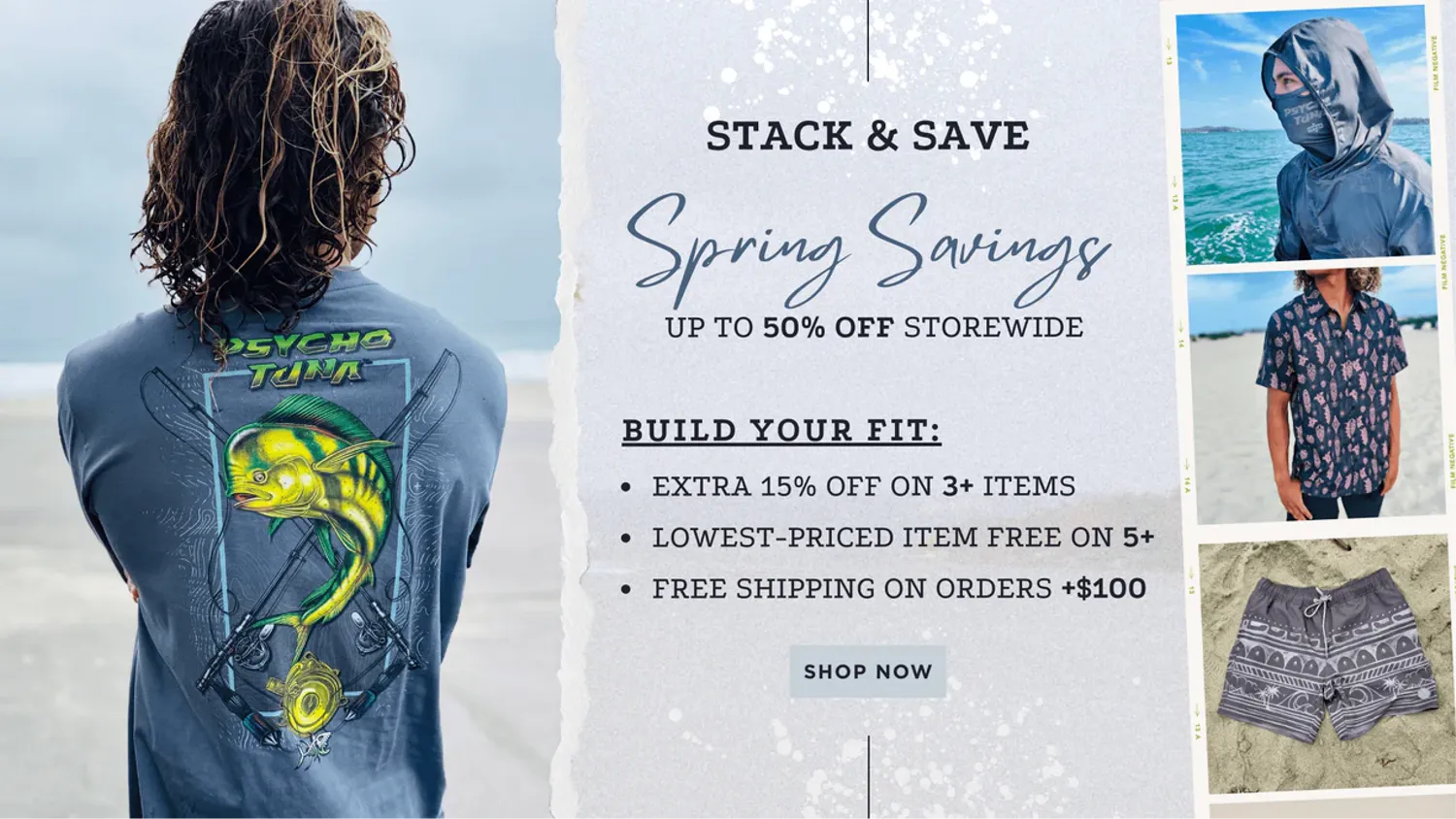
Why the Shirt Is the Most Underestimated Piece in the Kit
Every serious day on the water starts with a shirt decision that most people make in about thirty seconds. That is usually a mistake. A button-up shirt for coastal use carries more performance requirements than any other single piece in the kit. It needs to breathe in open-water heat, where the sun hits from above and reflects up from the surface simultaneously. It needs enough stretch to allow a full casting motion without binding at the shoulders or pulling at the chest. It needs to dry fast enough that morning spray does not follow into the afternoon.
And when moving off the boat and back into wherever the day takes you next — the marina, a meal, the drive home — it needs to look like something chosen deliberately, not something survived in. Most performance fishing shirts solve for one or two of these requirements. Breathability at the cost of structure. Stretch at the cost of appearance. Psycho Tuna builds its woven shirts around the full list: stretch construction that does not restrict a casting motion, fabrics selected for breathability in open-water conditions, and cuts that read as considered once back at the dock.
What Hours on the Water Actually Do to Swim Shorts
There is a specific kind of discomfort that builds slowly over a long day in the wrong shorts. It does not announce itself. It accumulates. Heavy wet fabric that never fully dries, so every movement carries a little more resistance than it should. A waistband that shifts under a life jacket and never quite sits right again. Prints that looked sharp in spring and faded before summer ended.
4-way stretch construction is the single most important technical specification in coastal swim shorts — not because of any single dramatic moment, but because of the thousand small movements that define a day on the water. Reaching across a gunnel. Pulling a fish over the rail. Climbing back into a centre console. Sitting for hours in a way that puts constant low-level stress on every seam. Fabrics that stretch in four directions move with those movements instead of against them. Psycho Tuna's swim shorts are built around that standard, with construction designed for the physical demands of real water time rather than appearance in a product shot.
The Layering Problem Nobody Solves Well
Most coastal outerwear is designed by people who have never spent a full day on the water. You can tell because it solves for one condition. A heavy fleece handles cold but becomes a liability the moment the sun gets high. A rain shell handles wet but traps heat and restricts movement. Layering on the water is a practical consideration — the temperature at 6am and the temperature at 2pm on the same day can differ by fifteen degrees or more, and the conditions between those points move independently of the clock.
A functional coastal layer packs away cleanly when not needed, deploys fast when conditions shift, handles wind and ambient moisture without saturating, and does not restrict the movement required to keep working. Psycho Tuna's outerwear is built for the temperature arc of a coastal day, not the temperature extreme — pieces designed for the specific window between active water time and cooler evening conditions, built for the same environment they sit alongside.
Building a Kit That Holds Up Across a Full Season
The way most people approach coastal apparel is piece by piece, occasion by occasion. A shirt for a specific trip. Shorts that were convenient at the time. A jacket grabbed last minute because the weather turned. The result is a kit that sort of works but creates friction at the edges — the shirt and the shorts are not built to the same stretch standard, the jacket does not sit right over the shirt collar, there is no coherent construction logic tying the pieces together.
A functional coastal kit is built as a system. Psycho Tuna's lineup is built around the same core premise across every category: apparel for men who take the water seriously, designed with genuine understanding of the physical demands of a full day outdoors. When the pieces are built from the same starting point and the same construction standards, they work together in a way that assembled kits do not. Shirts built for the stretch and breathability demands of coastal conditions. Swim shorts engineered for real movement on and in the water. Outerwear designed for the temperature transition windows that define coastal time. That is a complete day, covered by gear that was designed for it.