Sustainability is becoming an important consideration in how organisations operate and maintain commercial properties. Effective facilities management can help businesses improve resource efficiency, maintain assets and create workplaces that perform well over the long term.
A sustainable approach considers the full lifecycle of a building and its assets. This includes energy and water use, waste, maintenance, workplace operations and asset performance. By using reliable data and planned processes, organisations can identify practical opportunities to improve efficiency while supporting broader environmental and business objectives.
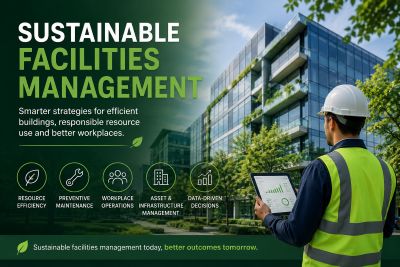
Sustainable facilities management is the responsible operation and maintenance of buildings, workplaces and physical assets with consideration for environmental and operational performance.
It can involve reducing unnecessary energy and water consumption, improving waste practices, maintaining equipment efficiently and monitoring building performance. The aim is to make informed decisions that support efficient operations, reliable assets and more sustainable workplaces over the long term.
Why Sustainable Facilities Management Matters
Buildings require energy, water, equipment and ongoing maintenance to operate effectively. The way these resources are managed can influence environmental performance, operating efficiency and the condition of physical assets.
A structured facilities management approach helps organisations understand how their buildings are performing and where improvements may be possible. Instead of making decisions based on assumptions, facility teams can use maintenance records, consumption data and asset information to establish priorities.
Sustainability should also be considered alongside safety, occupant needs, business requirements and asset performance. This creates a more balanced approach to improving commercial properties.
Supporting Long-Term Asset Performance
Effective asset and infrastructure management provides organisations with clearer information about the condition, performance and expected lifecycle of important building assets.
Regular inspections and accurate asset records can help identify equipment that requires maintenance, repair or replacement. Lifecycle planning also enables organisations to prioritise expenditure based on asset condition and operational importance.
This approach can support informed investment decisions while helping critical building systems remain reliable.
Sustainable Facilities Management Strategies
There is no single strategy that applies to every property. Sustainable facilities management should reflect the building type, its condition, occupancy patterns, operational requirements and organisational objectives.
However, several practical strategies can provide a strong foundation.
Develop Preventive Maintenance Programmes
Reactive maintenance often occurs after equipment has already failed or developed a noticeable problem. Preventive maintenance programmes take a more planned approach.
Regular inspections, servicing and condition checks can help teams identify developing issues earlier. Maintenance schedules should consider manufacturer guidance, equipment condition, operational importance and historical performance.
Professional building maintenance services can also support the ongoing inspection and servicing of essential systems.
Maintenance records should be reviewed regularly. If an asset requires frequent repairs or performs below expectations, the organisation can assess whether further servicing, upgrading or replacement is appropriate.
Improve Energy and Resource Efficiency
Understanding resource consumption is an important part of sustainable building operations. Organisations can begin by establishing baseline data for electricity, water and other significant resources.
Facility teams can then monitor performance over time and investigate unusual changes.
Potential efficiency measures may include LED lighting, HVAC optimisation, building controls, equipment scheduling and water-efficient fixtures. The most appropriate measures will depend on the property and how it is used.
Rather than assuming an upgrade will deliver a specific result, organisations should measure performance before and after implementation. This provides stronger evidence about whether the change has achieved its intended objective.
Strengthen Workplace Operations Management
Buildings do not always operate at the same level of occupancy throughout the day or week. Effective workplace operations management can help organisations better align building services with actual workplace requirements.
Occupancy and space utilisation information can provide insight into when and how different areas are being used. Where appropriate, this information may help teams adjust lighting, HVAC schedules, cleaning and other operational services.
The objective is not simply to reduce resource consumption. Buildings still need to provide safe, functional and comfortable environments for the people using them.
Adopt Integrated Facilities Management
Integrated facilities management brings multiple building and workplace functions into a coordinated management framework.
Instead of managing maintenance, contractors, workplace services and operational data separately, organisations can establish shared processes and reporting systems. This can provide greater visibility across individual buildings or larger property portfolios.
An integrated approach can also make it easier to establish consistent sustainability practices, monitor performance and identify recurring operational issues.
Clear responsibilities remain important. Organisations should understand who manages each service, how performance is measured and how issues are reported and resolved.
Review Property Maintenance Solutions
Existing property maintenance solutions should be reviewed periodically to ensure they remain appropriate for the building and its operational requirements.
This may involve assessing service frequency, maintenance costs, contractor performance, asset condition and recurring issues. Organisations can then use this information to determine whether their current approach remains effective.
Maintenance strategies should be based on evidence rather than fixed routines alone. Changes in occupancy, equipment condition or building use may require maintenance programmes to be adjusted.
Measuring Sustainable Facilities Management Performance
Measurement helps organisations understand whether their facilities management strategies are producing meaningful results.
Before making major changes, teams should establish relevant baseline information. Performance can then be monitored consistently to identify trends and compare results over time.
Not every organisation needs to track the same indicators. Measures should reflect the building, operational requirements and sustainability objectives.
Performance Measures to Monitor
Useful performance measures may include:
- Energy consumption
- Water consumption
- Waste generation and diversion
- Maintenance expenditure
- Equipment downtime
- Asset condition
- Planned versus reactive maintenance
- Workplace and space utilisation
Performance information should be reviewed in context. For example, changes in occupancy, operating hours or building use may affect consumption and maintenance requirements.
Combining quantitative data with operational knowledge can provide a more accurate picture of building performance.
Choosing Facilities Management Support
Selecting the right facilities management support requires more than comparing individual services. Organisations should consider whether a provider understands their properties, operational requirements and long-term objectives.
Strong facilities management services should include clearly defined responsibilities, reliable reporting and appropriate maintenance processes. Providers should also be able to demonstrate relevant experience and explain how performance will be monitored.
For organisations with multiple properties, consistency in reporting and service delivery may be particularly important.
What to Look for in a Facilities Management Company
When evaluating a facilities management company, organisations can consider factors such as:
- Relevant commercial property experience
- Clearly defined responsibilities
- Transparent performance reporting
- Maintenance planning capabilities
- Contractor management processes
- Sustainability knowledge
- Technology and data capabilities
Effective commercial facilities management should reflect the requirements of the individual building or portfolio. A solution suitable for one property may not be appropriate for another.
Organisations should therefore assess providers against their specific operational, property and sustainability objectives.
Key Takeaways for Sustainable Facilities Management
Sustainable facilities management combines responsible resource use with effective building operations and long-term asset planning.
Key considerations include:
- Use building data to identify opportunities and measure results.
- Maintain assets proactively rather than relying only on reactive repairs.
- Monitor energy, water, waste and workplace utilisation.
- Coordinate building functions where an integrated approach is appropriate.
- Review maintenance and operational strategies as property requirements change.
- Use measurable evidence to guide sustainability decisions.
A structured approach can help organisations better understand their properties and make informed decisions about maintenance, operations and future improvements.
Facilities Management FAQs
What Is Sustainable Facility Management?
Sustainable facility management involves operating and maintaining buildings in ways that consider environmental performance, resource efficiency and long-term asset needs. It can include energy and water monitoring, maintenance planning, waste management and workplace optimisation.
How Can Building Maintenance Support Sustainability?
Planned building maintenance services can help equipment operate as intended and identify faults or deterioration earlier. Regular servicing and condition monitoring also provide information that organisations can use when deciding whether assets should be maintained, upgraded or replaced.
What Is Integrated Facilities Management?
Integrated facilities management coordinates multiple property and workplace functions within a common management framework. This can include maintenance, contractor management, workplace services, reporting and asset oversight, helping organisations improve visibility across their operations.
What Should Businesses Measure?
Organisations may monitor energy and water consumption, waste, equipment downtime, maintenance expenditure, asset condition and workplace utilisation. Appropriate measures depend on the building, its operating requirements and the organisation's objectives.
Why Use Commercial Facilities Management Services?
Commercial facilities management provides structured oversight of building operations, assets, maintenance requirements, contractors and workplace services. Experienced providers can help organisations establish consistent processes and access reliable information to support property decisions.