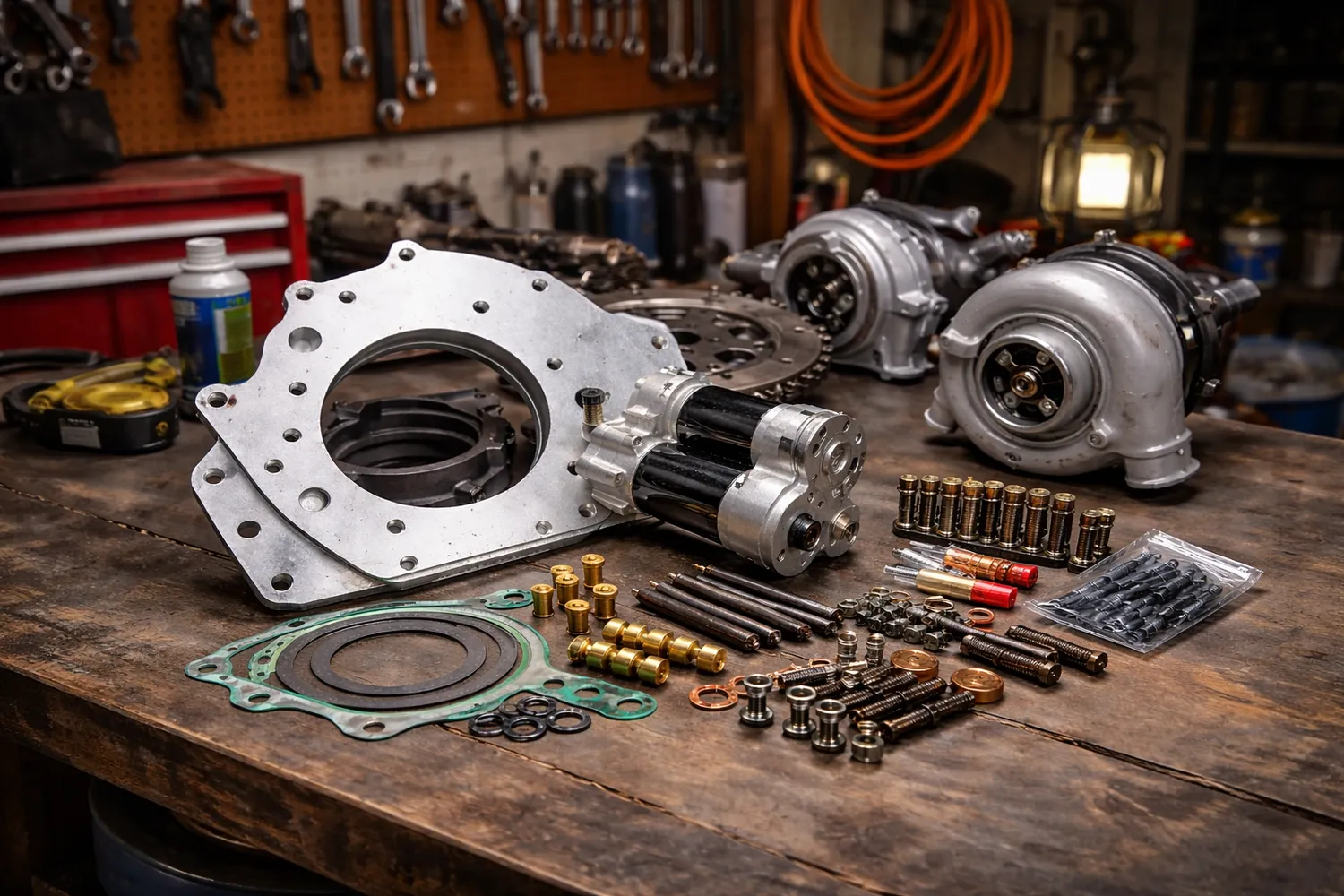
When people talk about diesel builds, the conversation usually goes straight to the engine block, fuel system, or turbo setup. Those are the visible parts of the project, the ones that draw attention and spark debates. But long-term reliability is often shaped by smaller pieces that rarely make the headline list.
In many builds, the difference between a machine that works for years and one that keeps returning to the garage comes down to fitment parts, mounting hardware, sealing surfaces, and alignment components. These pieces do not add bragging rights. They do not change the sound of the engine. They do not make a dramatic first impression. What they do is create consistency, and consistency is what keeps a diesel setup dependable under load, heat, and vibration.
Why the overlooked pieces matter
A diesel engine puts stress on every connected system. It produces vibration differently from many gasoline setups, often runs under heavier torque demands, and tends to expose weak links more quickly. That means the parts around the engine cannot be treated as generic placeholders.
A bracket that sits slightly off-angle can shift the load into the wrong area. A spacer with poor tolerances can affect starter engagement or drivetrain alignment. A seal chosen solely by rough dimensions can begin leaking long before the engine reaches its full service life. Each issue may seem minor on its own, but together they create a chain of preventable failures.
That is why experienced builders spend as much time checking interfaces as they do checking performance parts. Reliability starts where one part meets another.
Alignment is not a small detail
One of the most common causes of repeat problems in engine swaps and rebuilds is poor alignment. If the engine and transmission are not properly aligned, symptoms may appear gradually. Starter wear, uneven flex plate stress, strange noises during cranking, and premature bearing issues can all trace back to an interface that looked acceptable at first glance.
This is where precision parts matter. Spacer plates, adapter hardware, dowel locations, and mounting faces have one job: hold the geometry exactly where it needs to be. When they do that well, the rest of the system has a fair chance to live a long life. When they do not, even strong major components start wearing in ways they were never designed to handle.
Builders often search for big-ticket fixes when the real answer is far more basic. The hard truth is that a build cannot be more accurate than the small parts that locate it.
Hardware quality changes the outcome
Fasteners are another neglected category. It is easy to assume that a bolt is just a bolt, especially when the focus is on getting the engine in and running. But hardware quality affects clamping force, heat resistance, and serviceability. Low-grade or mismatched fasteners may loosen under vibration, distort under repeated heat cycles, or complicate future maintenance.
The same goes for washers, thread engagement, and torque sequencing. Reliable diesel assemblies depend on load distribution. That does not happen by accident. It comes from using the right hardware in the right place, with the right installation method.
This is also why builders looking for Toyota diesel engine parts often learn that the search is not limited to major assemblies. The smaller related pieces, hardware, spacers, seals, and interface components often decide whether the larger parts can do their job correctly.
Seals and gaskets do more than stop leaks
Leaks are usually treated as symptoms, but they are often early warnings. A leaking gasket or seal can indicate surface irregularities, misalignment, excessive pressure, or poor material selection. Replacing the leaking part without addressing the cause of the leak usually leads to the same problem recurring.
Diesel systems are unforgiving in this area. Oil, coolant, and fuel all move through environments shaped by pressure, temperature, and vibration. A sealing component must meet those conditions. It also has to match the surfaces it joins. Even a high-quality seal can fail quickly if the housing is warped; the fasteners are unevenly torqued, or the mating surface was never properly prepared.
That is why the best maintenance mindset is not simply leak repair. It is an interface inspection.
The hidden cost of “close enough.”
A lot of trouble in diesel projects comes from parts that are almost correct. A mount that nearly fits. A plate that works with slight modification. A reused fastener that still looks acceptable. A starter setup that engages, but not quite clean.
Close enough to get a project started. It rarely keeps it trouble-free.
The reason is cumulative error. Each slight compromise adds another point of stress or variation. One small mismatch might not cause immediate failure, but several together can create heat, wear, noise, and fatigue that slowly shorten the life of the build. What begins as convenience turns into repeated downtime.
That is why careful builders pay attention to tolerances, contact surfaces, and installation order. They understand that reliability is not built on a single perfect part. It comes from many correct decisions stacked together.
What dependable builds usually have in common
The most dependable diesel setups are not always the most expensive or the most aggressive. Often, they are the ones assembled with discipline. Their builders check fitment before the final torque. They inspect wearing patterns. They replace questionable hardware before it becomes a problem. They treat the small parts as structural decisions, not afterthoughts.
That approach may not be glamorous, but it reflects how durable machines are actually built. Reliability is rarely hidden inside a mystery upgrade. More often, it is sitting in plain sight, inside the spacer, the seal, the bolt, or the bracket that quietly keeps everything in line.
In diesel work, the smallest parts often carry the biggest consequences.