For decades, the path to a stable career looked the same for most young Americans: finish high school, enroll in a four-year university, graduate with a degree, and land a desk job. That script made sense at the time. But something quietly shifted in the background while everyone was chasing diplomas — the people who built, welded, fabricated, and maintained the country's physical infrastructure began retiring, and not enough people stepped in to take their place.
That gap is now impossible to ignore.
The Shortage Nobody Saw Coming
The skilled trades workforce in the United States is aging out faster than it's being replenished. According to the U.S. Bureau of Labor Statistics, industries like welding, machining, and metal fabrication are projected to see hundreds of thousands of job openings over the coming years — not because the work disappeared, but because the workforce did.
This isn't a niche problem. It touches aerospace, automotive, construction, defense manufacturing, and consumer goods. The products that require precision metalwork, composite materials, and digital fabrication don't build themselves, and software cannot replace the hands that shape raw steel into something functional.
What makes this shortage particularly unusual is that it's happening during a period of significant technological expansion in those same fields. CNC machining, 3D printing, advanced composites — these are not your grandfather's trade skills. The trades have evolved, and yet the pipeline of workers learning them has lagged behind.
A Generation That Got Steered Away
Part of the reason for the shortage traces back to how career guidance worked in American schools for the better part of two decades. Guidance counselors, parents, and cultural messaging collectively pushed young people toward four-year degrees as the only credible route to a good life. Vocational programs in public schools were quietly defunded or deprioritized. Shop class disappeared from most curricula.
The message — sometimes unspoken, sometimes direct — was that working with your hands was a fallback, not a first choice. That perception carried real cost.
When you look at the trade school vs college conversation today, the numbers tell a different story than conventional wisdom suggests. Vocational graduates often enter the workforce years earlier, carry significantly less debt, and land in careers with immediate, practical demand. A skilled welder certified in aerospace applications is not a fallback — they are a precision professional in short supply.
What Manufacturing Actually Looks Like Now
There's a widespread mental image of factory work that involves loud assembly lines, repetitive motions, and minimal skill requirements. That image is mostly obsolete.
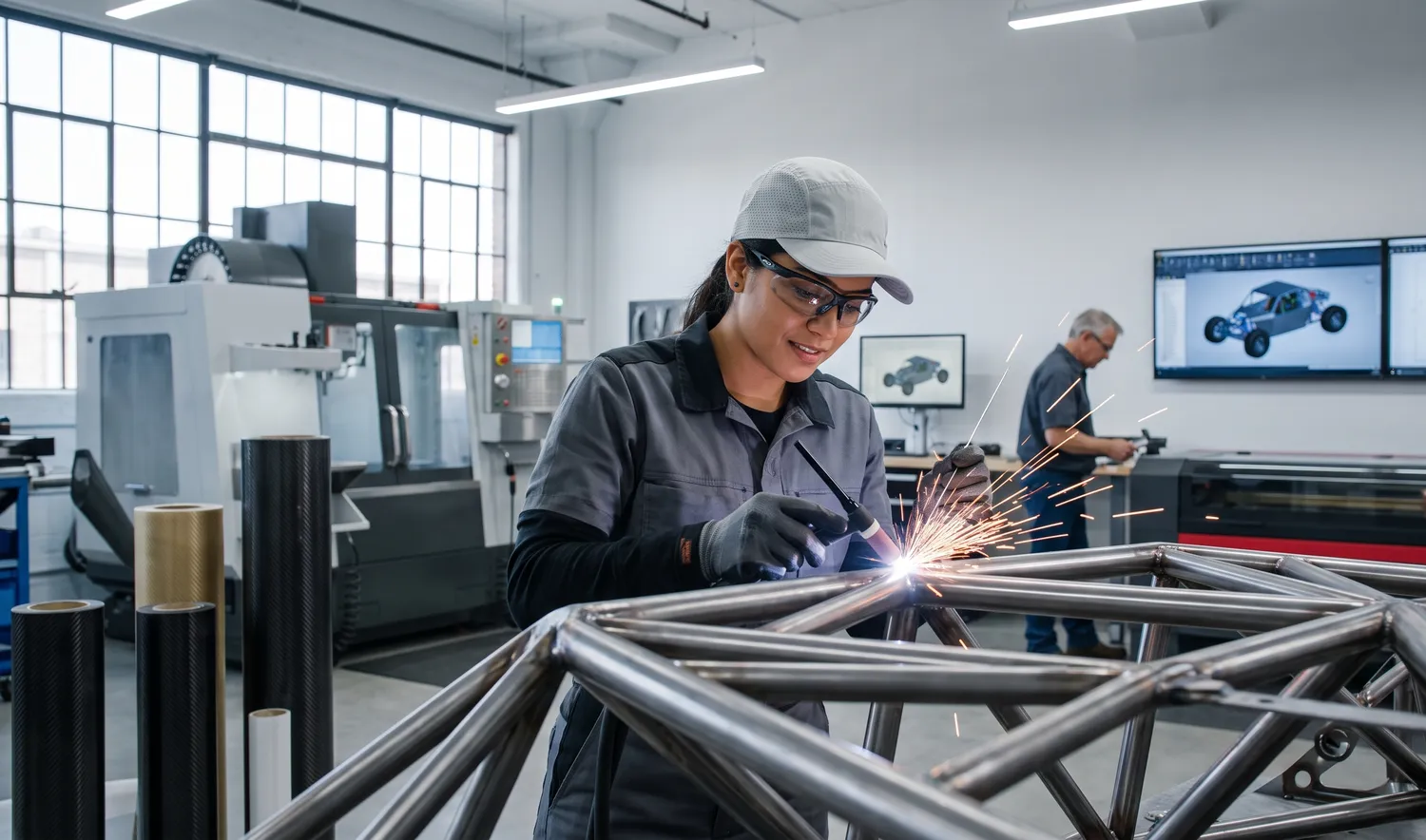
Modern fabrication facilities operate with CAD software, CNC plasma cutters, laser systems, and composite layup processes that require technical literacy, spatial reasoning, and hands-on precision. Workers in these environments are, in practice, closer to applied engineers than to the industrial laborers of the last century.
The off-road, motorsports, and aerospace sectors, in particular, have developed fabrication as something closer to a craft. Custom chassis work, roll cage construction, and aerospace component fabrication demand both technical training and creative problem-solving. These are careers that reward people who think in three dimensions and take satisfaction in making something real.
The Careers That Didn't Get Outsourced
One factor that rarely comes up in conversations about trades versus other career paths is geographic permanence. A welder working on industrial infrastructure in California cannot be replaced by a remote worker in another country. Fabricators building custom automotive components for motorsport clients need to be in the shop. Composites technicians working on defense contracts operate in facilities that require physical presence and often a security clearance.
This is not a minor point. White-collar jobs that seemed recession-proof a decade ago have been restructured, automated, or offshored at a rate that few anticipated. Skilled trade careers, particularly those tied to physical manufacturing and precision work, have proven more structurally resilient than many assumed.
The Businesses Waiting to Hire
Across the American Southwest — California in particular — employers in aerospace, defense, motorsports, and advanced manufacturing have been competing for a small pool of qualified trade workers for years. Companies that build everything from racing vehicles to rocket components maintain active relationships with vocational programs specifically because the open positions are real and the qualified applicants are few.
This employer demand isn't seasonal or speculative. These are permanent roles with benefits, career advancement, and in many cases, direct exposure to cutting-edge projects that would be the envy of any engineering intern.
Why the Perception Is Finally Shifting
Cultural momentum around skilled trades has been building gradually but noticeably. Younger generations that watched their older siblings graduate with degrees and struggle to find relevant work have grown more pragmatic about their own choices. The idea of spending six months learning a marketable skill and stepping directly into employment no longer sounds like a consolation prize.
There's also been a broader reappraisal of what "success" looks like. Financial independence, job security, and producing tangible results are values that have gained ground in how people evaluate their career satisfaction.
The trades aren't just filling a labor gap. They're quietly becoming one of the more sensible bets a person can make on their own future.