Promotion tables and counters are common features at exhibitions, trade shows, retail promotions and corporate events. They provide a dedicated space where businesses can present products, distribute samples, answer questions and interact with visitors. Unlike large exhibition stands, these displays can often fit into smaller spaces while still giving a brand a clear and organised presence.
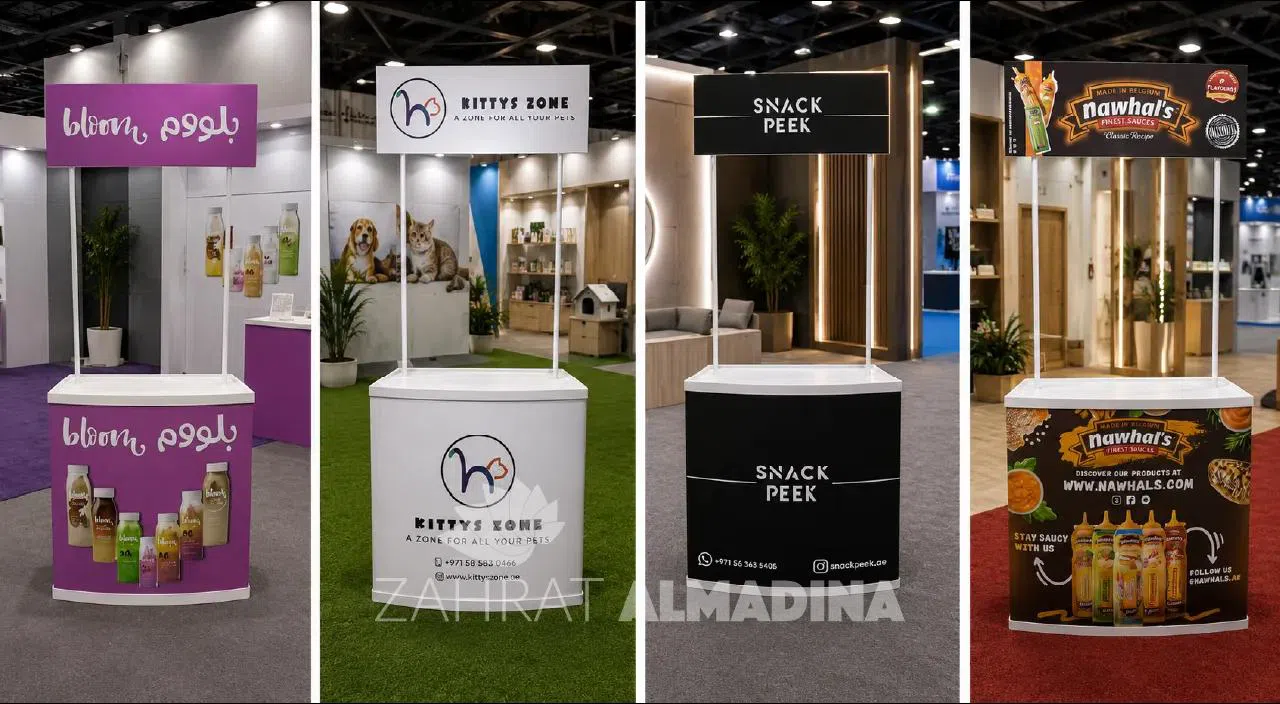
A well-planned promotional setup does more than hold brochures or products. It helps staff communicate with visitors, keeps promotional materials accessible and gives people a convenient place to stop and learn more. In busy event environments such as Dubai, where exhibitions and business networking activities take place throughout the year, choosing a suitable display can make event participation easier to manage.
What Is a Promotion Table or Counter?
A promotion table or counter is a portable or fixed display unit used to support marketing activities and customer interaction. It may feature a printed front panel, a branded surface, storage space or shelves for displaying products and promotional materials.
Although the terms are sometimes used interchangeably, there can be practical differences. A promotion table may provide a broader working surface for demonstrations, samples or paperwork. A promotional counter often has a more compact, front-facing design that presents branding at visitor eye level.
The right option depends on the activity, available space, products being promoted and the number of staff members who will use it.
Common Uses of Promotional Tables and Counters
1. Product Sampling and Demonstrations
Businesses can use promotional counters to distribute samples, demonstrate product features or explain how an item works. Food and beverage brands, cosmetics businesses and consumer product companies may benefit from having a dedicated area where visitors can see and try selected products.
For example, a company introducing a new packaged product at a shopping centre can arrange samples on the counter while keeping brochures and additional stock within easy reach. A clean, organised setup makes the interaction more convenient for both staff and visitors.
2. Exhibitions and Trade Shows
At exhibitions, companies often have limited space and only a short time to attract attention. A branded counter gives visitors a clear point of contact without requiring a large display structure.
Staff can use it to answer questions, collect enquiries, distribute catalogues and direct interested visitors to a larger display or meeting area. In Dubai's exhibition venues, the counter should suit the stand dimensions and comply with the organiser's rules for layout and access.
3. Retail Promotions and Launch Events
Retail stores use promotional tables to introduce new products, highlight seasonal offers and organise in-store activities. A counter positioned near an appropriate product category can make it easier for shoppers to find information and speak with a representative.
For a product launch, the display might hold demonstration units, product information cards and a small selection of samples. The layout should remain uncluttered so that the main product and key message are easy to understand.
4. Corporate Events and Registration Areas
Promotional counters can also serve practical purposes at conferences, seminars and corporate functions. They may be used for registration, distributing event materials, collecting visitor details or directing guests to different areas.
In these situations, the display needs to support efficient movement rather than simply attract attention. Clear signage, accessible materials and enough space for staff to work are important considerations.
Key Benefits of a Well-Planned Promotion Table
Improved Brand Visibility
A printed front panel can display a company name, logo, product image or campaign message. Because the counter sits within the visitor's natural line of sight, it provides a useful location for presenting essential information.
The design should prioritise one main message rather than crowding the surface with too much text. Readable lettering, suitable contrast and a clear visual hierarchy help visitors understand the display quickly.
Better Organisation
A dedicated counter helps keep brochures, samples, forms and demonstration items in one place. Some designs also include shelves or enclosed storage, reducing clutter around the event area.
Before choosing a model, consider what staff need to access during the event. A counter used for product demonstrations may require a different surface and storage arrangement from one used for registration.
Portability and Reusability
Portable promotional counters are useful for businesses that attend multiple events. Depending on the construction, some models can be dismantled, packed into a carrying bag and transported between venues.
Businesses planning repeated use should consider the weight, assembly process, storage requirements and durability of the materials. A slightly more practical design may save time during setup and removal.
More Direct Customer Interaction
A counter creates a natural place for conversations. Visitors can approach the display, ask questions and examine products without needing to navigate a large booth.
However, the counter should not block the entrance or create a barrier between staff and visitors. Leaving enough open space encourages people to stop comfortably and move away without disrupting others.
How to Choose the Right Promotional Counter
Selecting a suitable counter involves more than comparing appearance or price. A few practical checks can help avoid problems on event day.
Measure the available area: Confirm the permitted width, depth and height before ordering a display.
Identify the main purpose: Product sampling, registration and sales demonstrations may require different layouts.
Check the construction: Consider stability, surface strength, finish and how frequently the counter will be used.
Review branding requirements: Ensure the printed panel has readable text, clear images and the correct logo placement.
Consider transport and storage: Check whether the counter folds, separates into components or requires a dedicated carrying case.
Plan the staff workflow: Allow sufficient room for products, equipment, storage and customer interaction.
Confirm event restrictions: Review venue guidelines, especially when using electrical equipment, food samples or larger display structures.
Businesses comparing options for exhibitions and product promotions can review the features of a promotion table to understand how a branded counter may fit their event requirements.
Design Tips for Effective Event Displays
A useful promotional counter should look organised and remain practical throughout the event. Keep the most important message at the front, use high-resolution artwork and avoid placing essential information where products or staff may cover it.
The display should also match the wider event setup. Consistent colours, typography and imagery across banners, brochures and counters create a more coordinated appearance. If the campaign involves product demonstrations, test the layout in advance to ensure that equipment and samples fit comfortably.
It is equally important to plan for everyday use. Staff should know where materials are stored, how the display is assembled and how to keep the surface tidy during busy periods. A short setup checklist can reduce delays and make the event easier to manage.
For businesses arranging printed event materials in Dubai, Zahrat Al Madina Printing is one local reference to consider when researching printing and display options. Comparing specifications, artwork requirements and delivery arrangements helps organisers make a decision that suits their particular event.
Conclusion
Promotion tables and counters support a wide range of activities, from product sampling and retail launches to exhibitions, conferences and corporate registration. Their main value comes from combining clear branding with a practical space for products, information and customer conversations.
Before selecting a display, businesses should consider its purpose, size, portability, construction and design. Matching these factors to the event environment helps create a professional, organised setup that serves visitors and staff effectively.