Modern enclosures are designed to do more than just house components—they must actively protect sensitive systems from extreme environmental conditions. From EV battery packs and automotive electronics to outdoor telecom cabinets and industrial control boxes, today’s enclosures face constant pressure fluctuations, heat build-up, moisture intrusion, and dust exposure. When unmanaged, these stresses can lead to seal failure, condensation, corrosion, and early equipment breakdown.
This is where the pressure release vent becomes a critical engineering solution.
A properly designed pressure release vent maintains equilibrium between internal and external pressure while blocking liquids, dust, and contaminants. It enables enclosures to “breathe” safely without compromising protection. In this guide, we’ll explain what a pressure release vent is, how it works, why modern applications demand it, and how technologies like PTFE Venting Solutions are reshaping enclosure reliability—especially in fast-growing sectors such as EV battery vent systems.
Key Takeaways
- A pressure release vent equalises enclosure pressure while blocking water and dust.
- It prevents seal failure, condensation damage, and enclosure deformation.
- PTFE Venting Solutions offer the highest reliability for long-term protection.
- Pressure vents are critical for EV battery vent safety and performance.
- Trusted manufacturers PorVent® ensure certified protection across modern applications.
What Is a Pressure Release Vent?
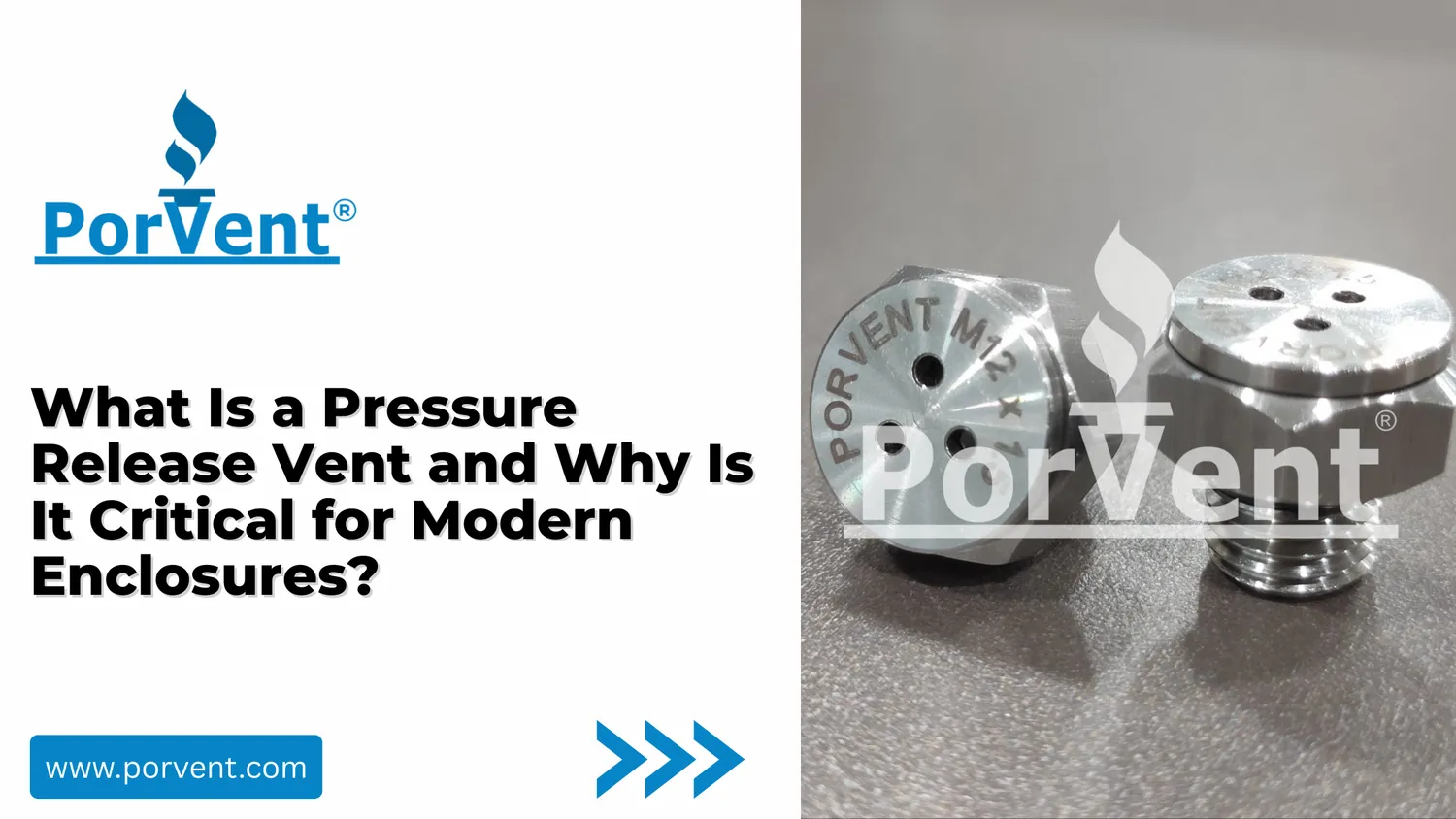
A pressure release vent is a specialised membrane-based component integrated into sealed enclosures to allow controlled airflow. It equalises pressure differences caused by temperature changes, altitude variations, and operational heat cycles—without permitting the entry of water, dust, oil, or chemicals.
Unlike basic mechanical vents or simple apertures, advanced pressure release vents use microporous membranes, most commonly expanded polytetrafluoroethylene (ePTFE). These membranes have billions of microscopic pores that are:
- Large enough for air and gas molecules to pass
- Small enough to block liquid water and solid particulates
This dual function enables steady pressure management while maintaining enclosure integrity certified to IP67/IP68 standards.
How a Pressure Release Vent Works
The working principle behind a pressure release vent is simple but powerful:
- Internal Pressure Builds Up
Heat from operating electronics or chemical reactions (such as within EV battery modules) increases internal air pressure. - Air Is Safely Expelled
The vent membrane allows pressurised air to exit rapidly. - External Pressure Drops or Temperature Falls
As conditions change, outside air can re-enter to equalise pressure. - Contaminants Remain Blocked
The hydrophobic and oleophobic membrane prevents moisture and dust from penetrating the enclosure.
This cycle ensures continuous pressure regulation, preventing enclosure deformation, seal stress, or moisture ingress.
Why Is a Pressure Release Vent Critical for Modern Enclosures?
Modern enclosure designs prioritise compactness, lightweight materials, and tight sealing—especially in electronics and vehicle systems. While these improvements increase efficiency, they also make enclosures more vulnerable to pressure imbalance.
A pressure release vent solves multiple risks simultaneously:
1. Prevents Seal Failure
Pressure differentials place stress on gaskets, adhesives, and weld seams. Over time this can cause seal fatigue, microcracks, or catastrophic seal rupture.
A vent equalises pressure before harmful stress builds up.
2. Stops Condensation & Corrosion
Temperature swings cause air inside enclosures to draw moisture. This leads to:
- Condensation on circuit boards
- Corrosion of metal contacts
- Reduced insulation resistance
A constant-pressure environment enabled by ventilation lowers moisture accumulation dramatically.
3. Protects Sensitive Electronics
Automotive modules, outdoor sensors, LED assemblies, and inverters rely on stable internal environments. Pressure release vents:
- Maintain thermal stability
- Reduce internal humidity
- Extend operating life
4. Supports Safety in Battery Systems
In EV battery vent applications, vents provide a controlled gas escape path during abnormal pressure events, reducing the risk of casing deformation or rupture while still blocking external water entry.
5. Preserves Enclosure Aesthetics & Structure
Pressure buildup causes “panel bulging,” distortion, or audible popping.
By integrating a pressure release vent, manufacturers maintain:
- Mechanical shape
- Structural strength
- Long-term reliability
Pressure Release Vent Technology and PTFE Venting Solutions
The most reliable modern vents rely on PTFE Venting Solutions using expanded PTFE membranes. PTFE provides unique advantages:
- High air permeability for rapid pressure equalisation
- Complete waterproofing due to intrinsic hydrophobicity
- Oil & chemical resistance
- Wide temperature tolerance (from extreme cold to intense heat)
- UV stability for outdoor applications
Most PTFE Venting Solutions are configured as:
- Adhesive vents for quick surface mounting
- Snap-in vents for high-volume assembly
- Screw-in vents for rugged industrial environments
These formats allow easy integration into complex enclosure geometries while maintaining sealing performance.
Key Applications of a Pressure Release Vent
A pressure release vent is now standard across multiple industries:
Automotive & EV Systems
- Battery packs and battery management systems (BMS)
- ADAS sensors
- ECU housings
- Exterior lighting modules
Outdoor Electronics
- Telecom cabinets
- Surveillance cameras
- Traffic signalling systems
- Weather monitoring units
Industrial Equipment
- Automation control panels
- Motor drives
- Power converters
Packaging & Containers
- Chemical packaging containers
- Agrochemical bottles
- Medical fluid containers
In each case, the vent ensures that enclosed products remain safe, functional, and contamination-free throughout transport, storage, and operation.
Why PTFE-Based Pressure Release Vents Outperform Traditional Vents
Older venting approaches—such as mechanical valves, open breather holes, or pin apertures—create significant risks:
- Water and dust penetration
- Poor pressure equalisation speed
- Rapid clogging or deterioration
PTFE Venting Solutions provide superior performance:
FeatureTraditional VentsPTFE Pressure Release VentWaterproofingLimitedIP67/IP68 certifiedAirflowLowHigh permeabilityChemical ResistancePoorExcellentMaintenanceHighMaintenance-freeReliabilityModerateLong-term stability
The Role of Pressure Release Vent in EV Battery Protection
Electric vehicles generate internal heat during charging, discharging, and regeneration cycles. Combined with altitude changes and rapid temperature shifts, this creates repeated pressure spikes inside battery housings.
In EV battery vent design, a pressure release vent:
- Prevents casing warping
- Allows gas escape during abnormal events
- Maintains waterproof sealing during rain or immersion
- Protects battery electronics from condensation
For EV manufacturers, pressure vents are no longer optional accessories—they are vital safety components.
Selecting the Right Pressure Release Vent for Your Application
Not all venting solutions are equal. When choosing the right option, consider:
- Target IP rating (IP67 or IP68)
- Required airflow rate
- Chemical exposure conditions
- Operating temperature range
- Mounting style (adhesive, snap-in, screw-in)
- Compliance with automotive or industrial standards
Working with a trusted vent specialist ensures the chosen pressure release vent matches your enclosure’s mechanical and environmental demands precisely.
Why Manufacturers Trust PorVent® Pressure Release Vent Solutions
PorVent® has become a trusted name for advanced venting technologies across automotive electronics, EV systems, industrial equipment, and packaging sectors. Every pressure release vent from PorVent® is engineered with premium PTFE Venting Solutions to deliver:
- High air-flow efficiency
- Outstanding waterproof protection
- Reliable pressure equalisation
- Long service life under extreme environments
With India-focused manufacturing capabilities and global application expertise, PorVent® helps product designers create safer, longer-lasting enclosures with confidence.
Future Trends in Pressure Release Vent Applications
As equipment becomes more compact and power-dense, the need for thermal management and pressure balancing continues to grow. Emerging trends include:
- Miniaturised vents for ultra-compact electronics
- Smart vent integration with sensors for pressure monitoring
- Custom PTFE membrane formulations for specialised chemical industries
- Enhanced EV battery vent systems for next-generation vehicles
Pressure release vent technology will remain essential as reliability expectations increase.
Final Words
A pressure release vent is no longer a minor design detail—it is a core requirement for modern enclosure protection. By equalising internal pressure, blocking moisture and dust, preventing condensation, and supporting critical safety functions in systems like EV battery vent modules, these vents safeguard both performance and durability.
Advanced PTFE Venting Solutions have transformed the industry by delivering high airflow with uncompromising waterproof protection. Supported by precision engineering and application expertise, PorVent® continue to raise standards in enclosure venting reliability.
Ready to enhance your enclosure protection with industry-trusted pressure release vent technology? Contact PorVent® today to explore customised solutions built for your application.