Learn how the probiotic manufacturing process works, from strain selection and fermentation to freeze-drying, quality testing, packaging, and storage. Understand how modern probiotics are manufactured in India.
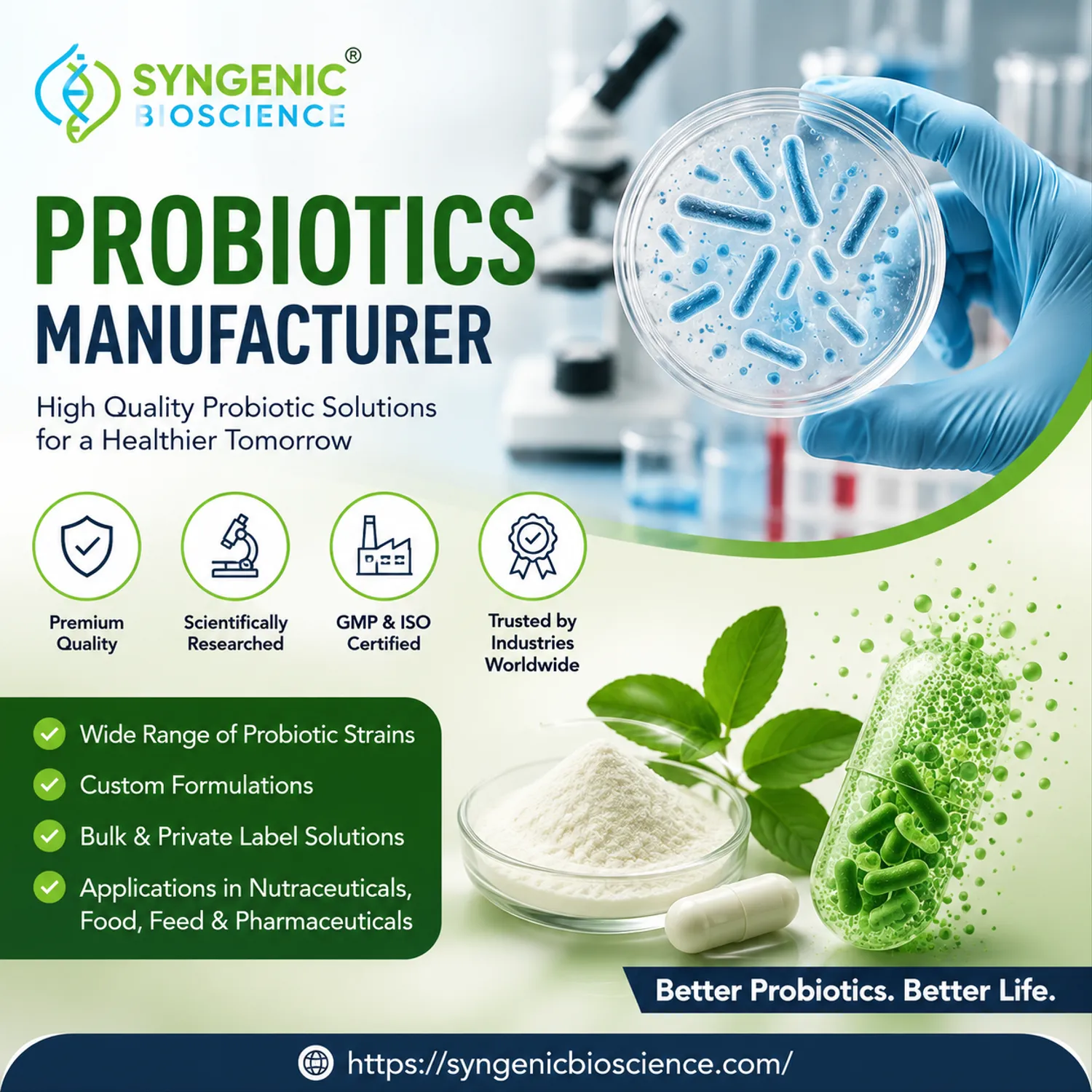
Probiotic Manufacturing Process Explained: Step-by-Step Guide
Probiotics have become an important ingredient in nutraceuticals, functional foods, dietary supplements, animal nutrition, and pharmaceutical formulations. As the demand for high-quality probiotics continues to grow worldwide, understanding the manufacturing process helps businesses, researchers, and buyers evaluate product quality and reliability.
Modern probiotic manufacturing is a highly controlled scientific process. Every stage—from selecting microbial strains to packaging the finished product—plays a crucial role in ensuring that beneficial microorganisms remain viable, stable, and effective throughout the product's shelf life.
This guide explains the complete probiotic manufacturing process step by step and highlights the quality standards followed by leading probiotics manufacturers in India.
What Is Probiotic Manufacturing?
Probiotic manufacturing is the process of cultivating beneficial microorganisms under controlled laboratory and industrial conditions. These microorganisms are then processed, stabilized, tested, and packaged while maintaining their viability and quality.
The objective is to deliver a product containing live microorganisms in sufficient numbers that remain stable until consumption or industrial application.
Step 1: Selection of Probiotic Strains
The manufacturing process begins with selecting the appropriate microbial strains.
Each strain possesses unique characteristics and applications depending on the final product.
Common probiotic strains include:
- Lactobacillus species
- Bifidobacterium species
- Bacillus coagulans
- Bacillus subtilis
- Saccharomyces boulardii
During selection, manufacturers evaluate:
- Safety profile
- Genetic stability
- Survival under processing conditions
- Acid and bile tolerance
- Shelf-life stability
- Industrial performance
Selecting the right strain forms the foundation of a successful probiotic product.
Step 2: Culture Development
Once the strain is selected, it is revived under sterile laboratory conditions.
Scientists prepare a master culture that serves as the original source for production.
The culture is carefully monitored to maintain:
- Purity
- Identity
- Cell viability
- Genetic consistency
Strict contamination control procedures are followed throughout this stage.
Step 3: Seed Culture Preparation
Before large-scale production begins, the microorganisms are gradually multiplied.
This process is called seed culture preparation.
Small cultures are expanded in multiple stages until sufficient biomass is available for industrial fermentation.
Each stage is monitored for:
- Cell density
- Growth rate
- Contamination
- pH balance
- Temperature
Step 4: Industrial Fermentation
Fermentation is the most important stage of probiotic manufacturing.
Large stainless-steel fermenters provide controlled conditions that allow probiotic bacteria to multiply rapidly.
Critical parameters include:
- Temperature
- pH
- Oxygen level
- Nutrient composition
- Agitation speed
- Fermentation duration
Modern automated fermentation systems continuously monitor these parameters to ensure consistent microbial growth.
Step 5: Cell Harvesting
Once fermentation reaches the desired cell concentration, the microorganisms are separated from the fermentation broth.
Common harvesting techniques include:
- Centrifugation
- Filtration
- Membrane separation
The harvested biomass is washed to remove residual media components while preserving cell viability.
Step 6: Cell Stabilization
Fresh probiotic cells are highly sensitive to moisture, oxygen, and heat.
To improve stability, protective agents are added before drying.
Common stabilizers include:
- Carbohydrates
- Proteins
- Cryoprotectants
- Protective sugars
These materials help preserve living microorganisms during drying and storage.
Step 7: Freeze Drying (Lyophilization)
Freeze drying is one of the most widely used technologies in probiotic manufacturing.
The harvested probiotic culture is frozen under controlled conditions.
Water is then removed through sublimation under vacuum.
Advantages include:
- Longer shelf life
- Better microbial survival
- Easy transportation
- Improved storage stability
- High CFU retention
Freeze-dried probiotics are commonly used in capsules, sachets, powders, and functional food products.
Step 8: Milling and Blending
After drying, the probiotic material may be milled into fine powder.
The powder is blended carefully to ensure uniform distribution of microorganisms.
Additional ingredients may include:
- Prebiotics
- Carriers
- Excipients
- Nutritional ingredients
Uniform blending ensures every batch maintains consistent quality.
Step 9: Quality Testing
Quality testing is performed throughout the manufacturing process.
Leading probiotics manufacturers conduct multiple laboratory analyses before product release.
Typical quality tests include:
- CFU count verification
- Microbial purity
- Pathogen screening
- Moisture analysis
- Stability testing
- Identity confirmation
- Contamination testing
- Shelf-life evaluation
Only products meeting predefined specifications proceed to packaging.
Step 10: Packaging
Packaging protects probiotics from environmental damage.
Common packaging options include:
- HDPE containers
- Aluminium foil sachets
- Blister packs
- Moisture-resistant pouches
- Bulk industrial packaging
Packaging materials are selected based on moisture protection, oxygen resistance, and transportation requirements.
Step 11: Storage and Distribution
Finished probiotic products are stored under recommended environmental conditions.
Manufacturers monitor:
- Temperature
- Humidity
- Storage duration
- Transportation conditions
Proper storage helps maintain microbial viability until the product reaches the customer.
Quality Standards Followed by Modern Probiotics Manufacturers
Reliable probiotic manufacturing facilities generally follow internationally recognized quality systems such as:
- GMP (Good Manufacturing Practices)
- ISO Quality Management Systems
- HACCP
- Quality assurance protocols
- Batch traceability
- Controlled documentation
- Laboratory validation
- Equipment calibration
These practices help ensure consistent production quality and product safety.
Applications of Manufactured Probiotics
High-quality probiotics are widely used in:
- Nutraceutical supplements
- Functional beverages
- Functional foods
- Dairy products
- Animal feed
- Aquaculture
- Pharmaceutical formulations
- Agriculture
- Veterinary nutrition
The growing demand across these industries continues to drive innovation in probiotic manufacturing technologies.
Why the Manufacturing Process Matters
The effectiveness of a probiotic product depends not only on the microbial strain but also on how it is manufactured.
Proper fermentation, stabilization, quality testing, and packaging help preserve viable microorganisms and support consistent product quality. Manufacturers that implement scientifically controlled production processes are better positioned to deliver reliable probiotic formulations for a wide range of industrial and commercial applications.