Bookshop Hero, Got Stars in Her Eyes
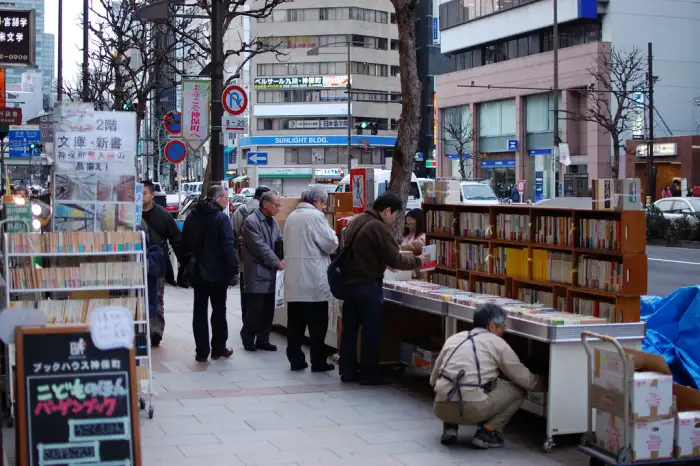
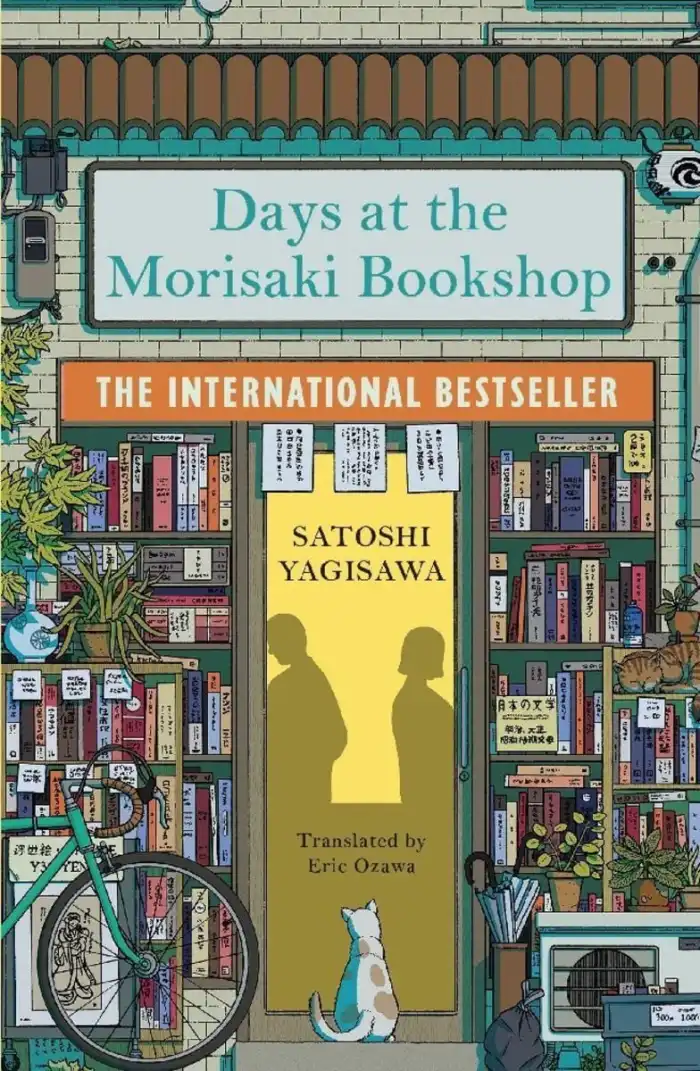
Takako’s life falls to pieces in short order. Her boyfriend reveals he is going to marry someone else, she is essentially forced out of her job, and without stable income, she is looking at soon not having a place to live in Tokyo. Deciding between returning to her parents—in what she considers a defeat—and taking up the offer of her eccentric uncle, to whom she hasn’t spoken in years, Takako goes along with Uncle Satoru, working part-time in his used bookstore in order to live rent free in its upstairs studio apartment. Through her uncle’s gentle cajoling and being constantly surrounded by books—not just in the store, but the whole neighborhood of Jimbocho is among the world’s largest collections of second-hand bookshops—Takako becomes interested in Japanese literature and slowly becomes part of the local community of book sellers, habitual book buyers, and coffee shop regulars. As she puts her life back together, Takako discovers more about herself and her uncle, especially when their lives are shaken up by the sudden return of Satoru’s wife, Momoko, who disappeared with hardly a word five years ago.
The Healing Power of Literature
At its core, Days at the Morisaki Bookshop is a novel about different kinds of love: love of family, love of community, love of literature, love of self, and romantic love. They all have their place in the story. Takako’s eventual return to confidence in herself correlates with her growing interior richness from investigating literature and her external developments in getting to know the inhabitants of the Jimbocho. Even though there is a fair bit of talking about Japanese literature in this novel, it is not necessary for the audience to know all the titles that get mentioned. This aspect is more a means for the characters to learn about themselves and connect with one another.
Not Lost in Translation
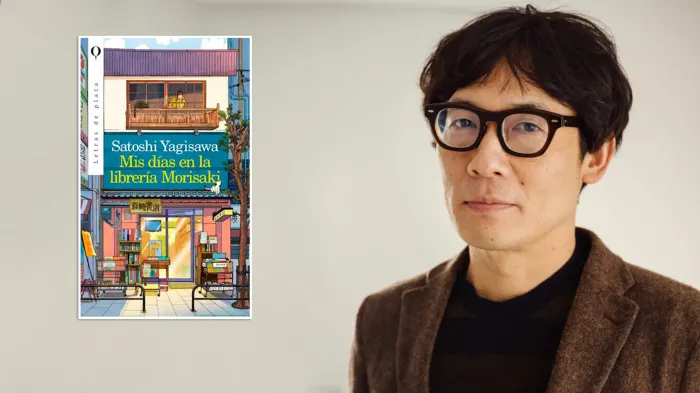
The prose style is plain and accessible in this novel, making it is easy to get into the book, but there is not much in the way of rich or poetic language. As with The Stranger by Albert Camus, it is not difficult to imagine the sentence-to-sentence translation of this book was not particularly difficult, even if striking the right tone is the greater challenge. In some ways, Days at the Morisaki Bookshop can come across as though it was written like a fix-up novel; the two different parts of the story read like tangentially related novellas with the same general cast of characters. This is not a plot heavy novel. Events within the story are more driven by characters deciding to talk to one another or be more open with each other and themselves. These stylistic choices all add to the atmosphere of the novel which is gentle and encouraging.
Sidewalk Book Sale
For readers looking for a book about people in contemporary Japan trying to rebuild their lives by making and remaking connections, while surrounded by used books, and some light romance, Days at the Morisaki Bookshop will fill those needs. It is also a fairly short book, so the story does not overstay its welcome.
Source
Yagisawa, Satoshi. Days at the Morisaki Bookshop. Translated by Eric Ozawa. Harper, 2023.
© 2024 Seth Tomko