Dark Horses
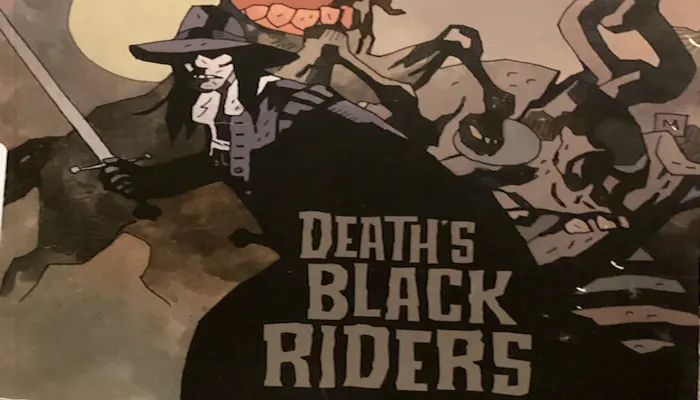
When traveling through Germany’s Black Forest, the Puritanical wanderer Solomon Kane finds himself caught in a roadway dispute between Romani, bandits, pilgrims, and demonic creatures with a taste for human flesh. The survivors hope to find shelter and wait out the night at an inn, but just as dangerous as the demons outside are the all too human sins and failings inside the lodge. Treachery and sorcerous turmoil ensue as a priest arrives late, and the demonic black riders assault the inn and those hiding there. Some people hope to last until sunrise, but Solomon Kane knows the only defense against supernatural creatures is to go on the offense.
Siege Story
The bulk of this graphic novel is comprised of an adaptation of Robert E. Howard’s fragment for “Death’s Black Riders,” wrapped around an adaptation of the short story “The Rattle of Bones.” The effect is to craft a longer narrative that becomes a kind of siege story, like a pulpy action-horror tale that calls to mind John Carpenter's Assault on Precinct 13, The Night of the Living Dead, the Dr. Who episode “Horror at Fang Rock,” and Sam Raimi’s Evil Dead 2. The story can feel a little disjointed at times—the seams showing where the plotlines are stitched together—but there overlap and results all work well enough. Also included is the Solomon Kane comic, “All the Damned Souls at Sea.”
The Wandering Puritan
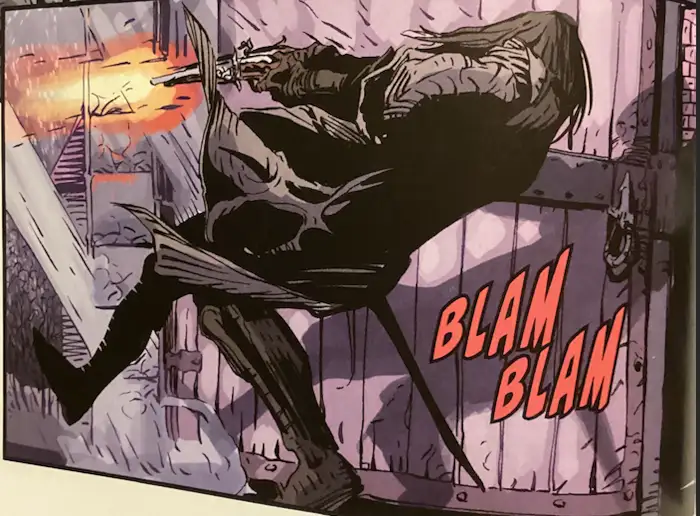
Fans of Robert E. Howard’s character will recognize Solomon Kane not only for his iconic look but also for his grim, resolute attitude. He is uncompromising with himself and others and steadfast in his determination again the Black Riders. What may come as a surprise to many readers, though, is that even with his judgmental and ascetic demeanor, Solomon Kane admits when he is wrong. In fact, much of his character arc in this graphic novel is about him conceding he has been arrogant and ignorant many times in his life. Now, Death’s Black Riders is pulp adventure story, so this epiphany is not like that of Elizabeth Bennet in Pride and Prejudice. However, it does add depth to the main character and the larger narrative that the audience might not expect in what could be considered disposable entertainment.
Robert E. Howard’s Legacy
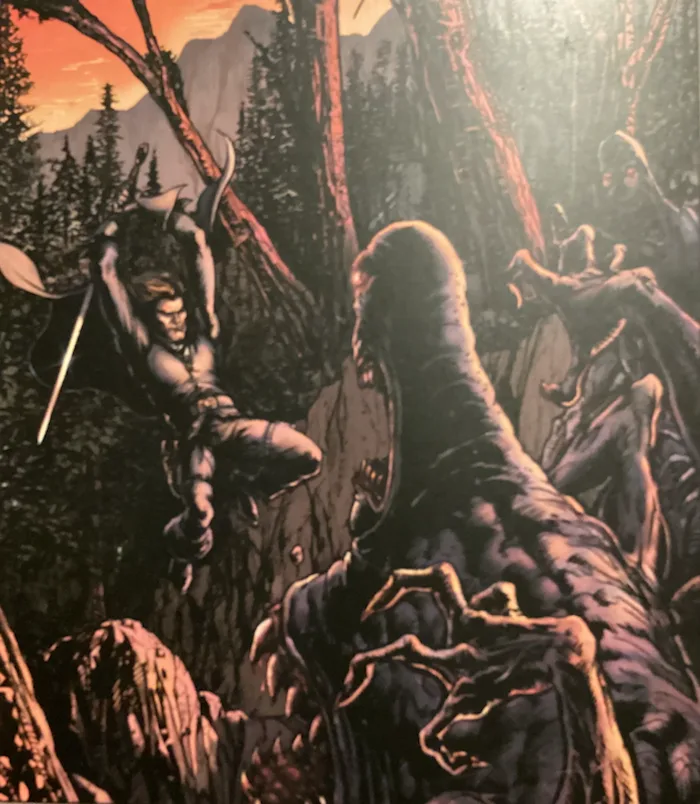
While not Howard’s most popular character—that is certainly Conan—Solomon Kane does have a cult following in his own right. Death’s Black Riders, based mostly on Howard’s own fragments and stories, puts the hero in a stressful, claustrophobic situation, having to deal with monsters, the occult, and regular human ethical failings. While Howard did not finish the fragment for "Death’s Black Riders," the completed tale by Scott Allie is satisfying and in keeping with the spirit of the character. While references are made to the previous graphic novel, Castle of the Devil, it is not necessary to have read that one beforehand, but doing so will provide greater context to statements Solomon Kane makes at the conclusion. All-in-all, this graphic novel is an enjoyable entry among the adaptations of Howard’s work.
Keep Riding, Never Stop Riding
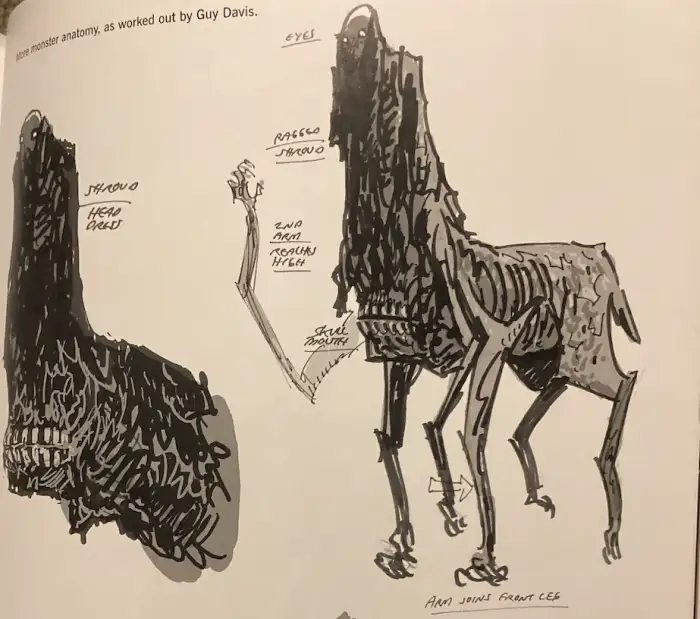
While the action can get a bit muddy in some panels, the design and presentation of the titular antagonists is memorable. Nightmarish and with multiple, distinct individuals among them, Death’s Black Riders make for grotesque and dangerous adversaries. The sketches, design work, and notes from Guy Davis and Mario Guevara make for an excellent bit of supplementary material, as does the gallery of alternate covers by artists like Mike Mignola. The art in “All the Damned Souls at Sea” is in an entirely different style, which may be jarring for some readers.
On the whole, Solomon Kane: Death’s Black Riders is solid dose of grim, violent adventure. Readers who are already fans of the character should enjoy this one as will anyone with an interest in design for unique and fearsome creatures. Watching Solomon Kane fight these monsters shows why the stories about this dour Puritan traveler have endured when so many other pulp stories have not.
Source
Solomon Kane: Death’s Black Riders. By Scott Allie and Robert E. Howard, artwork by Mario Guevara, et al., colors by Juan Ferreyra, letters by Richard Starkings, Dark Horse, 2010.
© 2024 Seth Tomko