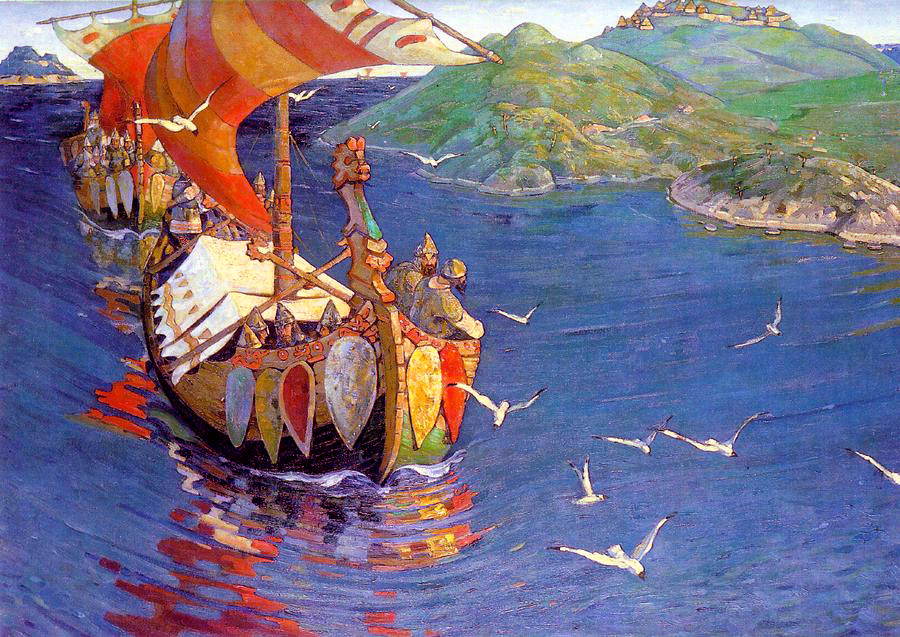
The Dragon-Prow Ships
In a fit of anger, Bern Thorkellson steals a horse and makes a desperate escape from his hometown—where he has no future following his father’s exile—and travels into the wider world, hoping to become a famed Erling raider and mercenary. Among the Cyngael people, Alun, a lesser son of a well-known family, finds himself pushed into a position of greater responsibility in the face of continued raids from the sea and petty conflict among their own leaders. Aeldred, King of the Anglcyn, struggles against his own health and time as he devises strategies to build and secure a future for his children and developing nation. Weaving through all these lives are the strange and enigmatic faeries, serving their unearthly queen.
Fame Once Won Endures Ever
One of the principle thematic currents in the novel is that of legacy, especially where children are concerned. It is a frequent question among many characters, whatever their status, as to what sort of life they are trying to make for those who will come after them. Beyond even being a personal concern, this thematic question also runs under the cultures of the novel. The Erlings understand the world to be a hard and uncaring place where accidents or even just a bad winter can undo human progress; the violent pillaging is, for them, not only necessary for material survival but also necessary to gain immortality through famous deeds. Among the Erlings, only the sagas they sing to recall their history can be eternal. The Cyngael, meanwhile, understand fate to be both kind and cruel and have organized their lives around seasonal cycles and their elaborate songs and poetry. They are similar to the Erlings in this regard, even though they hate them for their raids and plundering. The Anglcyn, principally through the efforts of their king, are on a trajectory of building a stable society of learning and laws, but they must work tirelessly to prevent it from succumbing to attacks or interpersonal divisions.
In the background of all these cultures are the faeries, thought of and treated differently by each one. They provide an interesting counterpoint to this theme because they endure so much longer and have a far different understanding of time and its effects. They both reinforce and provide an alternate viewpoint to the humans and their efforts to build and leave a legacy.
Unsystematic Magic
More than in many of Kay’s stories, there are overt magical and supernatural elements in this novel. This is not always the case with his works that are loosely affiliated with the Sarantine Mosaic. In this novel, there is no “magic system.” Faeries, magic, and the like are, at best, on the fringes of human understanding and not to be dissected and labeled according to some quasi-scientific classifications. Readers looking for detailed explanations about magic along the lines of Brandon Sanderson will be disappointed. One of the intellectual conflicts among characters in the book is the debate of what to think of these supernatural forces. The Church of Jad among the Anglcyn teach that the world is for humans and can be understood, but the Erlings and Cyngael, who live in the darker, harder edges of the world, are less optimistic about the true power and extent of human action when natural and supernatural power is potent and unknowable.
If there are any tricky aspects of the novel, they are on a technical level. Important elements of the story are not always strongly foreshadowed or showcased, while sometimes minor characters or parts get long, developed interludes. It is not always clear why this is the case, but it is likely that this is a stylistic device borrowed from the sagas and epics that Kay is sometimes emulating. Nonetheless, it can be a distracting digression. Similarly, it can feel like even though the scope of the novel is wide and some characters do a lot of traveling, many of the major plot points occur in just a few locations. It can feel like significant stretches of the book are spent running back and forth between two or three places.
Valhalla, I am Coming
Last Light of the Sun is another rock-solid piece of fantasy writing from Guy Gavriel Kay that borrows from Norse, Celtic, and Anglo-Saxon culture. Fans of Kay’s other novels, fantasy fiction enthusiasts, and readers who enjoyed Bernard Cornwell’s The Saxon Stories (the source of The Last Kingdom) but wished it had more magic will want to read this novel.
Source
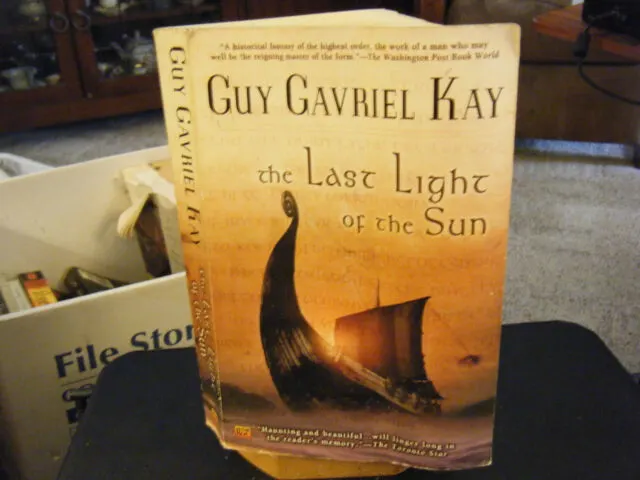
Kay, Guy Gavriel. The Last Light of the Sun. Roc, 2004.
© 2023 Seth Tomko