Dark Deeds in Sunny California
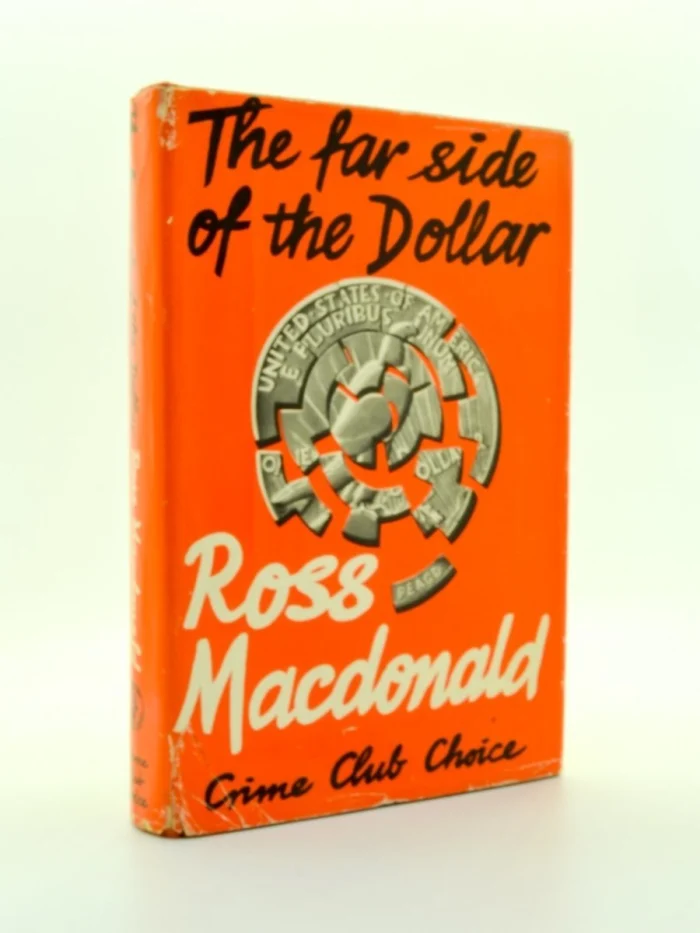
Tom Hillman has run away from a reform school, and private investigator Lew Archer is brought in, initially, to track and recover the young man. It soon appears, however, that Tom hasn’t just run away but been kidnapped, and as desperate as the Hillmans are to have their son returned, they are unwilling to give Archer the information he needs or even involve the police. As he stays with the case and hunts down leads from Southern California to Nevada to Idaho, Archer discovers decades’ worth of lies, abuse, and manipulations that have built pressure over time to explode in the present with contempt, malice, and violence.
The plot is solid but has certain similarities to Macdonald’s other novels like The Moving Target and The Galton Case. The last 25 or so pages are also quite busy, similar to The Zebra-Striped Hearse, which resolves the plot but feels abrupt. This conclusion will likely come as a let-down to any readers who want to see the final revelations play out for a longer period of time. However, the pleasure of the investigation comes from watching Archer use his reasoning and insights into human behavior to piece together the information he gathers. Almost all the progress he makes feels earned by his actions and investigations rather than luck or the needs of the plot.
Human Worth
As evidenced by the title, a major theme of the novel is money or more precisely, what has value. Many wealthy characters or institutions throw money around and pretend it is of no consequence, but they are obsessed with it and the display of status it affords them. Several characters casually talk about bribing police or other people involved with legal proceedings, and one character gives a naked display of this worldview, saying, “you can buy anyone, anyone at all” (244). Cynicism and immorality aren’t relegated to the wealthy, though, because there plenty of poor characters that are abusive, violent, selfish, or grifters, too.
Set into this mix is Lew Archer, who, while a flawed human being, is motivated in ways that inure him to the surrounding temptations. As he states early on, “I’m nobody’s man but my own,” and he’s aware that he’s engaged in the kind of career he wants and has professional and personal motivations to keep going (21, 114). His impulses and satisfaction are much more internal than many other characters. To this end, the audience gets two different insights into Archer and why he gets involved and remains so even when he isn’t being paid to do so for a stretch of the novel. In a frank discussion, he says, “Other people’s lives are my business . . . And my passion. And my obsession, too, I guess. I’ve never been able to see much in the world besides the people in it” (175). It is clear he sees himself drawn to this work because of humanistic instincts rather than for money, authority, or external motivations. However, another character counters this interpretation by saying, “Everything is connected with everything else. The problem is to find the connections . . . You’re not interested in people, you’re only interested in the connections between them” (194). This perspective sees Archer as distant and more than a bit judgmental, as though he’s amassing knowledge of these human connections for his own ends. The book does not say which view is more accurate; that determination is left to the audience to make for itself.
Much Like Sam Spade before him, Archer can be ruthless in pursuit of the truth, going so far as to aggressively question his potential love interest, Susanna Drew, likely wrecking any future interpersonal relationship (195-8). Later when a character asks for some leniency, he responds with, “I don’t have that much mercy” (246). His own internal motivations compel him in ways that prevent him from being turned from his pursuit of the truth while also prevent him from taking it easy on himself or even people for whom he cares.
The Past Is Another Country
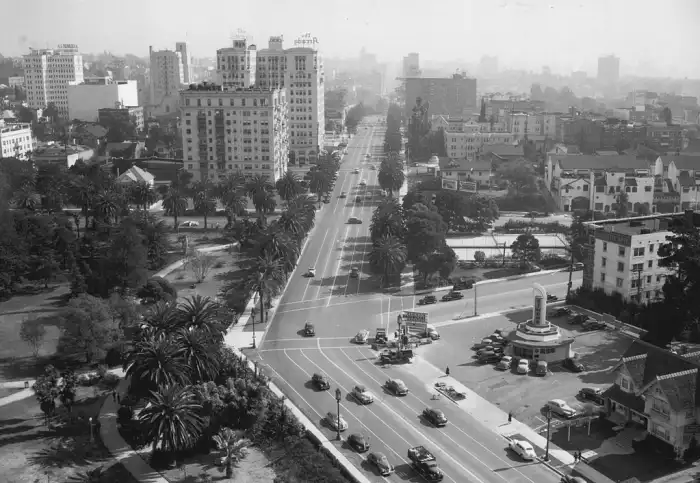
The novel is set in the 1960’s, but the present action—as with many of Macdonald’s novels—is a result of events from years prior. A good chunk of the book deals with characters reflecting on choices they made in 1940s Hollywood. Doing so gives a sense of scope and tragedy to the novel, as these characters set events in action decades ago that have doomed them to the present circumstances. Reminiscing about the Los Angeles of so many years ago also connects the book to the tradition of West Coast noir and earlier hardboiled detective stories, like those written by Raymond Chandler. Also, in one of the few occasions in which having multiple changes in scenery is effective in a Lew Archer story, the audience can see that crime and corruption isn’t limited to “the big city.” Pastoral Idaho is just as likely to be the home of malevolence and evil deeds as urban Los Angeles.
Dollar, Dollar Bill
The Far Side of the Dollar is another strong work of hardboiled detective fiction with more than a touch of psychoanalysis and philosophy thrown into the mix. Fans of the genre should certainly enjoy it, and it makes for a strong entry point to anyone wanting to check it out or give a look into Ross Macdonald’s novels featuring Lew Archer.
Source
Macdonald, Ross. The Far Side of the Dollar. Vintage Crime/Black Lizard, 1964.
© 2023 Seth Tomko