The Job Class System Takes Over
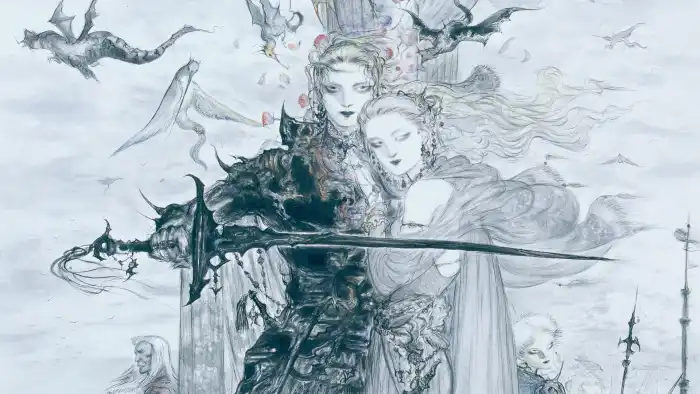
Though uneven in terms of plot and character development this installation, Final Fantasy Five, features an evolutionary step in character ability customization.
The story of this game revolves around the adventure of Bartz, Reina, Faris, Galuf and Krile as they attempt to defeat the return to power of an ancient evil. Generic fantasy tropes abound in the game, leading to a decrease in dramatic tension as far as the player is concerned. Thankfully, the advent of the job class system gives players the opportunities to focus on what talents these stock characters develop. In this manner, the player can provide more personality to the characters through class assignment than the game makes wrote into the characters in the first place.
Knight and Ninjas and Chemists, Oh My!
As the game progresses more adventuring classes become available to assign to characters giving them an opportunity to train in multiple ways such as samurai, geomancers, and summoners. Where previous Final Fantasy games had classes come prepackaged with characters with no opportunity to change, this game puts no prohibitions on how a character can develop. Some characters start being more disposed to particular classes—like Bartz with the knight or monk class—nothing stops the player from turning the characters into any job he or she desires. If for instance, a player dislikes the stereotype of the weaker female who must be a healer or cast magic, that player can make Reina or even Krile into the strongest fighter-type if he or she so chooses.
Unfortunately the value of come classes is limited or questionable at best. Berserkers, hunters, and bards all have fewer or less useful skills and powers when compared to white mages, ninjas, or lancers. Nevertheless, the availability of so many options for developing the characters gives the player a range of choices as to how he or she wants to proceed through the game. From here, one can see that this similar approach was the reasoning behind Final Fantasy 6 having so many different characters and the Magicite system, as they allow the player the freedom to pick favorites rather than be forced into identifying with a particular character.
Cardboard Fantasy
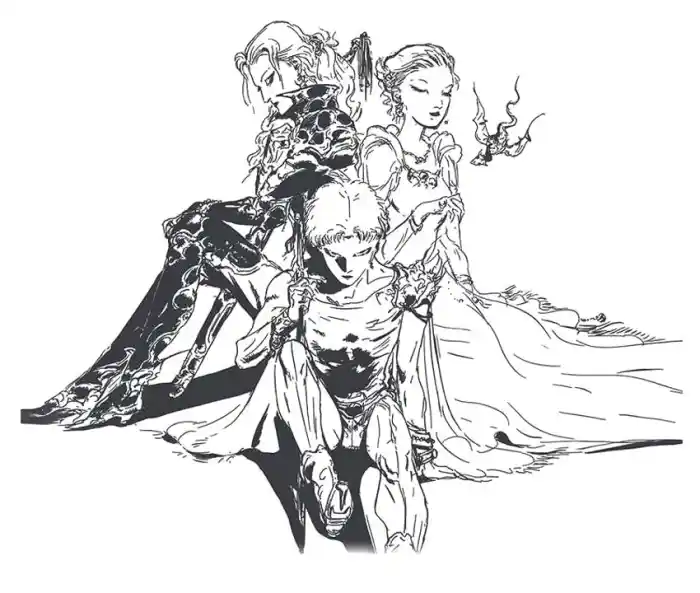
The open quality of the job classes and the ability to acquire new ones provides the best reason to continue playing when the story of the game quickly wears thin. Characters with amnesia, plucky princesses, characters unaware of their heroic heritage, worldwide threats from the bland and underdeveloped antagonist, and similar stock fantasy elements rule the roost in this game. In terms of its narrative, this game feel inferior to Final Fantasy 4 and struggles to set itself apart from other, generic fantasy settings. Such trope have been present in Final Fantasy, but in this game so much seems paper-thin that it is hard to care about the characters or the worlds they inhabit. On a positive note the game does eventually violate the male-bias so common in videogames and contains a party where in females are the majority.
A Step Forward for Some
In retrospect the innovations of Final Fantasy Five are what give birth to the intricate job class systems of Final Fantasy Tactics and the license board of Final Fantasy 12. Having the freedom to develop characters into powerful specialists or jacks-of-all trades allows for the opportunity to create new strategies and styles of play. This development must have been revolutionary at the time and even now is impressive in its versatility. Such an astounding shift in game design and play, however, deserves a better story and a better setting in which to be deployed than the two-dimensional and conventional one of Final Fantasy Five.
© 2010 Seth Tomko