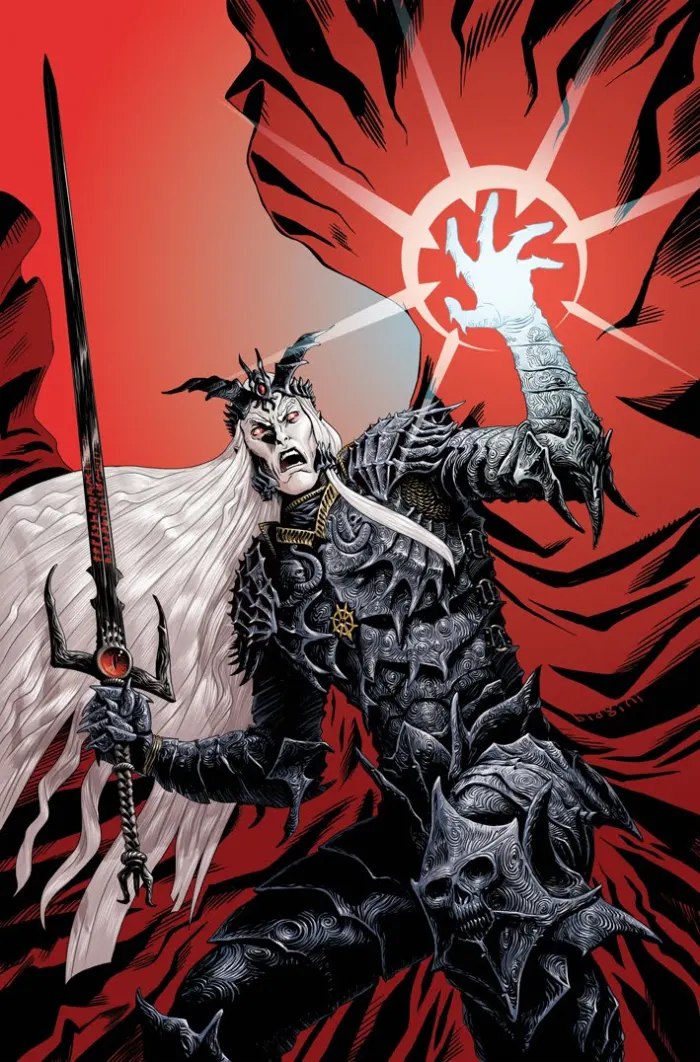
The Eternal Champion Battles Nazis
Moorcock’s surreal style blends with historical fiction in this thrilling addition to the saga of Elric of Melnibone.
As with many Eternal Champion stories there are mirrored plots that overlap across time and space given the physical structure of Moorcock’s fictional worlds known as the Multiverse. Count Ulric von Bek struggles to maintain his dignity and that of the German people as Nazis gain control of the country and take an occult interest artifacts long held in trust by the Bek family.
Meanwhile, Elric seeks to defend the mystic city of Tanelorn which is under siege by Gaynor the Damned. Even with his sword, Stormbringer, Elric is defeated just as Ulric is captured and sentenced to live out his remaining days in a concentration camp of political prisoners and others deemed undesirable by Hitler and the Nazis.
The only hope for both men is Oona, a strange woman and daughter of an alleged dreamthief known to Elric. It is Oona who can travel the Multiverse at will and bring both heroes together in order to combat the unholy union between Nazi Germany and the nearly unstoppable forces of Gaynor the Damned.
Surreal Fantasy
The density of the novel comes from Mookcock's understanding of the Multiverse. Fortunately, Ulric is clueless enough about the subject, so he seeks the answers to the same questions many readers will ask, such as how does the same person exist simultaneously in two places. This situation provides a good entry point for readers wanting to get into stories of Elric and others who hold the title of Eternal Champion. Those more familiar with Moorcock’s work will have a leg up on the complexity of the Multiverse, but the addition of new characters and new threats will keep them on their toes.
The nature of the Multiverse inherently adds depth to the novel since it forces the characters and the reader to question ideas of personal identity and how individuals can be subverted by mass movements and institutions like their own government or the magical beings to whom they have sworn fealty. On a similar note, the idea of how anyone can take free action in the face of unlimited possible futures forms an interesting undercurrent in the novel as Ulric tries to acclimate himself to a new understanding of the universe. This view sets him as a foil to his erstwhile ally Elric, who is a veteran at dealing with the complexities of the Multiverse.
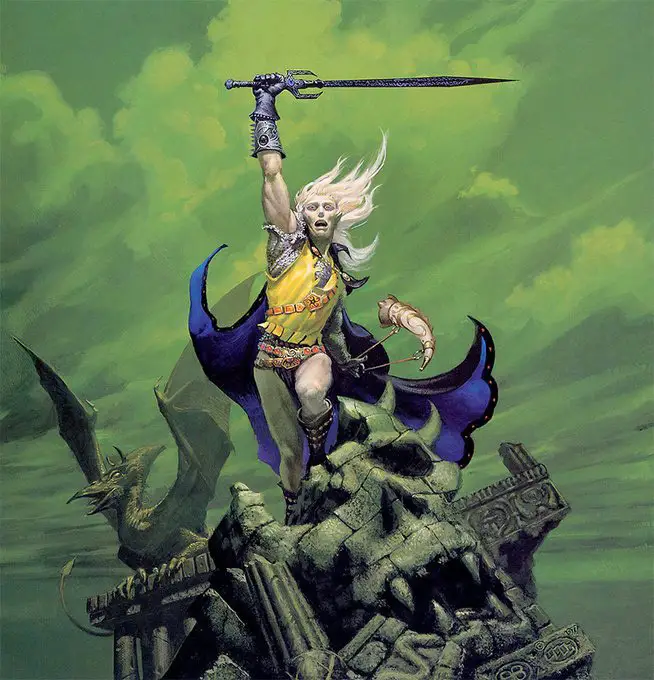
Elements of Historical Fiction
The inclusion of the real world settings of Germany and England during the start and early years of World War Two grounds the sections of the book in reasonably familiar territory. This development is unique in that few fantasy novels overtly deal with historical atrocities.
Moorcock also uses a lighter touch by slowly turning the real world—Nazi Germany—into a more profane and unwholesome place than the various fantastical settings of the Multiverse. This choice on the author’s part leads readers to question the world around them and examine how an evil, genocidal political entity might seem like the stuff of fantasy novels but is actually a real and disturbing part of human history. This fantastical questioning of reality and identity are hallmarks of Moorcock's writing, and here they find not only breathing room also an entry point for readers who may not be aware of this surrealist element or the idea of the Multiverse in general.
Black Blade
With Ulric, a character largely uninitiated into the particulars of Moorcock’s worlds, and real history to latch onto makes The Dreamthief’s Daughter accessible to anyone looking for an introduction to Moorcock’s world and works. There is also plenty of philosophically loaded fantasy action to keep fans of the Elric saga enthralled.
Source
Moorcock, Michael. The Dreamthief’s Daughter. New York: Aspect Warner Books, 2001.
© 2010 Seth Tomko