Divine Mandate
Along with their many other subversions, FromSoftware games remain as consistently critical of organized religion as they are of other institutions. Though often hidden in the oblique narratives and the density of the world building, the games almost always conclude that the divine powers and their associated institutions are no less corrupt or controlling than secular ones.
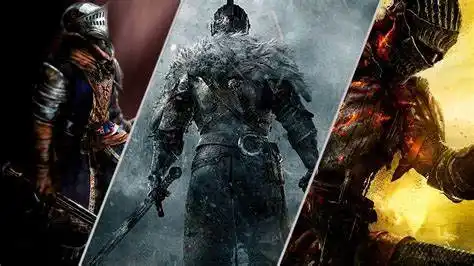
The Dark Souls Trilogy
Gwyn is a god-king who controls mortal destiny while trying to deny his own inevitable end by extending the Age of Fire and using undead humans as sacrifices. The extent of this manipulation is seen in all three games as humans remain committed to the Age of Fire through church-led propaganda and “prophecy” that keeps humans in a subjugated state and shackled to a cosmic cycle that can only be undone by ceasing to follow divine authority and putting an end to rekindling the First Flame. The spare information about religion in Thorolund, Carim, and other lands is evidence that these propagandized myths and religious indoctrination encourage humans to maintain the status quo of the Age of Fire against their own interests.
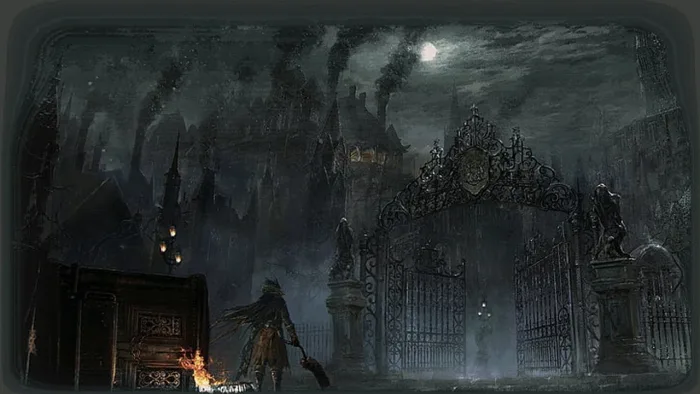
Bloodborne
The Healing Church is the primary source for Yharnam’s prosperity and its misery. The ministrations of the church are both the cure and disease that afflicts the citizens. It is slowly revealed through the game that the church is lying about and covering up how it is complicit in the monsters and madness that have taken over the city, requiring the Night of the Hunt. What’s more, the “gods” worshiped by the church are unfathomable, inhuman entities with mostly neutral or antagonistic outlooks on the people venerating them. At best, humans can be used to possibly generate new “Great Ones” because these deities are now incapable of reproduction on their own. The church is both an oppressor of its own members and a tool of powerful, outlandish entities.
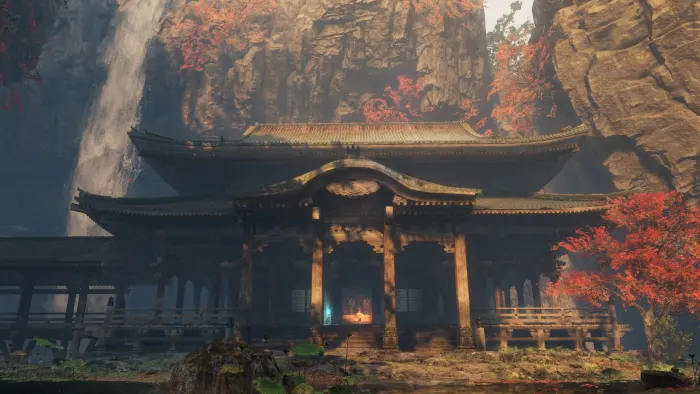
Sekiro: Shadows Die Twice
The Senpou Temple on Mt. Kongo is quickly revealed as a corrupt Buddhist sect that, far from seeking Enlightenment and freedom from worldly attachment, instead covets bodily immortality. It is bad enough that these allegedly holy men do terrible things to themselves and allow themselves to become host to immortal parasites. They step into outright villainy when it becomes clear they have experimented on and killed an untold number of children in their frenzy to produce the Divine Child of Rejuvenation who is immortal. Whatever moral authority they might once have possessed is long gone in light of these discoveries.
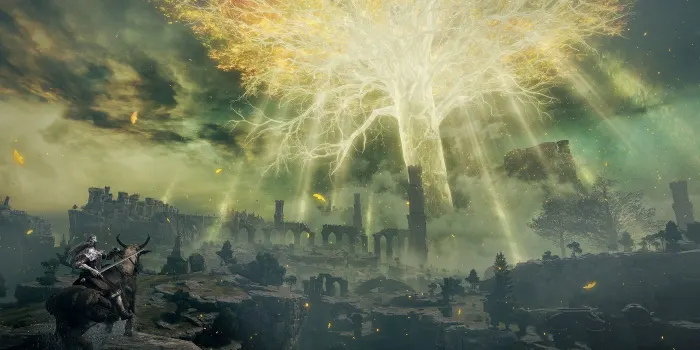
Elden Ring
The Golden Order, the Fundamentalist Teachings, the Two Fingers and Finger Maidens, and Erdtree are all part of how the Greater Will controls the Lands Between. This religious-feudal pyramid scheme is designed so that the Greater Will controls the power of the Elden Ring and the lives and deaths of all the people it touches. Because it is a divinely ordained mandate nobody is permitted to question this great chain of being as seen by D’s barely contained disgust with “those who live in death” whose existence exposes a flaw in the Golden Order. Similarly, Corhyn is unable and unwilling to accept the calculations and conclusions of the Noble Goldmask that the Golden Order might be wrong and the Elden Ring needs repair. A great many characters—several of whom, like Blackguard, Varré, and Patches, are on the social fringes—say there’s something wrong with how the world functions. The endless cascade of misery in the Lands Between is obviously at odds with the alleged beneficence of the Greater Will. Most of the people who benefit from this divine ordering of the world—like Kenneth Haight—do not challenge it. It is worth noting, however, that quite a few of the demigods actively work against the Greater Will and its Golden Order, and that most of the endings to the game either repair the Elden Ring in ways that subvert the Golden Order or annihilate it.
“Heresy is not native to the world; it is but a contrivance.”
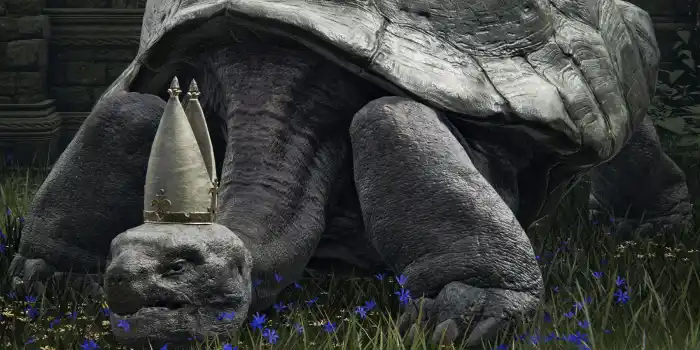
Because Elden Ring is such a large game, everything said about it is both true and false. While it becomes clear that religion in the lands between is mostly for generating hard and soft systems of control, one prominent character cuts completely against this fact: Miriel, Pastor of Vows (a.k.a. The Turtle Pope). He is almost certainly the gentlest and among the most thoughtful characters in the game. He explains the mechanics of obtaining forgiveness in the Church of Vows, and he will teach the player any spell or incantations they bring him. He is steadfast in his belief that sins can be forgiven and that dogmatism and heresy are contrivances. Perhaps among all FromSoft games, Miriel is the best example of what a wise and benevolent religious figure would look like.
All Things Can Be Conjoined
FromSoftware games encourage suspicion of all institutions, and religion is no different. The existence and superiority of divine forces does not prevent critical examination of them and their organized religions, and each game explores how these religious institutions rarely work in the best interests of the devoted believers. Instead they are another authority structure attempting to manipulate and control human behavior for their own ends.
© 2023 Seth Tomko