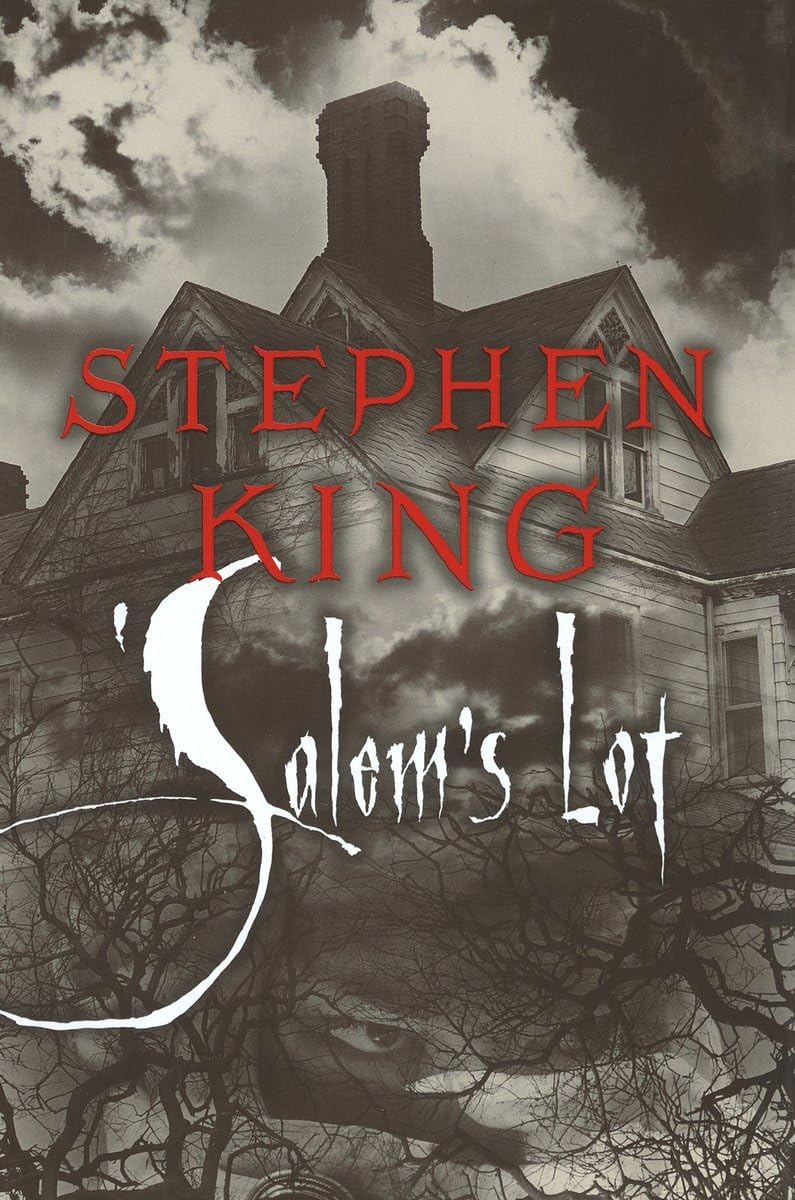
Vampire Invasion of Small Town America
Stephen King’s second novel is an exploration of the secrets and decline of the traditional American small town as well as a vampire hunting adventure in the tradition of Bram Stoker’s Dracula.
The book presents and sustains two kinds of tension. First there is the story of Ben Mears, struggling as a writer and a recent widower, he returns to his childhood hometown: Jerusalem’s Lot. Secondly the novel works as a traditional horror story as dark forces seep into and destroy the town by exploiting the desires and weaknesses of it citizens.
Evil Moves to Maine
At first Ben comes to ‘Salem’s Lot to recover from the recent death of his wife and work on a novel about the Marsten House—a local manor with a violent past and a place that emotional damaged Ben as a child. He acclimates to the picturesque town by forming relationships with a local girl named Susan and the high-school English teacher, Matt. Life appears to be approaching normal again except two other men—Barlow and Straker—recently arrived in town, established and antique business, and moved into the ominous Marsten House.
After some children go missing, people begin to get ill and die at an alarming rate. After several near-death encounters, Ben and Matt are forced to conclude that vampires have come to ‘Salem’s Lot and are feeding on the populace, turning them into subservient vampires. They mount a clandestine defense but find themselves in over their heads. It is only through luck and determination that several characters manage to survive the vampire invasion, and they return to ‘Salem’s Lot with no choice but to purify it by fire.
I Forgot You Could Tempt Me With Things I Want
Barlow and his ilk are vampires of the traditional horror standard. They have more in common with the bloodthirsty revenants of Easter European folklore than they do with stylish Hollywood vampires seen in countless Dracula movies or the moody, glittering vampires in many contemporary novels. The vampires in ‘Salem’s Lot are nearly feral beasts compelled to feed by insatiable hunger and the willful commands of the ancient vampire, Kurt Barlow.
King also maintains a lot of the lore concerning the undead such as their need to be invited into buildings, their fear of sacred objects, and their powers of suggestion. It is this latter ability that works wonders in the novel as it allows the vampires to play upon the cravings and wants of the town’s inhabitants to make them offer themselves up as food or willing minions. The misshapen Dud, for instance, joins with Barlow when promised the local beauty queen, and Corey Bryant is seduced in vampirism to get revenge. The vampires come across as entirely predatory first by singling out and feeding on the weakest members of the town, and then by using the fears and desires of other theoretically stronger people to manipulate or coerce them into service.
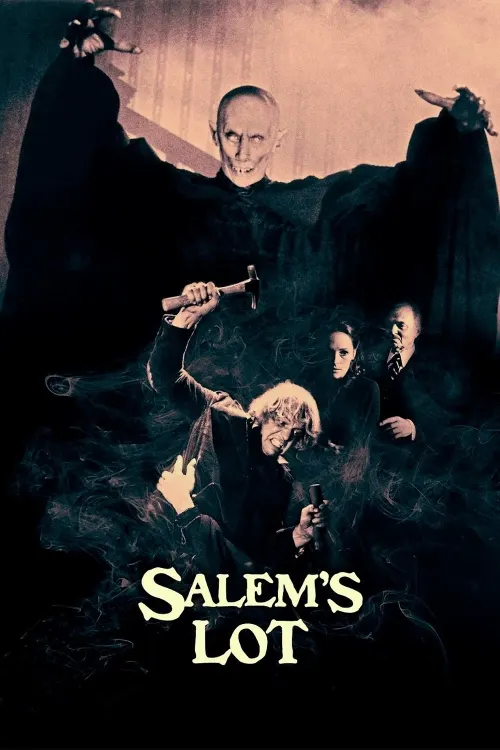
Rural Maine Life
What has allowed the novel to age so well is King’s use of the horror story as an overlay of criticism about towns like ‘Salem’s Lot. That the town is literally bled dry is clearly a metaphor of what really happened to many factory and agriculture-based small towns as those occupations were out-sourced over the decades. Richard Russo and other authors write about this same idea minus the vampires. That ‘Salem’s Lot so quickly and quietly dies out and becomes a haven for the undead, however, is an indictment against the sentimentality that often surrounds the picture perfect idea of small-town America as though nothing scary or evil could take place there.
Though the novel starts slow and lacks the polish of some of King’s later novels, ‘Salem’s Lot makes for a terrifying read whose deeper meanings remain viable concerns and criticisms. While some historical anachronisms like a party line for a telephone service will date the story, the terror and concerns about the frailty of life in small town America remain as strong as ever.
Source
King, Stephen. ‘Salem’s Lot. New York: Pocket Books, 1975.
© 2010 Seth Tomko