Imperial Manifest Destiny in Space
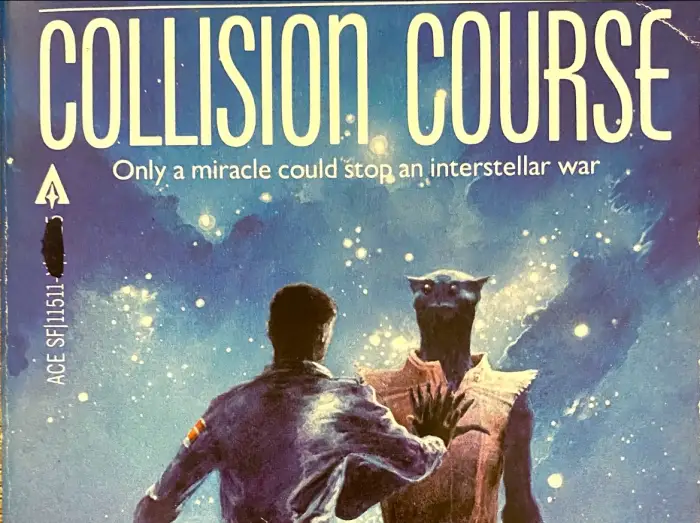
Centuries into the future, humanity is spreading through the galaxy and is on the cusp of developing sustainable faster-than-light space travel in order to reach and colonize distant star systems. The return trip of the maiden voyage arrives with shocking news. Humans have not found any evidence of extraterrestrial life until now. An alien species not only exists but also is expanding and colonizing other inhabitable worlds. Earth’s leading minds conclude that two expanding, space-faring civilizations will inevitably collide. In order to prevent potential violence, a small collection of scientific minds, linguists, and negotiators under the direction of Dr. Martin Benard are sent off to meet and come to agreeable terms with this newly discovered alien people. Initial contact with the Norgla are alarmed but peaceable, as both believed they were alone in the galaxy. As communication between the two groups develops, however, the humans are met with an insurmountable cultural impasse and dismissed to return to Earth. Dejected by the Norgla ultimatum and fearing for interstellar warfare, the humans encounter another problem on their way home: their experimental faster-then-light spacecraft veers off course to a previously unexplored region of the universe where new obstacles await them.
Crashing Stars
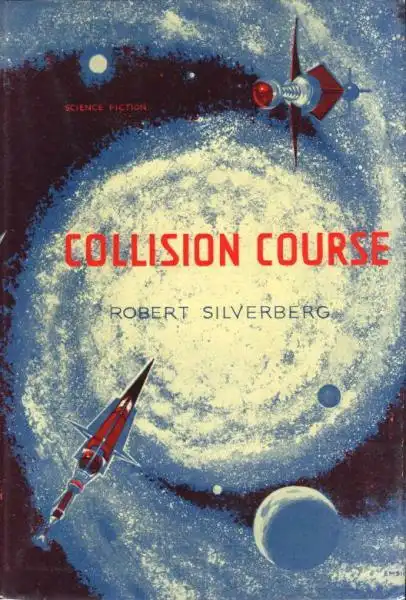
Collision Course is a first contact science-fiction story, and despite some of the pulpy styling it has, the novel is not action-oriented. It is primarily focused on the personal and group dynamics of the human negotiation team and the existential and civilizational dilemmas presented by the discovery of other intelligent life in the universe. Just after the halfway point of the book, it takes an unexpected turn with the complication of losing their way home on the return trip to Earth. The story’s second half verges into deus ex machina territory that can be as odd and off-putting to the readers as it is to some of the characters. The resolution of the plot and character arcs feels a bit anti-climactic because the driving factors of the story are suddenly pushed into a finale that is totally without foreshadowing.
Aggressive Expansion
In his authorial introduction, Silverberg relates how he intended the story be to a two-part serial for Astounding Science Fiction magazine. The editor John W. Campbell rejected it, however, because of what he called a fundamental philosophical error. As Silverberg puts it:
[Campbell] believed that human beings were better than anybody, and that when we got around to going to the stars we would swiftly and automatically demonstrate our superiority over any alien races that happened to hang out there. For John, a story about Earthmen who have doubts, who admit the possibility that grabbing half the galaxy on behalf of imperialist Earth might not be a good idea, and who ultimately run into superior opponents, was not a story that he was going to publish. (introduction)
Ultimately, Silverberg published the story elsewhere, but the behind-the-scenes drama of getting the novel into print is as interesting and just as much a time capsule as Collision Course itself. A contemporary reader might find it wild, for instance, that Campbell took issue with the possibility of alien superiority but not with a future Earth ruled by a technocratic autocracy that has stifled forms of human expression in the name of security and efficiency.
Line of Demarcation
Collision Course is an interesting bit of early science-fiction story telling about a first contact situation. It moves at a brisk pace but perhaps to its own detriment because some of the ideas it brings up do not get much room to breathe. Some of the characters can come across more like archetypes, but that also might be more a function of time, as this story has clearly had some influence on first contact stories that came after it. The novel is quick and reasonable, and it should appeal to fans of authors like Isaac Asimov.
Source
Silverberg, Robert. Collision Course. Ace, 1961.
© 2024 Seth Tomko