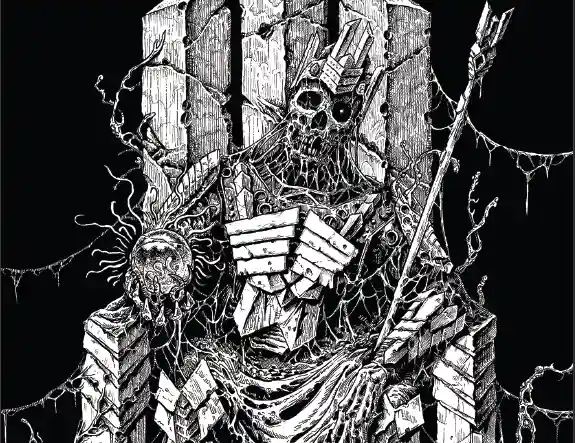
Let There Be Darkness
Shadowdark is a fairly rules-light, old school fantasy adventure game that recreates the atmosphere of classical Dungeons and Dragons style adventuring with a number of contemporary gaming mechanics that make it easy for any player to transition into it, even if they’ve only played modern incarnations of tabletop fantasy role playing. Most of the ability stats and aspects like hit points, experience points, advantage and disadvantage rolls, and leveling up will be familiar to players coming to Shadowdark from many other gaming systems.
Real-Time Sputtering Torches
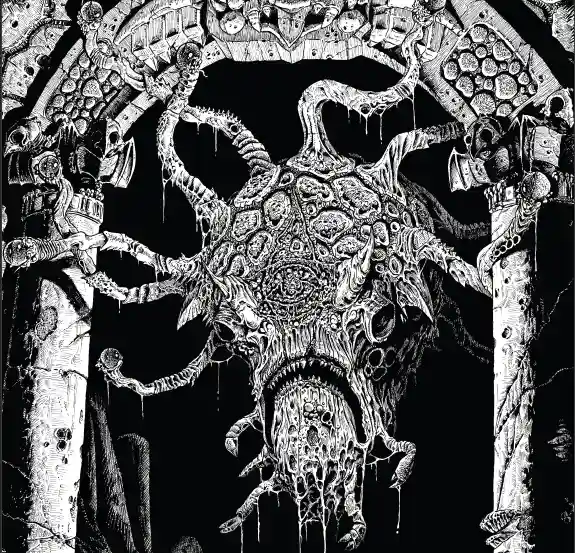
One main element that sets Shadowdark apart from the latest editions of popular fantasy role playing is its focus on actual and atmospheric darkness. Most of the adventuring locations in Shadowdark are underground or in distant, ruinous locations without much in the way of light sources. As such, it is up to the players to bring and maintain their own light, since they have precious little access to abilities like dark vision. Shadowdark uses this “torch” mechanic to add another layer of pressure to the game. Not only must players account for their light sources, the rules state that torches burn in real time, so a torch last one hour of game time in real life. This rule prods players not to dither because they could be left lightless and at the mercy of whatever horrific creatures are also prowling the dungeon.
Regarding the metaphorical darkness, Shadowdark is not a game of over-the-top power fantasies. The characters are fragile, the monsters are numerous, the traps are devastating, and the challenges are steep. While the game is not unfair, it presents adventuring as a high-risk-high-reward situation where the threat of character death is omnipresent. However, the game does not come across as an exercise in grimdark, hopeless nihilism, a charge that is often level at games like Warhammer Fantasy and Zweihander. Shadowdark is not a game the revels in needless struggle or cruelty, but it emphasizes the relative frailty of even prepared adventurers in the face of long odds, dangerous monsters, and devious obstacles. Also, unlike many other games, the rules for Shadowdark are quite lean, and most relevant information is grouped on single or facing pages.
Both the Wise and the Foolish Risk Their Fortunes in the Shadowdark. The Darkness Decides Who is Who.
Dungeon Crawling
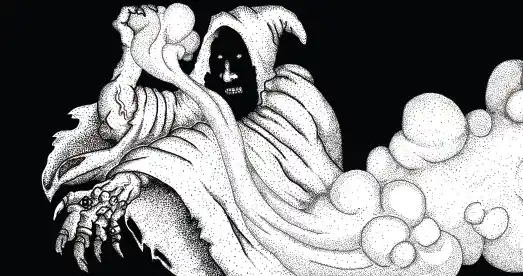
Shadowdark has a lot of random-generation tables, and it might seem like the most intimidating aspect of the game, at first. All these tables, however, are optional. A player can randomly generate a character, but it isn’t necessary. Many of the tables are for the GM to use, essentially to cut down on prep work. Instead of knowing all about a town with its inhabitants, non-player characters, and secrets, a GM can roll a few dice on a couple tables instead of using valuable time and resources to develop it all. These tables can even be used in-game to come up with aspects of characters, monsters, treasure, towns, or dungeons on the fly, as it were. There is a chance the results won’t make the most logical sense, but that also might make the encounter more memorable. In any event, the tables are also compatible with many other fantasy TTRPGs.
Find the creator of Shadowdark on youtube by clicking here.
Tomes from the Arcane Library
Shadowdark is the best example of blending both old school and more contemporary fantasy table top gaming. The astounding achievement of its million-dollar kickstarter campaign is, at least, an indication of its success and the large player base for these styles of games. Everyone looking for a dark, fantastical RPG that is light on rules but has a strong atmosphere of darkness and dread should try Shadowdark.
© 2023 Seth Tomko