
Creating a website for small business owners is not just about establishing an online presence; it's about creating a digital extension of your brand that captivates your audience, delivers value, and drives business growth. In today's digital era, your website acts as the virtual front door to your business, making it crucial to build a site that not only looks good but also functions seamlessly. This guide will walk you through the essential steps to build a high-impact website for your small business that stands out and delivers results..
Understanding the Purpose of a Website for Small Business
Understanding the purpose of a website for small business is critical to its success. A website serves multiple purposes, such as:
- Brand Visibility: Establishing an online presence to increase brand awareness.
- Lead Generation: Capturing potential customers through forms and contact information.
- Customer Engagement: Providing information and content that engages and informs visitors.
- Sales Platform: Offering products or services directly through e-commerce functionality.
- Customer Support: Assisting customers with inquiries and support through live chat or help desk features.
By clearly defining the purpose of your website, you can align its design and functionality with your business objectives, ensuring it serves as an effective tool in your marketing arsenal.
Planning Your Website for Small Business

Planning your website for small business is a crucial step that involves several key considerations to ensure its success. Here’s how to effectively plan your website:
1. Define Your Goals
Start by identifying what you want your website to achieve. Do you want to generate leads, sell products, or provide information? Your goals will guide the design and functionality of your site.
- Business Objectives: Clearly define the primary objectives of your website. Are you aiming to increase sales, build a mailing list, or showcase your portfolio?
- Target Audience: Understand who your audience is. What are their needs, preferences, and online behaviors?
2. Competitive Analysis
Analyze your competitors' websites to identify strengths and weaknesses. This analysis will help you understand what works in your industry and how you can differentiate your site.
- Identify Competitors: List out key competitors and visit their websites.
- Evaluate Strengths and Weaknesses: What are they doing well? Where can you improve?
- Differentiate Your Offering: Identify opportunities to stand out by offering unique value propositions.
3. Budget and Resources
Determine your budget and allocate resources effectively. This includes costs for web development, design, hosting, and ongoing maintenance.
- Budget Allocation: Determine how much you’re willing to spend on your website. This will guide decisions about design complexity, features, and technology choices.
- Resource Planning: Identify who will be responsible for content creation, updates, and maintenance.
4. Choose a Domain Name and Hosting
Select a domain name that reflects your brand and is easy to remember. Choose a reliable hosting provider that offers excellent uptime and support.
- Domain Name Selection: Choose a domain that is short, memorable, and relevant to your business.
- Hosting Provider: Select a reputable hosting provider with good reviews, reliability, and excellent customer service.
Key Elements of a Website Design
Website Design involves some key elements to create an engaging and user-friendly experience. Here are essential elements to consider:
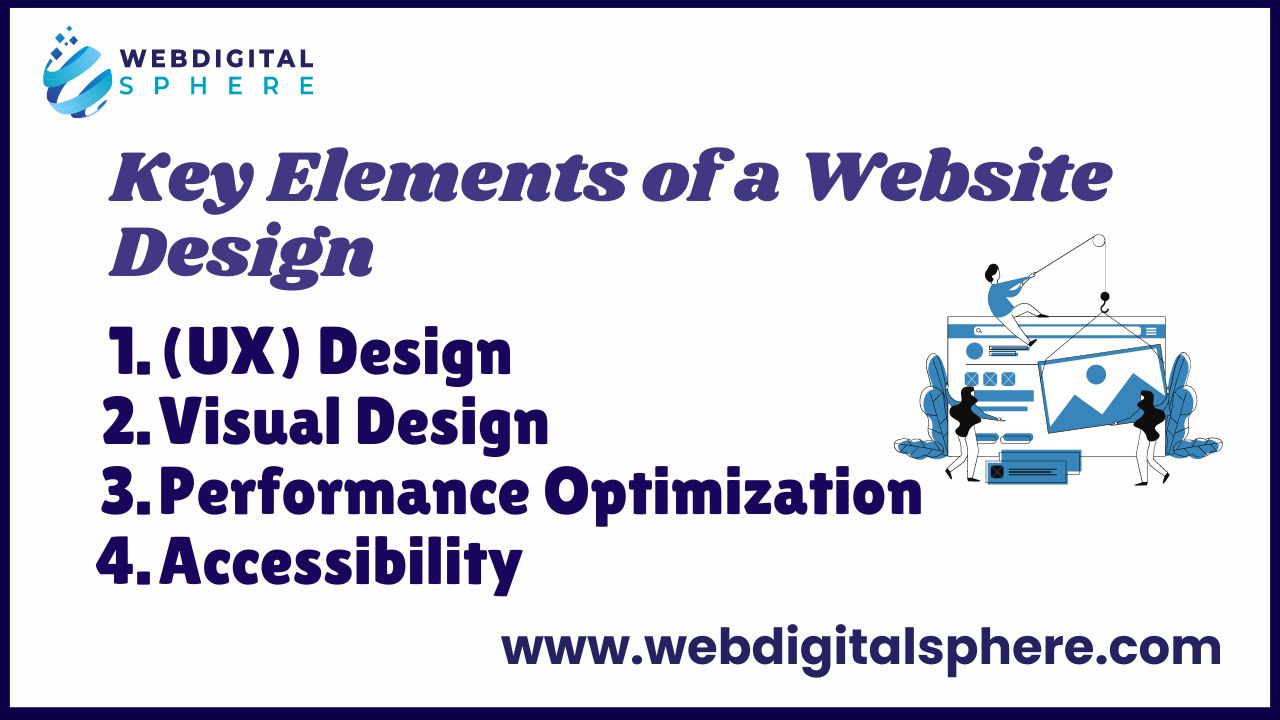
1. User Experience (UX) Design
Ensure that your website is easy to navigate and provides a seamless experience for users. Key UX principles include:
- Intuitive Navigation: Design a clear and intuitive navigation menu. Users should find what they’re looking for in a few clicks.
- Responsive Design: Ensure your website is mobile-friendly and adjusts to various screen sizes.
2. Visual Design
Create a visually appealing site that aligns with your brand identity. Consider these visual design elements:
- Consistent Branding: Use your brand colors, fonts, and logos consistently throughout your site.
- High-Quality Images: Incorporate professional images and graphics to enhance the visual appeal.
3. Performance Optimization
Optimize your website’s performance to improve loading times and user satisfaction. Key performance optimization practices include:
- Fast Loading Times: Minimize page load times by optimizing images and reducing server requests.
- SEO Best Practices: Implement on-page SEO techniques such as keyword optimization, meta tags, and alt text for images.
4. Accessibility
Ensure your website is accessible to all users, including those with disabilities. Important accessibility considerations include:
- Alternative Text: Provide alt text for images to assist screen readers.
- Keyboard Navigation: Ensure all interactive elements can be accessed using a keyboard.
Crafting Compelling Content
Crafting compelling content is essential to engage your audience and convey your brand message effectively. Follow these strategies to create impactful content:
1. Understand Your Audience
- Research Audience Needs: Conduct surveys or interviews to understand what your audience cares about.
- Create Audience Personas: Develop detailed profiles of your ideal customers to guide content creation.
2. Develop a Content Strategy
- Content Planning: Plan a content calendar that aligns with your business goals and audience interests.
- Content Types: Incorporate a mix of content types such as blog posts, videos, infographics, and case studies.
3. Use Clear and Persuasive Language
- Engaging Headlines: Craft attention-grabbing headlines that compel users to click.
- Call to Action (CTA): Use strong CTAs to guide users towards desired actions, such as signing up or making a purchase.
4. Optimize for SEO
- Keyword Research: Identify relevant keywords that your audience searches for.
- On-Page SEO: Optimize content with keywords, meta tags, and internal linking to improve search visibility.
Integrating Essential Features
Integrating essential features into your website enhances its functionality and user experience. Consider incorporating the following features:
1. Contact Information
- Visible Contact Details: Display your phone number, email address, and physical address prominently on the site.
- Contact Form: Include a simple contact form for users to reach out easily.
2. Social Media Integration
- Social Media Links: Add links to your social media profiles to encourage engagement.
- Social Sharing Buttons: Enable users to share your content on their social networks.
3. E-Commerce Functionality
- Product Listings: Showcase products with clear descriptions, images, and prices.
- Secure Payment Gateway: Offer secure payment options to build trust with customers.
4. Analytics and Tracking
- Google Analytics: Implement analytics to monitor site traffic and user behavior.
- Conversion Tracking: Track conversions to measure the effectiveness of your website.
Conclusion
Building a high-impact website for small business owners is a vital component of a successful digital strategy. By understanding the purpose of your site, planning meticulously, designing with best practices, crafting compelling content, and integrating essential features, you can create a website that not only attracts visitors but also converts them into loyal customers. Remember, your website is a reflection of your brand, and investing in its development is an investment in the future success of your business.